Used motorcycle: what to check before you buy
A complete checklist for buying a used motorcycle in Italy: PRA lien check, frame number, crash signs, test ride, inspection and ownership transfer costs.
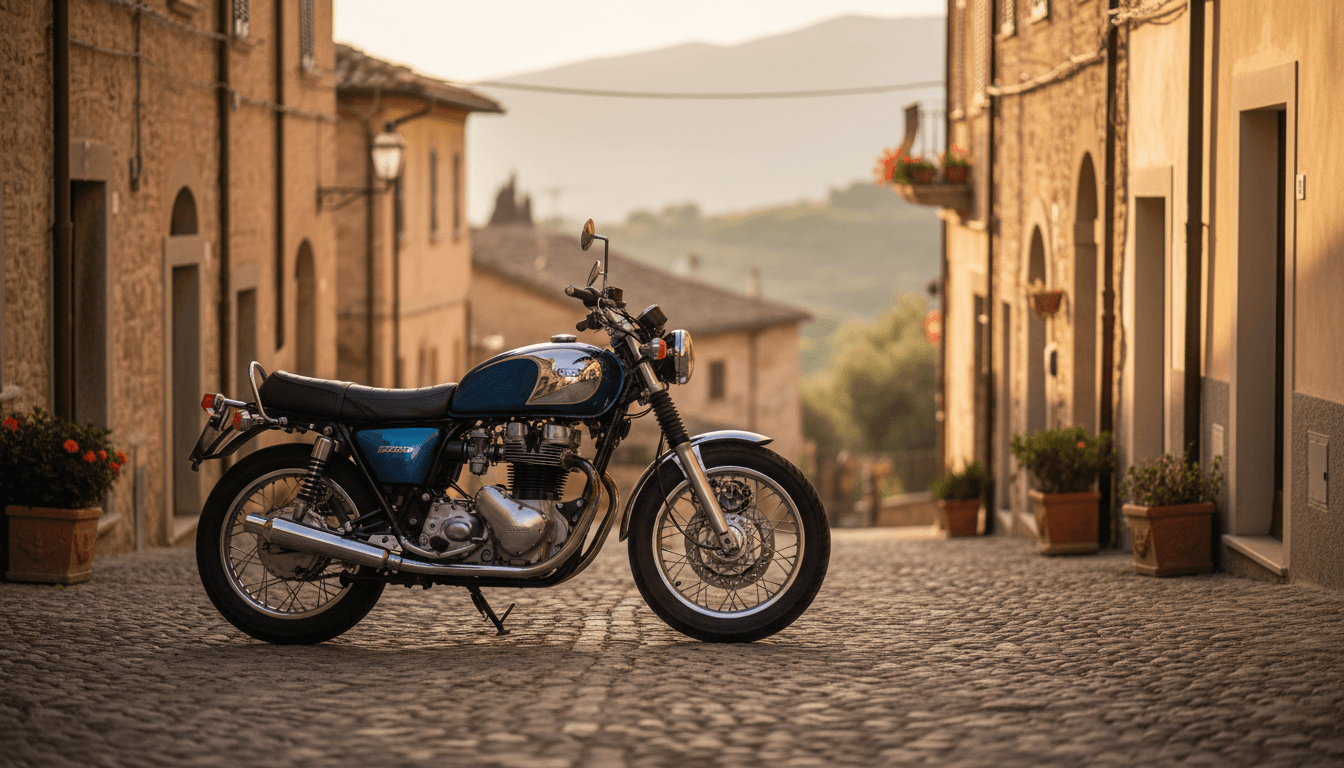
Buying a used motorcycle is one of the cheapest ways to start riding, but it is also where the costliest mistakes happen: a hidden administrative lien, a frame number that does not match the papers, a bike that has been dropped and cosmetically refreshed. This guide is a checklist in chronological order for Italian buyers: paperwork first, then the bike, then the test ride, then the ownership transfer. It takes a couple of hours and can save you thousands of euros.
1. Before you see the bike: the ad and the price
Compare the listing with similar models of the same year, mileage and trim on the main marketplaces (AutoScout24, Subito.it, Moto.it). A price far below the market average, a rushed sale, vague answers about how the bike was used, or missing paperwork and keys (especially the spare) are warning signs [1]. Ask in advance for a photo of the registration document and the plate: an honest seller will not mind.
2. Paperwork: registration document and owner
Since 2020 the Documento Unico has replaced the old registration certificate and the separate proof of ownership. Check that the owner matches the person selling, and verify the frame number, engine size, first registration date and inspection expiry [1][2]. If the seller suggests putting the bike in a third party’s name or doing an informal handover, the prudent choice is to walk away.
If there have been many owners in a short time, ask for the full PRA history: a bike that changes hands every few months rarely hides good news [1].
3. PRA check: liens, mortgages and seizures
Before you even negotiate, run a PRA check on the plate. It reveals administrative liens (fermo), mortgages and other encumbrances. A lien is not erased by the sale: the bike cannot be ridden and, if you do, the fine is between 770 and 3,086 euros [1]. The online check costs about 8.83 euros, far less than a single mistake [1]. It is the best value-for-money step in the whole process.
4. Frame number and signs of a crash
The number stamped on the frame must match the registration document exactly; if it does not, you risk having to re-register the bike or owning a machine of uncertain origin [1][3]. Then inspect the bike closely, ideally in daylight:
- a bent frame, non-original welds, or paint shades that differ between fairings;
- misaligned handlebars, wheels or footpegs, bent levers or mirrors;
- fork tubes that are scored or leaking oil;
- worn screw heads on engine covers, a sign of frequent dismantling.
A bike that has been in a crash is not automatically a no, but the price must reflect it and a technical inspection is worth it [3].
5. Mileage and service history: trust invoices only
A service booklet stamped by recognisable workshops is a good sign, but the mileage written in it has little value without invoices. An extra check comes from the Portale dell’Automobilista, which shows mileage recorded at inspections, but only for those done since 1 June 2018, and a bike’s first inspection comes about four years after registration [1]. Also check:
- tyres: replace them if older than 5 years, even with plenty of tread [1];
- chain and sprockets, discs and pads, oil and brake fluid;
- battery, lights and dashboard.
6. The test ride
Ask to start the bike cold: hard starting and unusual smoke only show up that way. During the ride judge engine response, gearbox (precise shifts, no jumping out of gear), braking (progressive, with no handlebar vibration), straight-line stability and strange noises. Afterwards check again for fluid leaks under the bike [1]. If you do not feel able to judge, a workshop inspection costs roughly 80 to 150 euros [1].
7. Inspection (revisione): when it is due
A motorcycle must be inspected within four years of first registration and every two years after that, under article 80 of the Highway Code, in the month shown on the registration document [4]. Check the expiry before you buy: an overdue inspection forces you to book one straight away and brings a fine if you are stopped [4].
8. Ownership transfer: deadlines and costs
The transfer must be completed within 60 days of the authentication of the signature on the sale deed; you can do it at an ACI counter or through a vehicle paperwork agency [1][2]. According to a 2026 guide, the fixed national costs are about 27 euros in ACI fees, 10.20 euros in Motorizzazione fees and the stamp duty on the Documento Unico, a total close to 85 euros [2]. On top come the provincial transcription tax, if due (for motorcycles it depends on the province: it can be fixed, reduced or absent), and the agency fee, which is not set by law [2]. For the exact figure use the official ACI calculator. Agree in writing with the seller who pays what and when.
9. Warranty and hidden defects
Even between private parties you are protected by article 1490 of the Civil Code on hidden defects [3]. In practice a serious defect found after purchase must be reported within 8 days of discovery and a claim brought within one year of delivery [1]. If you buy from a dealer, the warranty on used bikes is 12 months [1].
The checklist in short
- Compare the price with similar bikes.
- Check the registration document and the owner.
- Run the PRA check on the plate.
- Match the frame number with the papers.
- Look for signs of a crash.
- Ask for invoices and the service booklet.
- Take a cold-start test ride.
- Verify the inspection date.
- Put the agreements and transfer costs in writing, and complete the transfer within 60 days.
If even one item does not add up, wait: good used bikes are not scarce, and on VendiVoce you can compare used motorcycle listings and find the right one without rushing.
Fonti / Further reading
- Quotidiano Motori, Moto usata: tutti i controlli da fare prima di comprare, dalla visura PRA alla prova su strada.
- Automobilista.it, Quanto costa il passaggio di proprietà di una moto nel 2026 (26 April 2026).
- InMoto, Cosa controllare prima di comprare una moto usata: guida all’acquisto (February 2025).
- Segugio.it, Revisione moto 2026: scadenze, controlli e sanzioni.
Further reading
- Moto usata: tutti i controlli da fare prima di comprare, dalla visura PRA alla prova su strada — Quotidiano Motori
- Quanto costa il passaggio di proprietà di una moto nel 2026 — Automobilista.it
- Cosa controllare prima di comprare una moto usata: guida all'acquisto — InMoto
- Revisione moto 2026: scadenze, controlli e sanzioni — Segugio.it
Related articles
Used scooter: what to check before you buy
How to choose a used scooter (Vespa, Honda SH, Beverly): paperwork and frame number, belt and variator, test ride, transfer costs and price negotiation.
Electric 125 scooter in Italy: licence, costs, worth it?
B or A1 licence, purchase price, annual costs of a petrol 125 and a worked example of charging and break-even: when an electric 125 scooter really pays off.