Buying a Used Hybrid in 2026: When It Actually Pays Off (and When It Doesn't)
With Euro 7 arriving and road tax rules still a regional patchwork, here is an up-to-date guide to whether a used hybrid makes sense, which type to buy, and what to check before you sign.
Why everyone is searching “hybrid car” right now
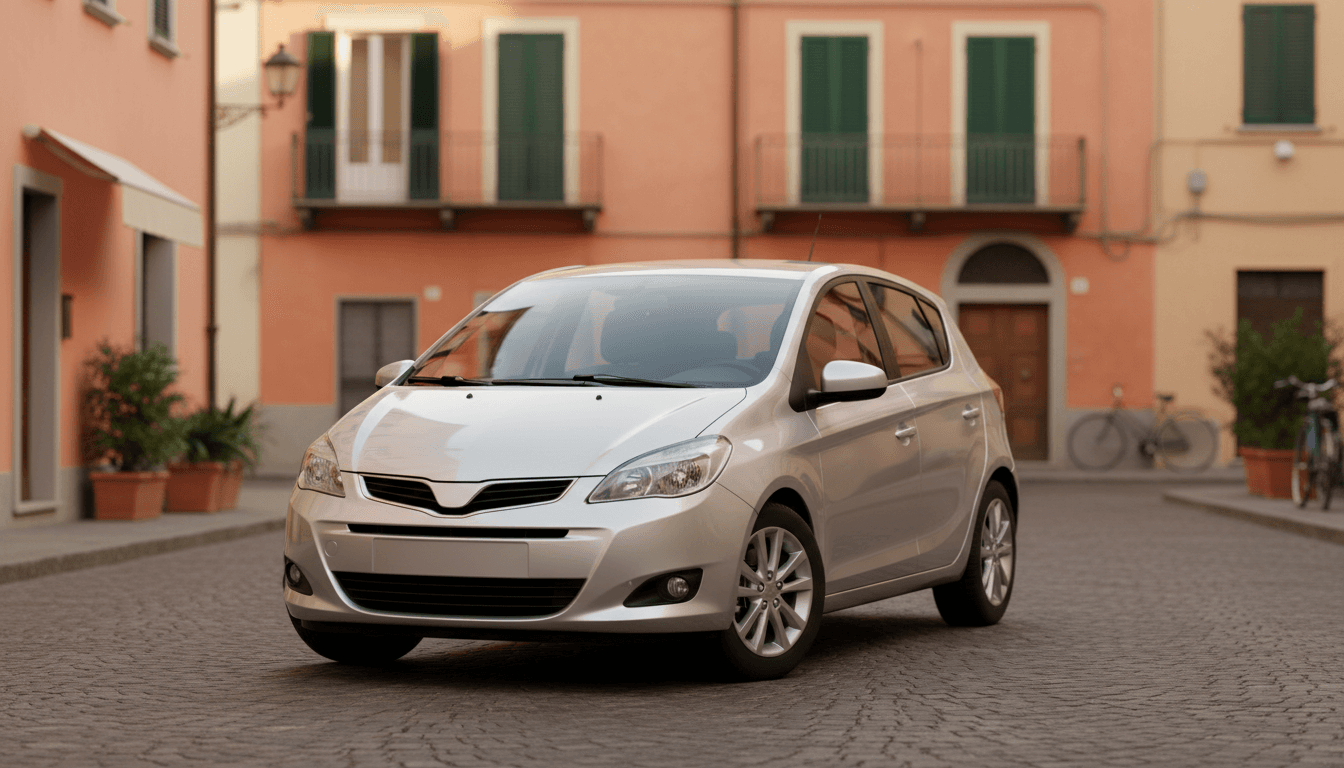
Over the past few weeks, searches around auto ibrida - how it works, when it's not worth it, what it means, cheap options, used ones - have been among the most frequent in the Italian automotive space. That is not a coincidence. The first stage of the Euro 7 regulation takes effect on 29 November 2026, fuel prices remain a sore spot, and more households are eyeing used hybrids as a middle ground between the cost of a pure EV and the running costs of a purely combustion car [4]. The trouble is that most listings sell hybrid as a single label, when it actually covers three quite different technologies, each with its own upside and its own trap.
Mild, full and plug-in are not the same car
The difference is mechanical, not marketing. A mild hybrid uses its electric motor only to assist the combustion engine during acceleration or coasting - it never moves the car on electric power alone, so the saving is real but modest, and the premium over an equivalent petrol car tends to be lower [1]. A full hybrid, like the systems Toyota or Honda use, can actually drive short stretches on electric power alone, typically in traffic or at low speed, recharging its own battery on the move; it is the simplest compromise to live with because it never needs a plug [1] [2]. A plug-in hybrid carries a far larger battery, with a claimed electric range of roughly 40 to 100 km, and it only makes sense if you actually plug it in: drive more than about 70 km a day without ever charging it, and you end up hauling a heavy battery pack around while burning more fuel than a conventional car [2].
When it pays off, and when it doesn't
A full hybrid is the safest bet for anyone doing mostly city driving and stop-and-go traffic, where the electric motor kicks in constantly [1] [2]. A plug-in only makes sense for short daily trips paired with disciplined overnight charging; used without that discipline, most of its advantage evaporates [2]. On the motorway, where the electric motor contributes little, the gap between all three technologies narrows sharply, and aerodynamics and engine displacement end up mattering more than the hybrid badge on the tailgate [2]. In other words, if your driving is mostly long, steady-speed stretches on the autostrada, a good late-model used diesel or petrol car may actually serve you better.
The question that matters most on a used hybrid: the battery
It's the first worry for anyone shopping a used hybrid, and it's a fair one. A traction battery lasts eight to ten years on average, but newer lithium-cell packs, if properly maintained, can outlast twelve years of service [5]. Electric motors carry fewer wear parts than a conventional combustion engine, and Toyota's full-hybrid system remains the reference point for documented long-term reliability, with the Yaris and Corolla Hybrid the most cited examples [5]. Most manufacturers back the battery itself with a dedicated warranty, often running eight to ten years or up to a mileage cap [5] [6]. One figure worth watching going forward: Euro 7 will introduce minimum battery-durability requirements for EVs and plug-in hybrids specifically - at least 80% of original capacity after five years or 60,000 miles, and 72% after eight years or 100,000 miles [4]. Those rules won't apply retroactively to today's full and mild hybrids, but they show where regulators' attention is heading.
Road tax is still a regional patchwork
From 1 January 2026, anyone with a personal annual income up to €8,000 can apply for a full road-tax (bollo) exemption regardless of what fuel their car uses - it isn't automatic, and requires documentation filed with the relevant regional office [3]. For hybrids first registered from 2022 onward, the dedicated discounts still apply, valid for five years from first registration, but they vary enormously by region: Campania offers a 50% discount on the bollo for hybrids, plus a three-year full exemption for new registrations; Lombardy and Piedmont apply a 50% reduction for the first five years, but only for hybrids with a combustion engine up to 100 kW; in Friuli-Venezia Giulia, Tuscany, Emilia-Romagna, Umbria, Molise, Calabria and Sardinia, by contrast, hybrids pay the same bollo as a conventional car, with no discount at all [3]. Before buying a used hybrid, it is worth checking the rules where you, the owner, actually reside - not where the car happens to be registered, since bollo is levied on the owner's region.
What to check before you sign
On the 2026 used market, budget hybrids under €15,000 are available, including recent-year Yaris and Clio hybrids, while something like a Nissan Qashqai e-Power runs roughly €21,500 to €26,000 for 2022-2024 examples [8] [7]. Before buying, have the battery's state of health (SoH) read out with a dedicated diagnostic tool at a garage or dealer, check for uneven tyre wear (an indirect clue to how the car was actually driven), inspect the underbody around the battery pack for impact damage, and - for plug-ins specifically - ask for the charging history if it is available, because a plug-in that was never plugged in essentially spent its life as a petrol car dragging around a heavy battery [6] [7].
The takeaway
A used hybrid makes sense in 2026 when the technology actually matches how you drive: full hybrid for city use, plug-in only if you genuinely charge it every day, mild hybrid as an affordable middle ground on mixed routes. It makes less sense for anyone living mostly on the motorway, where the advantage thins out fast. And two things are always worth checking before you sign: the battery's real health, and your region's specific bollo rules - both can move the true cost of ownership far more than the price on the listing.
Sources
- Hybrid: differenze tra mild, full e plug-in - Autobro
- Auto ibrida: quando conviene e quando non conviene (2026) - Elettrico per Tutti
- Bollo auto ibride: le esenzioni in vigore nel 2026 - Segugio.it
- Normativa Euro 7 per le auto: quando entra in vigore e in cosa consiste - alVolante.it
- Batterie delle auto ibride usate, durata e prezzo dei ricambi - Motorbox
- Acquisto auto ibrida usata: conviene? Guida ai pro e contro - Motorbox
- Auto ibride usate: 10 modelli da comprare nel 2026 - L'Automobile ACI
- Migliori auto ibride usate: i modelli più economici - AutoSuperMarket
Further reading
- Hybrid: differenze tra mild, full e plug-in — Autobro
- Auto ibrida: quando conviene e quando non conviene (2026) — Elettrico per Tutti
- Bollo auto ibride: le esenzioni in vigore nel 2026 — Segugio.it
- Normativa Euro 7 per le auto: quando entra in vigore e in cosa consiste — alVolante.it
- Batterie delle auto ibride usate, durata e prezzo dei ricambi — Motorbox
- Acquisto auto ibrida usata: conviene? Guida ai pro e contro — Motorbox
- Auto ibride usate: 10 modelli da comprare nel 2026 — L'Automobile ACI
- Migliori auto ibride usate: i modelli più economici — AutoSuperMarket
Related articles
600kW Chargers: What It Means for a Used EV
Electra is bringing 600 kW charging to the A4 and A10 motorways by 2027. But fast charging stresses batteries, here is what to actually check before buying a used EV.
Charging an EV at Night: How Much You Really Save
With September 2026 prices in hand: home charging in the F2/F3 time bands can save up to 826 euros a year versus petrol. But without a parking spot for a wallbox, the math changes completely.