600kW Chargers: What It Means for a Used EV
Electra is bringing 600 kW charging to the A4 and A10 motorways by 2027. But fast charging stresses batteries, here is what to actually check before buying a used EV.
The news: 600 kW chargers are coming to Italian motorways
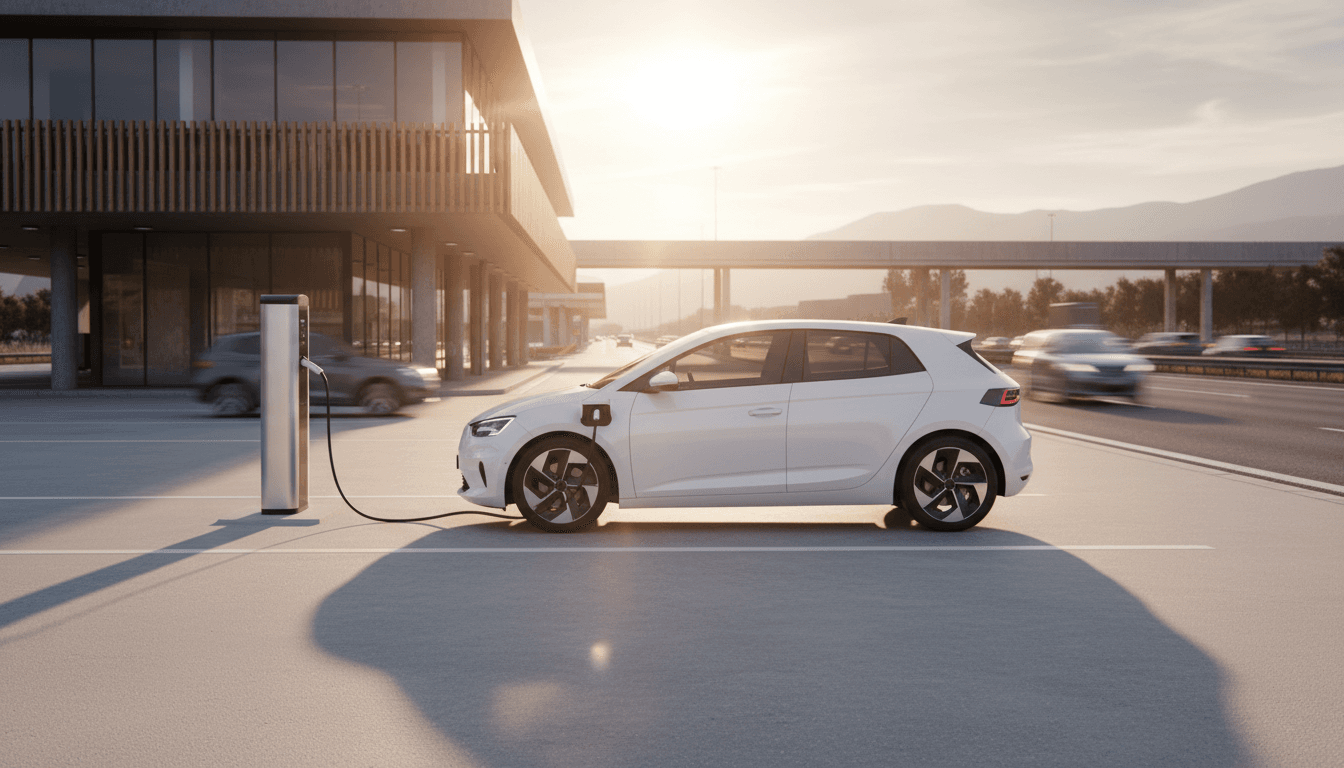
Ultra-fast charging is back in the headlines in Italy. Electra, the French high-power charging operator, has won three tenders to build its first motorway charging stations directly on the Italian network: one on the A4 Milan-Turin at the Novara Sud service area, and two on the A10 Genoa-Ventimiglia at Valleggia Nord and Borsana Sud. Each station will have two charging pillars for a total of twelve charging points, with power up to 600 kW per pillar; under ideal conditions, that means roughly ten minutes to go from 10% to 80% battery. Construction is due to finish by the first half of 2027 [1][4].
This is not a vague announcement. These are tenders already won, with specific locations and a stated delivery window, which makes them a much better indicator of where Italy's charging network is actually heading than any press release full of intentions.
It is not an isolated project
These three stations add to the 338 ultra-fast charging points (between 300 and 600 kW) that Electra has already installed across 11 Italian regions between early 2025 and June 2026, funded with roughly seven million euros from Italy's PNRR recovery plan [1][2]. It is just the latest piece of a much bigger expansion: according to Motus-E data from July 2026, Italy now counts over 84,500 public charging points, up 17,000 in twelve months, and more than half of them are fast or ultra-fast, as required under the EU's AFIR regulation [6].
Italy is already ahead of the European average
The AFIR regulation requires that, by the end of 2025, the main routes of the Ten-T network carry a high-power charging point at least every 60 kilometres, with prices displayed clearly before charging starts. By June 2026 Italy had already reached 89% coverage against that benchmark, compared with a 79% average across the continent [6]. For anyone driving an EV, that means the classic long-trip anxiety, finding a working, free charger before running dry, is fading fast, at least on the main corridors like the A4 and A10.
Charging faster is not always good for the battery
There is a flip side that rarely gets mentioned alongside the excitement over 600 kW chargers: rapid DC charging stresses a battery more than slow AC charging, mostly because of the heat it generates. That is not a minor detail if you are shopping for a used EV: how the car was charged during its first years on the road matters just as much as, if not more than, the number on the odometer.
What the Geotab data actually shows
The most solid reference here is Geotab's analysis of more than 22,700 electric vehicles across 21 brands, updated in January 2026: average annual battery degradation sits at 2.3%, up from 1.8% in the 2024 study. Vehicles that relied heavily on DC fast charging above 100 kW showed average degradation of 3.0% a year, versus roughly 1.5% for cars charged mostly on AC or lower-power chargers; hot climates add roughly another 0.4% of degradation a year on top. That said, Geotab itself notes these rates are still consistent with a battery lifespan well beyond 13 years, far longer than the average time a private owner keeps a car [5]. So this is not a scare headline, but a real factor worth weighing when you look at a used EV.
What this means if you are shopping for a used EV
The practical takeaway cuts both ways. On one hand, more ultra-fast chargers on the motorway network make a used EV a realistic option even for people who drive long distances, widening the pool of models worth considering, including smaller-battery cars that used to be a hard sell for anyone doing regular road trips. On the other hand, the easier and more convenient rapid charging becomes, the greater the temptation to rely on it for everyday top-ups instead of charging at home overnight, a habit that can accelerate battery wear in cars that are new today and will be on the used market in a few years. In short, the same chargers that make a used EV more usable now could be quietly wearing down the battery of the car someone will buy tomorrow.
A practical checklist before you buy
Before signing anything, ask the seller or dealer for a battery State of Health, or SOH, report: most manufacturers let owners pull a history from the brand app or the car's own infotainment system. An SOH above 90% after three to four years and 50,000-80,000 km is generally a good sign, while lower figures are worth negotiating on price or getting a second technical opinion about. It also helps to ask about the previous owner's charging habits, whether they mostly charged at home on AC or relied heavily on motorway fast chargers, since that context makes the SOH number much easier to interpret. Finally, check what is left of the battery warranty: most manufacturers cover 8 years or around 160,000 km, with a minimum residual capacity threshold that varies between 70% and 80% depending on the brand, and that coverage usually survives a change of ownership.
Bottom line
The new 600 kW chargers are good news for anyone driving, or thinking of buying, an EV: long trips are getting easier, and Italy's network is already among the most developed in Europe. But the power available at the charger should not distract from the fact that battery health also depends on how a car is actually charged day to day. On a used EV, the SOH report and the previous owner's charging habits matter just as much as, if not more than, a stamped service book.
Further reading
- Electra, in Italia 338 colonnine ultraveloci: entro il 2027 arrivano anche in autostrada — Quattroruote
- Da Electra 338 punti di ricarica veloce per auto in 11 regioni — ANSA
- Ricarica auto, arrivano colonnine da 600 kW in autostrada — InsideEVs Italia
- Electra ricarica in autostrada, in A4 e A10 — Vaielettrico
- Nuovi dati di Geotab mostrano che le batterie dei veicoli elettrici rimangono in buone condizioni nonostante l'aumento dell'uso della ricarica rapida — Geotab (GlobeNewswire)
- Colonnine ogni 60 km: cosa prevede il regolamento AFIR — Motorionline
Related articles
Charging an EV at Night: How Much You Really Save
With September 2026 prices in hand: home charging in the F2/F3 time bands can save up to 826 euros a year versus petrol. But without a parking spot for a wallbox, the math changes completely.
Used Electric Car: Battery Passport Arrives 2027
From 18 February 2027 every electric car battery sold in Europe will need a digital passport showing its health, charge cycles and carbon footprint. Here is what that already means for anyone buying or selling a used EV in Italy, now that the 2026 national incentive for new cars has run dry.