Recycled EV Batteries Now Outperform New Ones: What It Means for the Used Electric Car Market
A new process from the University of California San Diego turns spent LFP batteries into cells up to 28% denser than the originals, without the cost of traditional recycling methods. Here is what it actually means for anyone buying or selling a used electric car.
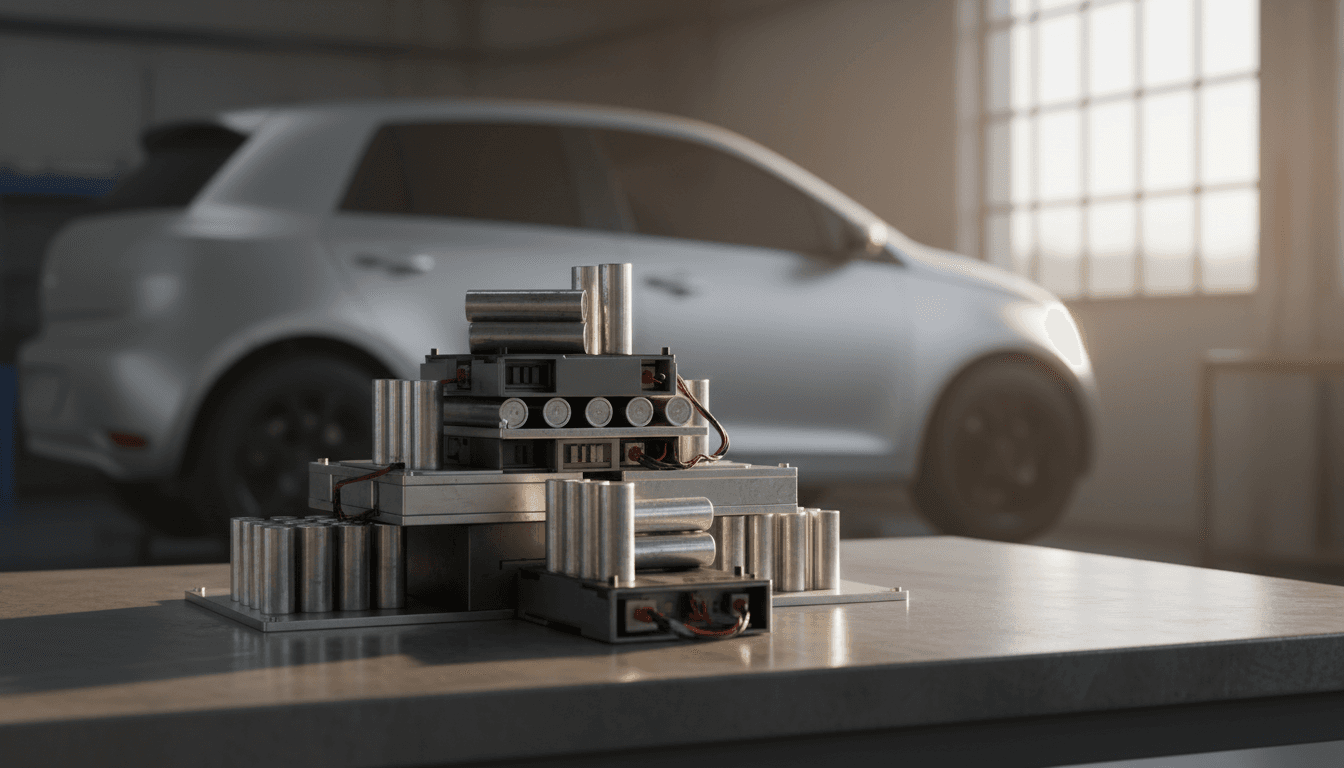
A recycling breakthrough that flips the old logic
For years, recycling a dead lithium battery meant, at best, getting back something worse than what you started with: a lot of energy spent separating lithium, iron and phosphate from aged cells, in exchange for a material that rarely matched the original's performance. In early July 2026, a team of engineers at the University of California San Diego published a process in the scientific journal Joule that turns this logic on its head [1][2]. Starting from spent LFP (lithium iron phosphate) cells — the chemistry now dominant in affordable electric cars and entry-level models, from certain Dacia Spring variants to standard-range Teslas and BYDs — the team developed a low-temperature treatment, running between 60 and 80 degrees Celsius at ambient pressure, that converts the exhausted cathode material into LMFP (lithium manganese iron phosphate). The result is striking: recycled cells capable of storing between 10% and 28% more energy than the battery they came from, while keeping the inherent safety and long service life LFP is known for [3][4].
How it actually works
The researchers call it upcycling rather than plain recycling, and the distinction matters. The process does not require breaking the battery down into individual chemical elements the way traditional pyrometallurgical or hydrometallurgical methods do — approaches that are slow, costly and fairly energy-hungry. Instead, the team works directly on the recovered cathode material, adding manganese and re-crystallising it at low temperature and ambient pressure, skipping the extreme-heat furnaces typical of extractive metallurgy. The energy savings over conventional recycling are significant, according to the study's authors, but the more interesting finding is different: the end product is not a diminished substitute, it is a material that outperforms the one it replaced. That is the difference between remaking a faded copy of an original and getting, quite literally, an upgraded version of a battery that just went out of service.
Why LFP chemistry is already everywhere in the affordable used market
The news lands at a moment when LFP chemistry has long stopped being a niche choice. Over the past three years, most entry-level electric cars sold in Europe — including several Chinese city cars and some base-spec Teslas — have adopted LFP cells precisely because they are cheaper, safer and longer-lived than nickel-manganese-cobalt chemistries, at the cost of somewhat lower range for the same weight and footprint. Anyone shopping the used market today for a first, budget-friendly electric car is therefore increasingly likely to run into this exact chemistry, often without knowing it precisely. Knowing there is now a proven industrial route for turning end-of-life LFP cells into a better-performing material, rather than scrap or second-tier recycled output, changes how you think about what actually happens to a battery once it leaves the car.
What it means for replacement costs
The point that matters most to anyone buying or selling a used electric car is, predictably, financial. The cost of a replacement battery pack remains today's biggest unknown holding back purchases of electric cars that are a few years old — a bigger deterrent, in practice, than vague fears about degradation itself. An upcycling process that is cheaper than traditional recycling, and that produces denser cathode material to boot, points toward two effects over time: more recycled material available to build replacement packs, and a lower production cost for whoever manufactures them at scale. This is not an overnight effect — the process has only just been published in a scientific journal, and the road from lab to industrial-scale production typically takes several years, as seen before with other announced chemistries — but it is a concrete signal in the direction the used-EV market has been waiting for: cheaper replacement batteries over time, not progressively more expensive ones, right as the installed fleet of electric cars ages and its first generations reach the used market in volume.
The Italian and European regulatory backdrop
The timing is not a coincidence. The new EU end-of-life vehicles regulation, in force since August 13, sets stricter recovery targets for materials in traction batteries once a vehicle reaches the end of its useful life. In parallel, the EU Battery Regulation (2023/1542) is phasing in, through 2027, mandatory minimum recycled-content requirements and a digital battery passport traceable across the whole supply chain. Against this increasingly demanding regulatory backdrop, Italy — which still lacks an industrial-scale EV battery recycling supply chain comparable to France's or Germany's — has good reason to watch technologies like this one closely: cheaper, less energy-intensive processes make it more realistic to build recycling plants on Italian soil, reducing dependence on shipping spent batteries abroad and the logistics costs that come with it.
Do not confuse this with solid-state batteries
Worth being precise here, because the two stories are easy to mix up: this is not a new chemistry for brand-new batteries, and it has nothing to do with the solid-state batteries being discussed for 2027-2028. This is an end-of-life technology, one that acts on the fate of cells already installed once they degrade below roughly 80% of original capacity and get pulled from the car. It will not make the battery currently sitting under the floor of a used electric car go any further. What it can do is meaningfully lower the cost of whatever eventually replaces it.
What to do today if you're buying or selling a used EV
If you're selling an electric car with an LFP battery: the chemistry remains a solid selling point, not a flaw to downplay in the listing. Longevity and safety have always been its strengths versus nickel-cobalt chemistries, and now its end-of-life economics have a better story to tell an informed buyer too. If you're buying: still get the battery's state of health (SOH) independently certified before signing anything, ideally with a diagnostic check at a workshop — but you can worry a little less about what comes after. If the battery does eventually need replacing, the market for recycled replacement packs is moving, gradually rather than overnight, toward lower prices and equal-or-better performance than the original — not toward the scenario that discourages many prospective used-EV buyers today, which is a replacement that is either impossible to find or prohibitively expensive.
Further reading
[1] UC San Diego Today — Spent EV Batteries Get Second Life as Higher-Performance Battery Material — https://today.ucsd.edu/story/spent-ev-batteries-get-second-life-as-higher-performance-battery-material — July 1, 2026 [2] TechXplore — Spent EV batteries get second life as higher-performance battery material — https://techxplore.com/news/2026-07-spent-ev-batteries-life-higher.html — July 1, 2026 [3] R&D World — UC San Diego engineers found a short-cut to higher-energy recycled EV batteries — https://www.rdworldonline.com/uc-san-diego-engineers-found-a-short-cut-to-higher-energy-recycled-ev-batteries/ — July 2, 2026 [4] Rinnovabili.it — Upcycling Batterie LFP, dagli scarti nuove batterie più performanti — https://www.rinnovabili.it/economia-circolare/riciclo/upcycling-batterie-lfp/ — July 3, 2026
Further reading
- Spent EV Batteries Get Second Life as Higher-Performance Battery Material — UC San Diego Today
- Spent EV batteries get second life as higher-performance battery material — TechXplore
- UC San Diego engineers found a short-cut to higher-energy recycled EV batteries — R&D World
- Upcycling Batterie LFP, dagli scarti nuove batterie più performanti — Rinnovabili.it
Related articles
600kW Chargers: What It Means for a Used EV
Electra is bringing 600 kW charging to the A4 and A10 motorways by 2027. But fast charging stresses batteries, here is what to actually check before buying a used EV.
Charging an EV at Night: How Much You Really Save
With September 2026 prices in hand: home charging in the F2/F3 time bands can save up to 826 euros a year versus petrol. But without a parking spot for a wallbox, the math changes completely.