Hybrid Cars in Italy: When They Don't Pay Off
Almost one in two new cars sold in Italy in 2026 is a hybrid, but the price premium doesn't pay off for everyone. Here's who actually benefits, and who is better off with petrol, diesel or LPG.
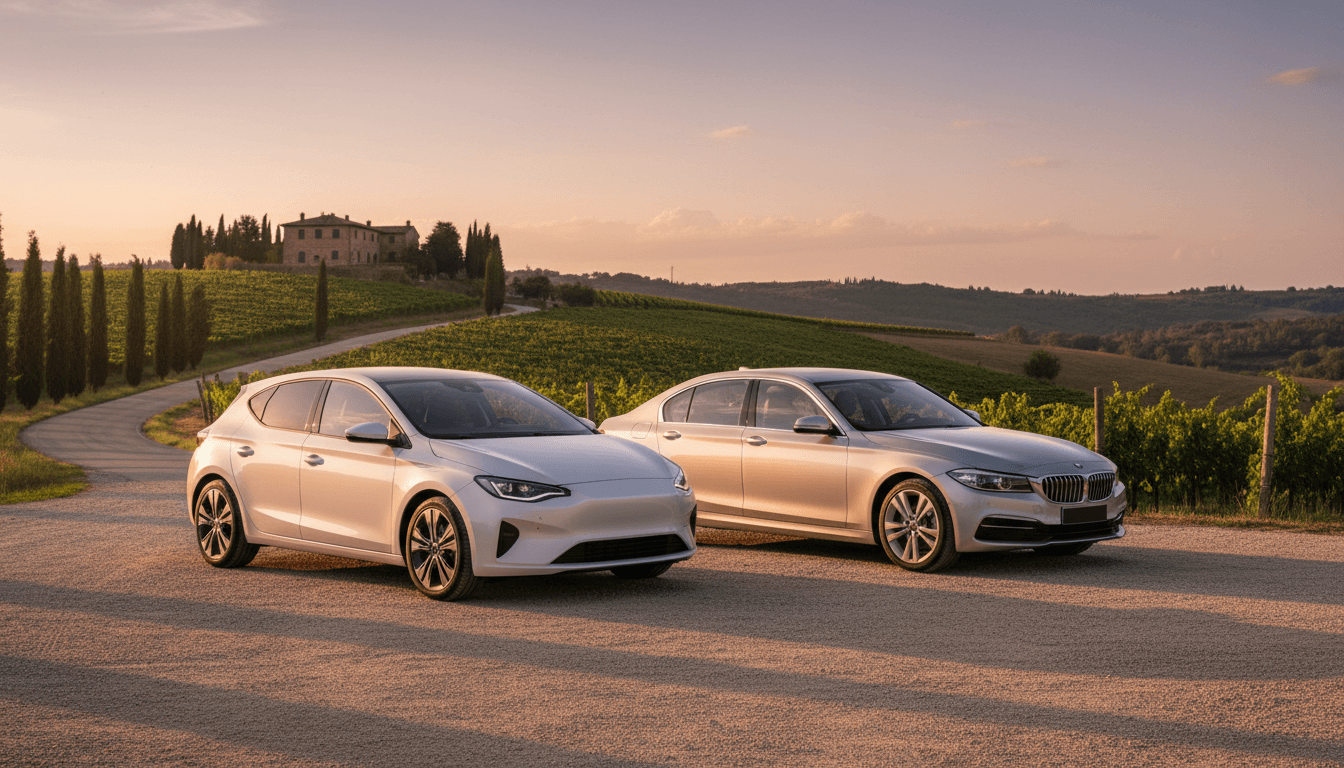
Nearly one new car in two sold in Italy is now a hybrid
Italy's new-car registrations rose 3.9% in July 2026, and UNRAE revised its full-year forecast upward to 1.61 million units [1]. Buried in that figure is the real story: non-plug-in hybrids alone now sit around 47-49% of the market, and plug-in hybrids are accelerating too, past 10% of new registrations [1]. In practice, dealers push the hybrid almost by default, regardless of how the car will actually be driven.
That's the problem. Hybrid technology is excellent for one kind of driving and mediocre for another. Buying one because it's trendy, or because it happens to be the version sitting on the lot, often means paying a premium that never comes back.
Where hybrids genuinely win
A hybrid's strength is regenerative braking and low-speed electric driving. In city traffic, between traffic lights and stop-and-go queues, the combustion engine shuts off frequently and the battery recovers energy on every deceleration. That's where a full hybrid can burn up to 50% less fuel than an equivalent petrol car, with typical mixed-cycle figures between 4.1 and 4.8 l/100 km. Drivers doing urban or light suburban commuting, averaging 10,000 to 20,000 km a year, are the ones who recoup the extra purchase cost fastest and keep saving for years afterward.
The weak point: motorway driving
At a constant cruising speed the picture flips. Above roughly 100-110 km/h the electric motor contributes little: there's no braking to recover energy from, and the combustion engine has to do almost all the work while still dragging around the extra weight of the battery pack and electric components. The result is that a full hybrid's motorway fuel consumption can match, or even exceed, that of a modern Euro 6 diesel, which stays efficient at constant speeds. Anyone covering a lot of motorway kilometres — sales reps, long-distance commuters, frequent out-of-town drivers — often finds no practical hybrid advantage over a good diesel, or even an LPG-converted petrol car.
Low annual mileage? The premium never pays back
Even light drivers should run the numbers before choosing a hybrid. Below about 8,000-10,000 km a year, the fuel savings — roughly 300 euros a year versus an equivalent petrol car in mostly urban use — aren't enough to recover the 2,000-4,000 euro price gap between a hybrid trim and its petrol equivalent within a reasonable time. In these cases, a modern petrol car, ideally with a factory LPG option, is usually the more rational economic choice, even if it's the less fashionable one.
The excise-tax landscape changed: diesel is no longer public enemy number one
Since January 1, 2026, Italy has equalised excise duty on petrol and diesel at 672.90 euros per thousand litres, cutting the petrol rate by 4.05 cents a litre and raising diesel by the same amount, closing a tax gap the government judged environmentally harmful [2]. The practical effect is that diesel's old structural advantage at the pump has shrunk, and at times through the year diesel has cost as much as, or more than, petrol. That doesn't erase diesel's fuel-efficiency edge on long, steady drives, but it changes the overall math: with summer 2026 fuel costs estimated to run up to 1.5 billion euros higher for Italian drivers as a whole [3], every fuel-type decision needs to be recalculated on today's prices, not on what things cost two or three years ago.
The cost nobody budgets for: the battery once the warranty expires
Hybrid battery-pack warranties typically run 5-8 years or 100,000-160,000 km, depending on the manufacturer. The trouble starts after that: an out-of-warranty replacement for a mild-hybrid system can cost around 1,250 euros, while a plug-in hybrid traction battery, like the one in a Mitsubishi Outlander PHEV, can run to roughly 5,100 euros before labour and VAT [4]. Anyone keeping a car long-term, past 8-10 years, or buying a used hybrid already out of warranty, should factor in this residual risk. Battery failure before 200,000 km is uncommon, but when it happens the bill is far from symbolic, and it's a cost a well-maintained petrol or diesel car simply doesn't carry.
The real numbers, kilometre by kilometre
Using the official ACI cost tables cited by the trade press for a 15,000 km annual mileage, yearly running costs come out to roughly 1,695 euros for a petrol car, 1,211 euros for an efficient diesel, and between 1,011 and 1,271 euros for a hybrid, depending on the model [5]. The interesting part is that diesel, even with excise duty now equal to petrol's, still often competes with hybrids at medium-to-high mileage, precisely because its fuel-efficiency advantage holds steady regardless of road type, while a hybrid's advantage depends heavily on how much time you actually spend in stop-and-go traffic.
Who should probably skip the hybrid
In short, the hybrid premium risks never paying off for three specific profiles: drivers who cover most of their kilometres on motorways or at constant speed, drivers doing under 8,000-10,000 km a year, and buyers hunting for the cheapest possible used car with no room for a battery surprise. For all three, an up-to-date petrol car, a well-maintained Euro 6 diesel, or an LPG conversion remain the more predictable choices on cost.
What to check if you still choose a used hybrid
If your driving really is urban or mixed and you decide on a used hybrid anyway, always ask for the service history of the hybrid system, check whether the manufacturer's battery warranty is still active and transferable to a new owner, and insist on a specific electronic diagnostic of the battery pack before you sign, not just a generic combustion-engine service check. These are details a private listing often won't mention, yet they can swing the car's real value by thousands of euros.
Bottom line
A hybrid isn't the wrong choice; it's the right choice only for a specific kind of use. Before you sign anything, work out your real annual mileage, the share of it spent on motorways, and how many years you plan to keep the car — those three variables, not this year's trend, are what actually decide whether a hybrid pays off.
Further reading
- UNRAE, Registrations up 3.9% in the Italian car market in July. 2026 forecast revised upward, https://unrae.it/sala-stampa/autovetture/7748/immatricolazioni-a-39-nel-mercato-auto-italiano-a-luglio-rivista-al-rialzo-la-stima-2026-a-1610-milioni-di-unita-55-sul-2025-il-mercato-cresce-la-vera-sfida-e-rinnovare-il-parco-circolante, August 3, 2026
- FIGISC, Changes to petrol and diesel excise duty from January 1, 2026, https://www.figisc.it/blog/2025/12/29/variazioni-accise-benzina-e-gasolio-dal-1-gennaio-2026-nota-figisc/, December 29, 2025
- ANSA, Fuel costs: summer 2026 could cost drivers up to 1.5 billion euros more, https://www.ansa.it/canale_motori/notizie/mondo_motori/2026/07/16/caro-carburante-estate-2026-potrebbe-costare-fino-15-miliardi-in-piu_307ce483-fe81-494e-be60-18915cd2ec43.html, July 16, 2026
- ComparaSemplice, How much do hybrid car batteries cost?, https://www.comparasemplice.it/informazioni/auto/quanto-costano-le-batterie-delle-auto-ibride, January 21, 2026
- Motor1 Italia, How to protect your company car budget from high fuel costs in 2026, https://it.motor1.com/news/791378/caro-carburante-auto-aziendale/, March 28, 2026
Further reading
- Immatricolazioni a +3,9% nel mercato auto italiano a luglio. Rivista al rialzo la stima 2026 — UNRAE
- Variazioni accise benzina e gasolio dal 1° gennaio 2026 - Nota FIGISC — FIGISC
- Caro carburante, estate 2026 potrebbe costare fino 1,5 miliardi in più — ANSA
- Quanto costano le batterie delle auto ibride? — ComparaSemplice
- Come difendere l'auto aziendale dal caro carburante nel 2026? — Motor1 Italia
Related articles
600kW Chargers: What It Means for a Used EV
Electra is bringing 600 kW charging to the A4 and A10 motorways by 2027. But fast charging stresses batteries, here is what to actually check before buying a used EV.
Charging an EV at Night: How Much You Really Save
With September 2026 prices in hand: home charging in the F2/F3 time bands can save up to 826 euros a year versus petrol. But without a parking spot for a wallbox, the math changes completely.