EV Incentives Have Dried Up: Italy's Electric Car Share Halved in July 2026, and Used Is Now the Smart Bet
With the PNRR bonus closed since June 30, Italy's EV market share collapsed from 10.2% to 5.9% in a single month. Waiting for the next incentive round is a gamble; a well-vetted used EV, whose road-tax exemption transfers with the car, is the steadier move right now.
The signal from July 2026
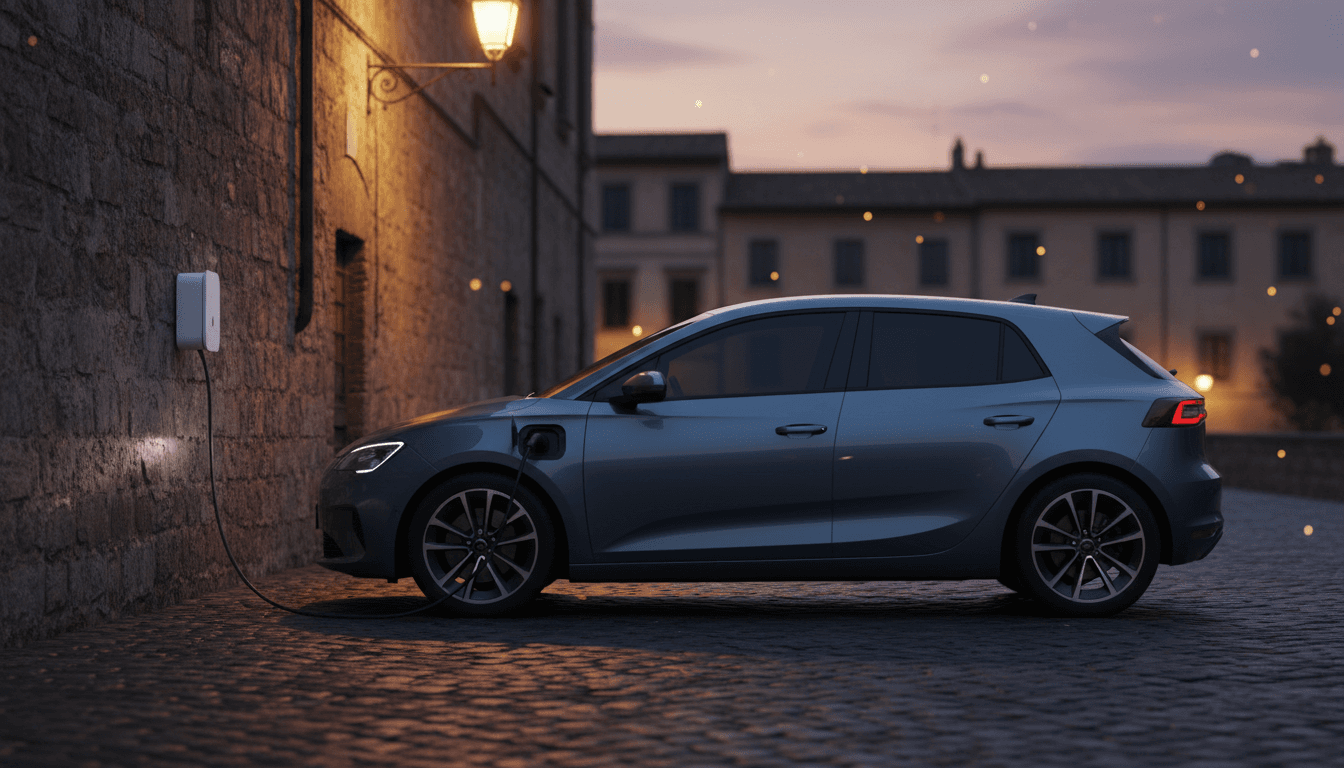
At the end of June 2026, Italy's PNRR bonus for electric cars closed its window. Between October 2025 and June 2026 it had offered up to 11,000 euros to anyone scrapping an old car and buying a zero-emission one. The effect showed up immediately in the numbers: according to data from Motus-E and Unrae, reported by Quattroruote, pure electric cars hit a peak of 10.2% of the Italian market in June; by July, the month after the bonus closed, that share had fallen to 5.9%. Registrations are still up year over year (more than 7,300 units, nearly 25% higher than July 2025), but the month-over-month drop makes clear how dependent the Italian EV market remains on public incentives, far more than France or Germany, where electric share stays reliably above 28-30% without this kind of swing.
Why the bonus is gone, and what is still active
The PNRR bonus, run by the Ministry of Environment and Energy Security through the Sogei platform, had a budget of roughly 597 million euros and ended on June 30, 2026, with no reopening announced so far for private cars. What remains active, through December 31, 2026 unless funds run out sooner, is the ordinary MIMIT Ecobonus, but with different amounts and eligibility, and a recent track record of funding pools emptying within hours of opening, exactly as happened with the commercial-vehicle ecobonus and the electric-scooter ecobonus. Motus-E and Unrae are now calling for structural measures, in particular a reform of company-car taxation, to stabilize demand instead of leaving it hostage to incentive windows that open and close within a day.
The real question is not when, but whether waiting even pays off
Anyone shopping for an electric car right now faces an uncomfortable bet: wait for a new scheme, with an uncertain opening date, funding that can vanish within hours, and ISEE and scrappage requirements that are not trivial to meet, or move now. Nobody can say with any confidence when the next private-car bonus will arrive, or how long it will last. On a new car, that uncertainty weighs heavily on the final price. On a used electric car, that variable simply does not exist: the price is already set by the market, with no click-day lottery to win first.
Used EVs: the road tax exemption follows the car, not the owner
One detail many buyers overlook actually works in favor of used cars: Italy's five-year road-tax (bollo) exemption for electric vehicles is tied to the car itself, not to whoever owns it. Buy a two-year-old EV and you automatically inherit the remaining three years of exemption, no application required. In some regions, notably Lombardy and Piedmont, the exemption extends beyond the standard five years and is effectively permanent, a perk that carries over to the next owner regardless. It is a quiet, concrete benefit that no state incentive can take away or let expire overnight.
What to actually check before buying
The real risk with a used EV is not the bollo or a missed incentive, it is the battery, which typically represents 40-50% of the car's value. The number to always ask for is the State of Health, or SoH: above 85% the battery is in good shape, below 75% real-world range starts becoming a daily inconvenience, especially for anyone doing long trips regularly. Many manufacturers offer battery warranties up to 8 years or 160,000 km, and within that window a well-managed battery typically retains 85-92% of its original capacity; before signing, it is always worth confirming that this warranty transfers to a second owner, which is almost always the case but should be checked in writing rather than assumed.
The sweet spot: 2 to 4 years old, 50,000-80,000 km
Industry experts converge on a fairly precise sweet spot: electric cars between two and four years old, with 50,000-80,000 km on the clock and a SoH above 90%. In that band, prices typically run about 35% below the equivalent new car, four to six years of battery warranty remain, and the fast-charging hardware is already modern, with peak DC rates of at least 100 kW. These are the first wave of EVs sold between 2020 and 2023 now reaching the used market, often still under original warranty, a supply that simply did not exist at this scale even a couple of years ago.
The practical details worth not forgetting
Before closing the deal, always ask whether a home wallbox and charging cable are included in the sale: an original Type 2 cable runs 200-400 euros, and a 7.4 kW home wallbox starts around 400 euros, figures that can meaningfully change whether the deal is actually a good one. For purchases above 15,000 euros, buying from a professional dealer provides conformity protections a private seller cannot match, hardly a minor point when the most expensive component of the car, the battery, cannot be assessed by eye.
The practical takeaway
July's collapse in market share is not a sign that electric cars do not work in Italy, it is a snapshot of a market still too dependent on incentives that open and close without reliable warning. For anyone who genuinely needs to change cars now, chasing the next scheme is a bet with uncertain timing and uncertain terms; a well-vetted used EV, checked on SoH and battery warranty, with its road-tax exemption continuing to follow it without needing a single euro of state support, remains the steadier way into electric driving today, without waiting on a window nobody can promise will open.
Further reading
- Mercato auto italiano luglio 2026: crescono le immatricolazioni, rallentano le elettriche — Quattroruote
- Auto elettriche, il mercato frena senza gli incentivi — Il Tempo
- Incentivi auto elettriche finiti: cosa succede ora, cosa resta attivo e cosa chiede la filiera — Auto361
- Bollo auto elettriche: chi paga, quanto costa e quali regioni lo azzerano — AutoScout24
- Auto Elettriche Usate 2026: Conviene Davvero? Prezzi Crollati, Batterie da Controllare e i Modelli Migliori da Comprare Ora — MotoreUsato.com
Related articles
600kW Chargers: What It Means for a Used EV
Electra is bringing 600 kW charging to the A4 and A10 motorways by 2027. But fast charging stresses batteries, here is what to actually check before buying a used EV.
Charging an EV at Night: How Much You Really Save
With September 2026 prices in hand: home charging in the F2/F3 time bands can save up to 826 euros a year versus petrol. But without a parking spot for a wallbox, the math changes completely.