Italy's EV Charging Network in 2026: What Used-EV Buyers Really Need to Know
Italy just hit a record 84,564 public charging points. For anyone shopping for a used EV, what matters more is the AC/DC mix, where those chargers actually sit, and what charging really costs.
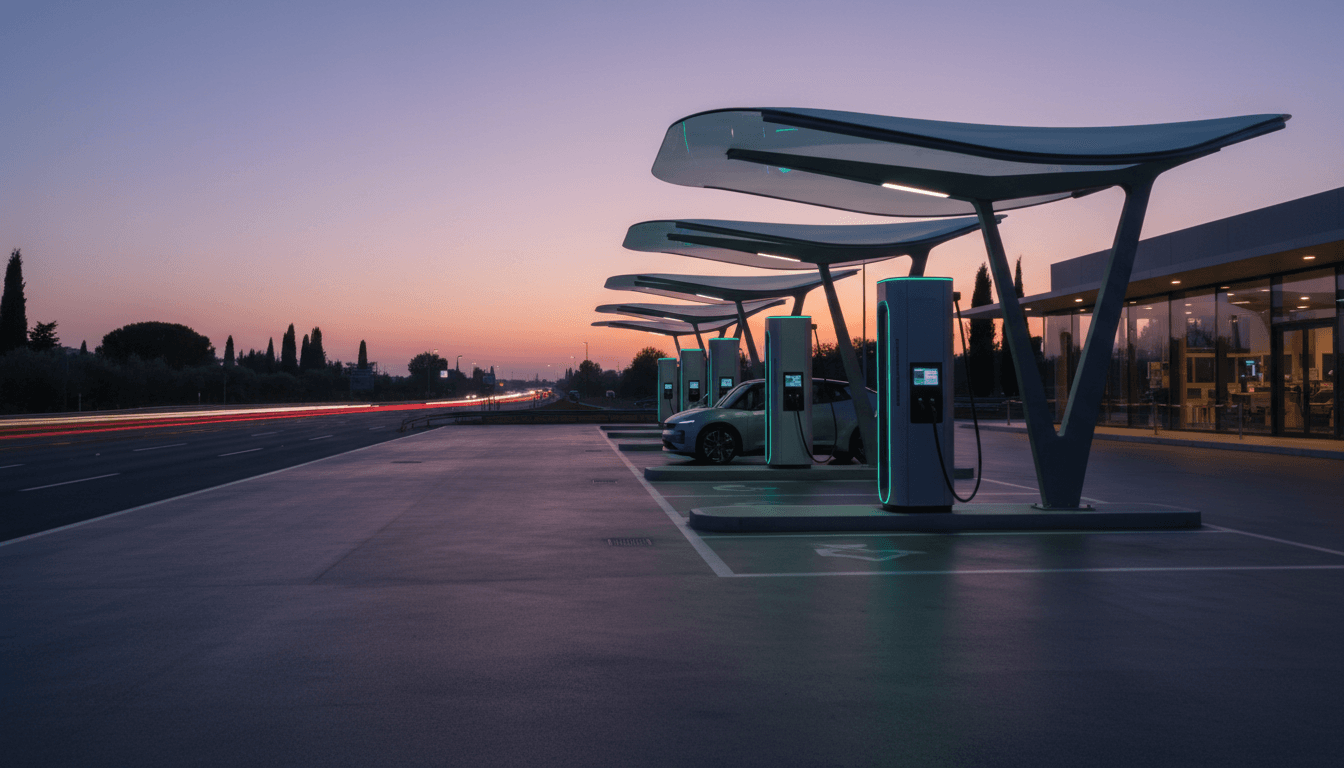
The headline number: 84,564 charging points
By the end of June 2026, Italy had reached a new milestone: 84,564 public charging points nationwide, according to the latest quarterly report from Motus-E, the industry association that tracks Italy's EV charging infrastructure [1]. The second quarter of 2026 alone added 6,311 new points, and the network grew by 17,003 points over the previous twelve months. Those are genuinely strong growth numbers, but for anyone shopping for a used electric car, the more useful question is not how many chargers exist nationally, but where they are, what kind they are, and what they actually cost to use.
AC or DC? The mix matters more than the total
Not all charging points are created equal. Motus-E's first-quarter 2026 data counted 78,253 registered points, 68,153 of them actually active, split between 55,451 AC points up to 22 kW, 15,859 fast DC points under 150 kW, and 6,943 ultra-fast DC points at 150 kW and above [2]. DC now makes up 29.1 percent of the network, up 6.3 percentage points year over year, and the ultra-fast segment is growing at roughly twice the rate of the rest of the network. For someone driving a used EV day to day, that split has a very practical meaning: AC charging remains the most common option, useful while you shop or work, while how comfortable your longer trips will be depends on how much DC capacity has actually reached your neighbourhood and the routes you drive most.
Where the chargers really are
Geographic distribution is still lopsided. An InsideEVs Italia analysis of Motus-E's June 2026 figures put Lombardy at the top of the regional rankings with 18,177 charging points, ahead of Piedmont at roughly 7,574, Veneto at roughly 7,413, Lazio at roughly 6,985, and Emilia-Romagna at roughly 6,366 [3]. At the provincial level, Milan leads with 7,423 points, up more than 2,800 over the past year, followed by Rome with 6,109, Turin with 4,498, Naples with 3,470, and Brescia with 2,489. Buy a used EV for daily driving in a large northern city and you will find a genuinely dense network; buy one in a smaller town in central or southern Italy and coverage is still noticeably thinner, despite PNRR recovery funds specifically earmarked to close that gap.
The motorway test: the real proving ground for a used EV
For anyone weighing a used EV for longer trips too, the most telling figure is on the motorway network. Highway charging points reached 1,516 in June 2026, up from 1,159 in June 2025 and just 963 in June 2024 [1]. Of those, 86 percent are DC and 59 percent deliver more than 150 kW, meaning stop times are dramatically shorter than they were two years ago. That shift is quietly making mid-range used EVs, roughly 40 to 60 kWh batteries, far more workable for weekend trips out of town than they were in 2023 and 2024, when queuing for a slow charger was still a common complaint.
The detail almost nobody checks: phantom chargers
One number worth knowing before you trust a charging map app blindly: Motus-E reports that 12.3 percent of registered charging points as of June 2026 were still waiting to be connected to the grid, meaning they show up as installed but cannot actually be used [1]. That is down from 14.9 percent in 2025, which is progress, but it is still a meaningful margin of error. Before a long trip in a used EV, it is worth checking a charger's live status through the operator's own app rather than trusting its presence on a map alone.
What charging actually costs
Cost is often the deciding factor for anyone moving to a used EV. Analysis from Quotidianomotori puts home wallbox charging at roughly EUR 0.25 per kWh on a standard domestic tariff, dropping to EUR 0.15-0.18 per kWh on time-of-use rates during evening and overnight hours [6]. Public AC charging runs EUR 8-11 per 100 km, while fast public DC charging without a subscription can reach EUR 13-16 per 100 km. A full charge that costs around EUR 13 at home can run as high as EUR 39 at an ultra-fast public station with no membership plan. The Adiconsum-TariffEV pricing observatory's July 2026 figures back this up, tracking an average public tariff of EUR 0.63 per kWh for AC and EUR 0.74 per kWh for DC and HPC across twenty AC and twenty DC operators [5]. Anyone who charges in public regularly should seriously weigh a subscription with a single network operator over paying pay-as-you-go rates every time.
The EU rules quietly changing the picture
On the regulatory side, 2026 is a turning point. The EU's Alternative Fuels Infrastructure Regulation, known as AFIR, sets charging-coverage targets tied to each member state's EV fleet size, and by mid-2026 every EU country except Malta is meeting those targets [4]. On the practical side, Plug and Charge, based on the ISO 15118-2 standard, became mandatory for new public AC charging points from 8 January 2026, and from 14 April 2026 operators must share real-time availability data in the DATEX II format, which should make charging-map apps meaningfully more trustworthy. Over time, that should help close the exact phantom-charger gap described above.
What this means if you are buying a used EV now
Put together, the picture for used-EV shoppers in 2026 is more encouraging than the headline charger count alone suggests. The network is expanding, fast charging is growing faster than the network overall, and new EU rules are making charger-location data more reliable. Still, two checks are worth doing before you buy: confirm how many DC chargers genuinely sit within your daily driving radius, since the regional total alone will not tell you that, and work out whether you have access to home or building charging, which remains by far the cheapest way to run an EV. When browsing a used-EV listing on VendiVoce, it is worth cross-checking the seller's stated range against the DC charger density in your own area. That comparison, more than the asking price, tells you whether the car will actually fit your daily life.
Sources
- Motus-E, Auto elettriche: record in Italia per le nuove colonnine di ricarica, tutti i dati aggiornati (July 2026) - motus-e.org
- Quattroruote, Motus-E data on charging points, Q1 2026 (May 27, 2026) - quattroruote.it
- InsideEVs Italia, regional and provincial EV charging data 2026 - insideevs.it
- electrive.com, Only one EU country misses AFIR charging target (July 20, 2026) - electrive.com
- Adiconsum, charging tariff price observatory, July 2026 tables - adiconsum.it
- Quotidianomotori, home vs public EV charging cost, 2026 pricing - quotidianomotori.com
Further reading
- Auto elettriche: record in Italia per le nuove colonnine di ricarica, tutti i dati aggiornati — Motus-E
- Colonnine di ricarica, i dati Motus-E del primo trimestre 2026 — Quattroruote
- Ricarica auto elettriche: regioni e province a confronto nel 2026 — InsideEVs Italia
- Only one EU country misses AFIR charging target — electrive.com
- Mobilita elettrica: le tabelle di luglio 2026 dell'Osservatorio prezzi delle tariffe di ricarica — Adiconsum
- Costo ricarica auto elettrica: casa o colonnina, i prezzi 2026 — Quotidianomotori
Related articles
600kW Chargers: What It Means for a Used EV
Electra is bringing 600 kW charging to the A4 and A10 motorways by 2027. But fast charging stresses batteries, here is what to actually check before buying a used EV.
Charging an EV at Night: How Much You Really Save
With September 2026 prices in hand: home charging in the F2/F3 time bands can save up to 826 euros a year versus petrol. But without a parking spot for a wallbox, the math changes completely.