EREV cars explained: the range-extender hybrids Hyundai is betting on for 2027, already on sale in Italy today
On 26 August 2026 Hyundai announced 41 new models for Europe and its first EREVs, range-extender hybrids that drive like an electric car. In Italy the technology is not science fiction: the Leapmotor C10 REEV is already for sale today. Here is what to know before buying one, new or used.
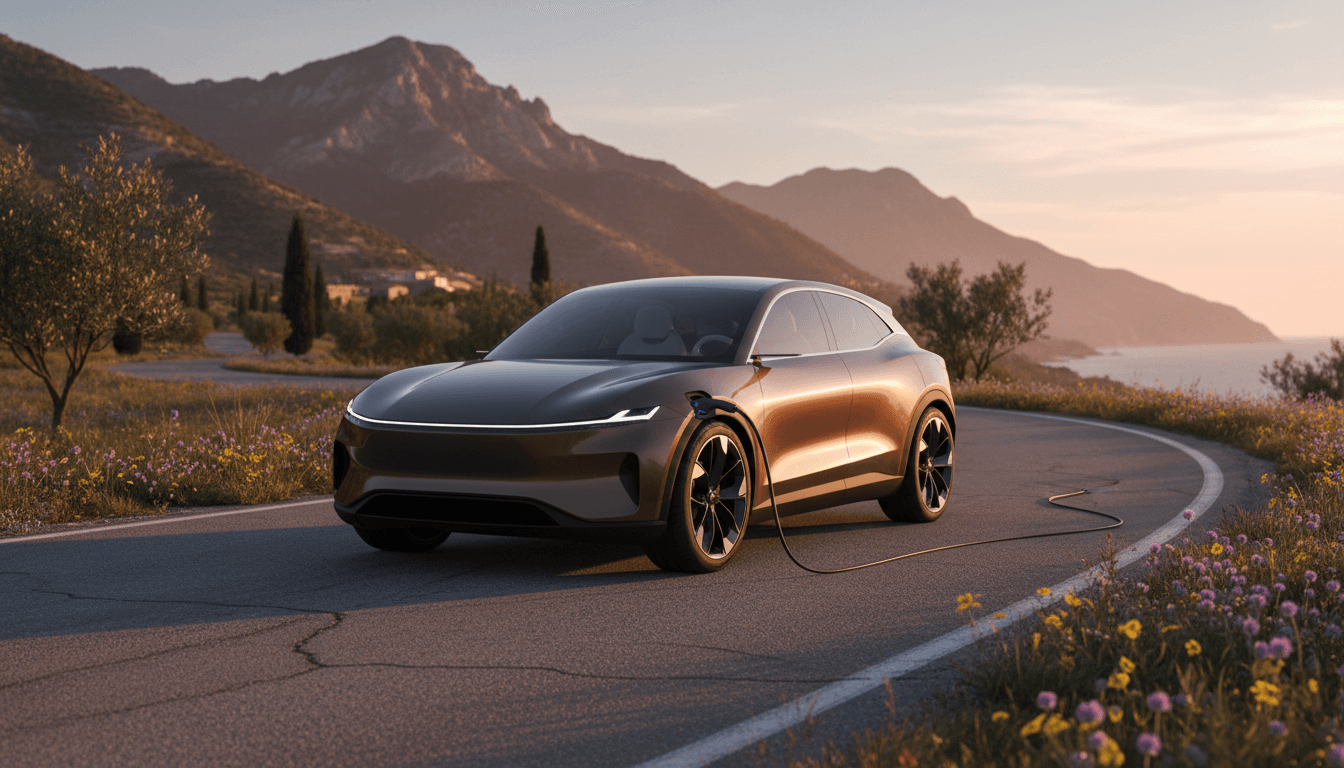
The announcement that shook the industry: 41 new Hyundai models for Europe
On 26 August 2026, at its CEO Investor Day, Hyundai unveiled the most ambitious product plan in its history: more than 100 new or refreshed models worldwide by 2030, 41 of them earmarked for Europe. The stated goal is to cover 85% of the European market with a fully electrified lineup, including five brand-new SUVs and light commercial vehicles. On the sales side, Hyundai wants to nearly quadruple its European EV registrations by 2030, reaching more than 420,000 units a year, up from 116,000 in 2025. This very month the new Ioniq 3 reached the market, with a claimed range of 497 km.
But the detail that grabbed the most attention among industry watchers was not about pure electrics at all. It was about a technology that not long ago looked like an afterthought: the EREV, or range extender.
Hyundai and Genesis's EREV debut
In the same announcement, Hyundai confirmed that its first EREV models, starting with the Santa Fe, will arrive in the first half of 2027, with a claimed combined range of more than 960 km. Genesis, the group's premium brand, will follow with its own EREV SUV over the same period, reportedly targeting a range beyond 1,000 km. It is a meaningful shift for a manufacturer that had, until recently, poured almost all of its resources into pure electrics — a sign that even the big generalist groups now see range-extender technology as a real answer to the range anxiety that still holds many European buyers back from going fully electric.
What an EREV actually is (and why it is not just another plug-in hybrid)
EREV stands for Extended Range Electric Vehicle, also known as a range extender or REEV. Unlike a conventional plug-in hybrid, where the combustion engine can drive the wheels directly alongside the electric motor, in an EREV the wheels are always and only driven by the electric motor. The petrol engine works purely as a backup generator: it kicks in only to recharge the battery when needed, and never sends mechanical power to the wheels. On paper, the result is the smooth, quiet driving feel of an electric car, with the reassurance of refuelling in minutes once the battery runs low, instead of having to hunt for a charging point.
In Italy, it is not science fiction — the technology is already on sale
Anyone who thinks EREVs are still a distant experiment far from Italian showrooms is mistaken. Leapmotor brought its C10 Range Extended EV to Italian dealerships in mid-April 2025, with a starting list price of 37,400 euros. The SUV pairs a 158 kW (215 hp) electric motor with a 1.5-litre combustion engine used solely as a generator, delivering a claimed electric-only range of 145 km and a combined range topping 970 km, with declared fuel consumption of just 0.4 l/100 km and CO2 emissions of 10 g/km. At launch, Leapmotor's Italian dealer network counted around 100 outlets, with a target of reaching 125.
2026 is the year plug-in hybrids go mainstream
Hyundai's move fits into a broader industry shift. According to an analysis published by Autoblog, more than 50 new plug-in hybrid and range-extender models are due to reach Europe in 2026, driven mainly by Chinese manufacturers such as BYD, Jaecoo, Lynk & Co and SWM, but also by European brands rethinking their own strategy. Volkswagen has also started production of its first range extender, though for now aimed mainly at the Chinese market — another sign that the technology is winning over manufacturers who had initially written it off in favour of pure electrics.
Buying an EREV today, new or used: what to check before signing
If you are weighing up an EREV, whether new or one of the first used examples starting to appear, a few things are worth checking carefully. First, compare the claimed electric-only range (typically 100-200 km) against your actual driving pattern: if most of your daily trips fall within that radius, you can drive almost entirely on electric power, charging at home or at work, and only lean on the combustion engine for longer journeys. Second, because this is still a young technology on the Italian market, there is no reliable track record on residual value yet: as with other recently introduced electrified technologies, it is reasonable to expect sharper depreciation in the early years, until the used market builds up enough trust and data. Third, it is worth checking the warranty coverage on the battery and the generator engine, as well as service-network coverage in your area, especially for brands that arrived in Italy relatively recently.
The takeaway
Hyundai's announcement marks a turning point: when even the big generalist groups choose the EREV format for their first European launches in this category, it signals the technology is moving out of the niche. In Italy, you can already drive an EREV today with the Leapmotor C10 REEV, and over the next two years the choice will multiply, between Hyundai and Genesis's plans and the more than 50 plug-in hybrid and range-extender models expected in 2026 alone. Anyone weighing a purchase should look closely at their own daily mileage, the warranty on offer and the local service network, rather than being swayed purely by the range figures on the spec sheet.
Sources
- Hyundai's model blitz is on: 41 new cars coming to Europe by 2030, Autocar, 26 August 2026
- Hyundai invests in product offensive with first EREV models, electrive.com, 26 August 2026
- Hyundai is about to shake things up with 100 new vehicles by 2030, Electrek, 26 August 2026
- Arriva in Italia il Leapmotor C10 Range Extended EV (REEV), Stellantis Media, 4 April 2025
- Leapmotor C10 REEV: prova, ibrido, range extender, consumo, prezzo, Motor1 Italia, 2025
- Ibride Plug-in, tutte le auto che arriveranno nel 2026: oltre 50, Autoblog.it, 21 November 2025
Further reading
- Hyundai's model blitz is on: 41 new cars coming to Europe by 2030 — Autocar
- Hyundai invests in product offensive with first EREV models — electrive.com
- Hyundai is about to shake things up with 100 new vehicles by 2030 — Electrek
- Arriva in Italia il Leapmotor C10 Range Extended EV (REEV) — Stellantis Media
- Leapmotor C10 REEV: prova, ibrido, range extender, consumo, prezzo — Motor1 Italia
- Ibride Plug-in, tutte le auto che arriveranno nel 2026: oltre 50 — Autoblog.it
Related articles
600kW Chargers: What It Means for a Used EV
Electra is bringing 600 kW charging to the A4 and A10 motorways by 2027. But fast charging stresses batteries, here is what to actually check before buying a used EV.
Charging an EV at Night: How Much You Really Save
With September 2026 prices in hand: home charging in the F2/F3 time bands can save up to 826 euros a year versus petrol. But without a parking spot for a wallbox, the math changes completely.