China Taxes Batteries and Cuts EV Incentives: What It Means for Buyers of Chinese Electric Cars in Italy
As of September 1st, China has introduced its first-ever consumption tax on lithium batteries and keeps dismantling EV incentives at home. The domestic market is cooling, exports to Italy are speeding up: Chinese brands already reached a 13.7% share of new registrations in August.
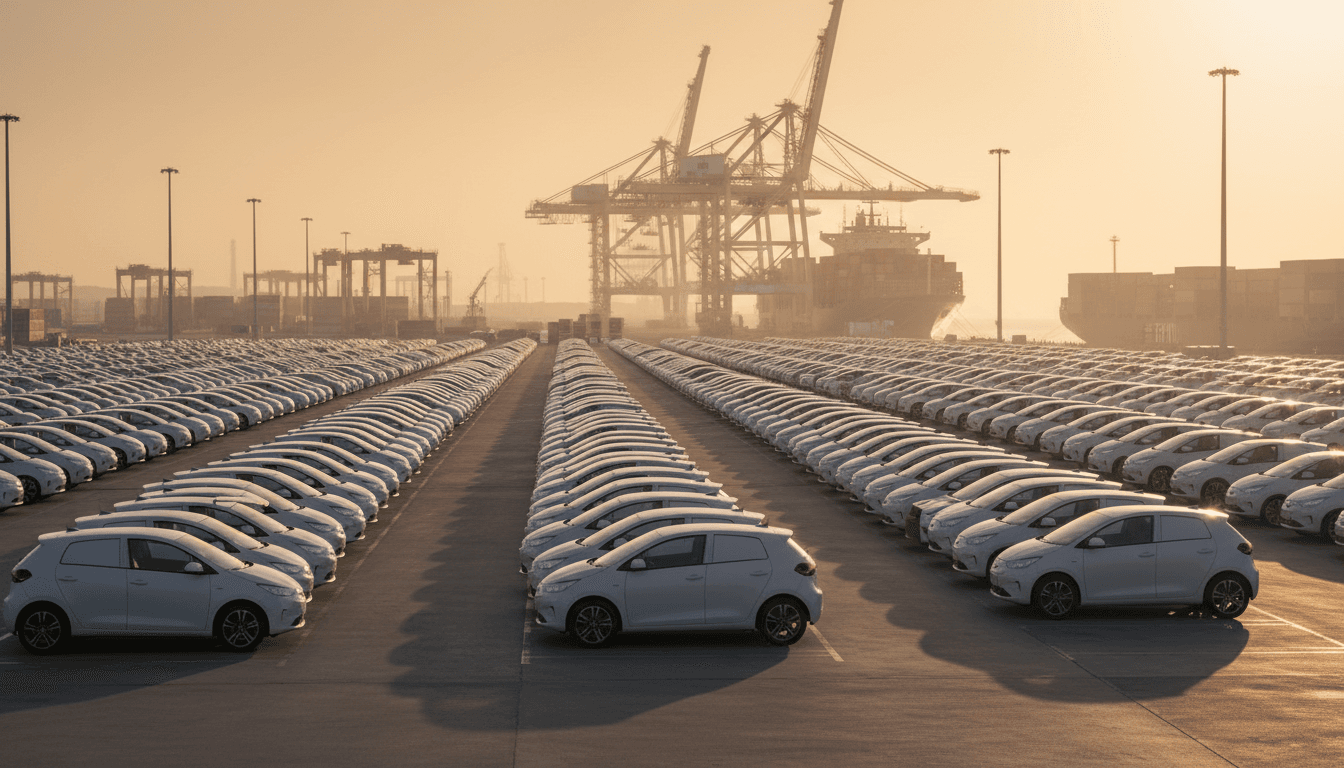
The End of an Eleven-Year Tax Break
As of September 1st, 2026, China has, for the first time, imposed a consumption tax on lithium battery makers: 2% right away, rising to 4% from September 2027 [1]. The move ends eleven years of full exemption and covers five cell categories — lithium-ion, primary lithium, nickel-metal hydride, mercury-free primary cells and vanadium redox-flow batteries — while sodium-ion batteries, qualified solid-state cells and fuel cells stay exempt through the end of 2028 [1] [2]. The message is unambiguous: Beijing wants to favour the next generation of chemistries, not just anything with a plug.
A Three-Stage Incentive Wind-Down
The battery tax is only the latest piece of a planned phase-out running from 2026 through 2028 [2]. Back in January 2026, the full purchase-tax exemption for battery-electric and plug-in hybrid vehicles was already replaced with a 50% discount, capped at 15,000 yuan (roughly 1,900 euros) per vehicle [2]. From January 1st, 2027, the remaining 50% break on the vehicle-and-vessel tax for low-consumption models, plug-ins and commercial vehicles included, disappears entirely [2]. Meanwhile the export VAT rebate on batteries, already cut from 9% to 6% since April 2026, drops to zero from January 2027. Purchase, ownership and export incentives are all moving in the same direction: making China's EV supply chain markedly less subsidised than it has been for a decade.
Sales Slow at Home, Exports Speed Up
The effect already shows up in the numbers: first-half 2026 sales of electrified vehicles in China fell 13%, to 4.73 million units, with the gradual removal of tax breaks cited as a direct driver [3]. For manufacturers, the obvious response to a cooling home market is the same one they have always reached for: sell abroad what is harder to move at home. Europe, Italy included, is the closest and most receptive destination, not least because European tariffs have done little to slow the growth, as the numbers below make clear.
Italy's Numbers: From a Sliver to 13.7% of the Market in Months
August 2026 data from UNRAE, Italy's carmakers association, capture the shift well: Chinese brands now account for 13.7% of the month's new registrations, up 92.1% over the first eight months of the year, with their combined share nearing 15% [4]. BYD alone registered 2,579 cars in August, almost ten times Tesla; among plug-in hybrids, six of the ten best-selling models are Chinese, together making up 38% of that segment [4]. Just months earlier, between January and April, BYD had grown 208% and Omoda&Jaecoo 329% year on year, with MG already Italy's eleventh-largest brand by volume [5]. That growth predates China's fiscal squeeze, but the squeeze is only likely to accelerate it further: every unit Beijing discourages at home is one more unit to sell somewhere else.
Tariffs or a Price Floor: Europe's Open Question
Since October 2024, the European Union has applied countervailing duties of 7.8% to 35.3% on EV imports from China, but Brussels is negotiating a minimum-price system with Beijing that would replace tariffs with a direct price commitment from exporters [6]. Should that deal go through, it would change little for buyers in Italy: a negotiated price floor would still tend to stay competitive, because China's goal remains shifting volume, not maximising the margin on each unit.
What It Means for Buyers, New or Used
For anyone eyeing a new Chinese EV, entry prices remain aggressive: the BYD Dolphin Surf starts around 19,490 euros, the Leapmotor T03 at 18,900 euros, the MG3 at 16,990 euros [7]. Don't expect an immediate price bump: the battery tax adds to production costs in China, but brands have every reason not to pass it on to European price lists right when they are gaining share. The used market is a different story: Chinese models still have too short a track record to judge how well their prices hold over time. Buyers going the used route should favour the models already most widespread — the ones with more units on the road and a visible service network nearby — and factor in that resale value three or five years out remains largely uncharted territory.
The Real Test Comes in October
The decisive clue arrives with September's figures, due on October 1st: they will show whether August's 13.7% was a post-summer spike or Italy's new market floor [4]. In the meantime, the combination of fewer incentives in China and more exports to Europe looks set to outlast a single season. Anyone weighing a Chinese EV, new or used, is better off focusing on the fundamentals — service network, parts availability, model track record — than waiting for a price increase that, for now, is nowhere in sight.
Sources
- CnEVPost, China to impose consumption tax on lithium batteries, exempting sodium-ion and solid-state cells, July 17, 2026, https://cnevpost.com/2026/07/17/china-to-impose-consumption-tax-lithium-batteries/
- Electrive, China further reduces tax incentives for EVs, September 4, 2026, https://www.electrive.com/2026/09/04/china-further-reduces-tax-incentives-for-evs/
- Carscoops, China's Electrified Car Sales Sank 13%, And The World Is About To Feel It, July 10, 2026, https://www.carscoops.com/2026/07/china-ev-tax-break-cuts/
- Il Giornale Digitale, Auto cinesi in Italia: 13,7% del mercato ad agosto 2026, dati UNRAE, September 1, 2026, https://www.ilgiornaledigitale.it/immatricolazioni-agosto-2026-auto-cinesi-mercato-italia-89443.html
- Quotidiano Motori, Auto cinesi in Italia 2026: marchi, vendite e quota di mercato, May 12, 2026, https://www.quotidianomotori.com/automobili/auto-cinesi-italia-marchi-vendite-classifica-2026/
- Rest of World, Why the EU is ready to drop high tariffs on China-made EVs, February 25, 2026, https://restofworld.org/2026/why-the-eu-is-ready-to-drop-high-tariffs-on-china-made-evs/
- Virgilio Motori, BYD Dolphin Surf, successo in Italia: i prezzi dell'elettrica che scala le classifiche, March 29, 2026, https://www.virgilio.it/motori/auto/auto-elettriche/fotonotizia/byd-dolphin-surf-2026-prezzi/322186/
Further reading
- China to impose consumption tax on lithium batteries, exempting sodium-ion and solid-state cells — CnEVPost
- China further reduces tax incentives for EVs — Electrive
- China's Electrified Car Sales Sank 13%, And The World Is About To Feel It — Carscoops
- Auto cinesi in Italia: 13,7% del mercato ad agosto 2026, dati UNRAE — Il Giornale Digitale
- Auto cinesi in Italia 2026: marchi, vendite e quota di mercato — Quotidiano Motori
- Why the EU is ready to drop high tariffs on China-made EVs — Rest of World
- BYD Dolphin Surf, successo in Italia: i prezzi dell'elettrica che scala le classifiche — Virgilio Motori
Related articles
600kW Chargers: What It Means for a Used EV
Electra is bringing 600 kW charging to the A4 and A10 motorways by 2027. But fast charging stresses batteries, here is what to actually check before buying a used EV.
Charging an EV at Night: How Much You Really Save
With September 2026 prices in hand: home charging in the F2/F3 time bands can save up to 826 euros a year versus petrol. But without a parking spot for a wallbox, the math changes completely.