Winter tyres in Italy 2026: rules, dates, fines
From 15 November 2026 to 15 April 2027: where winter tyres or chains are really required in Italy, what the fines are, the speed-rating trap and how to choose between winter, all-season and snow socks.
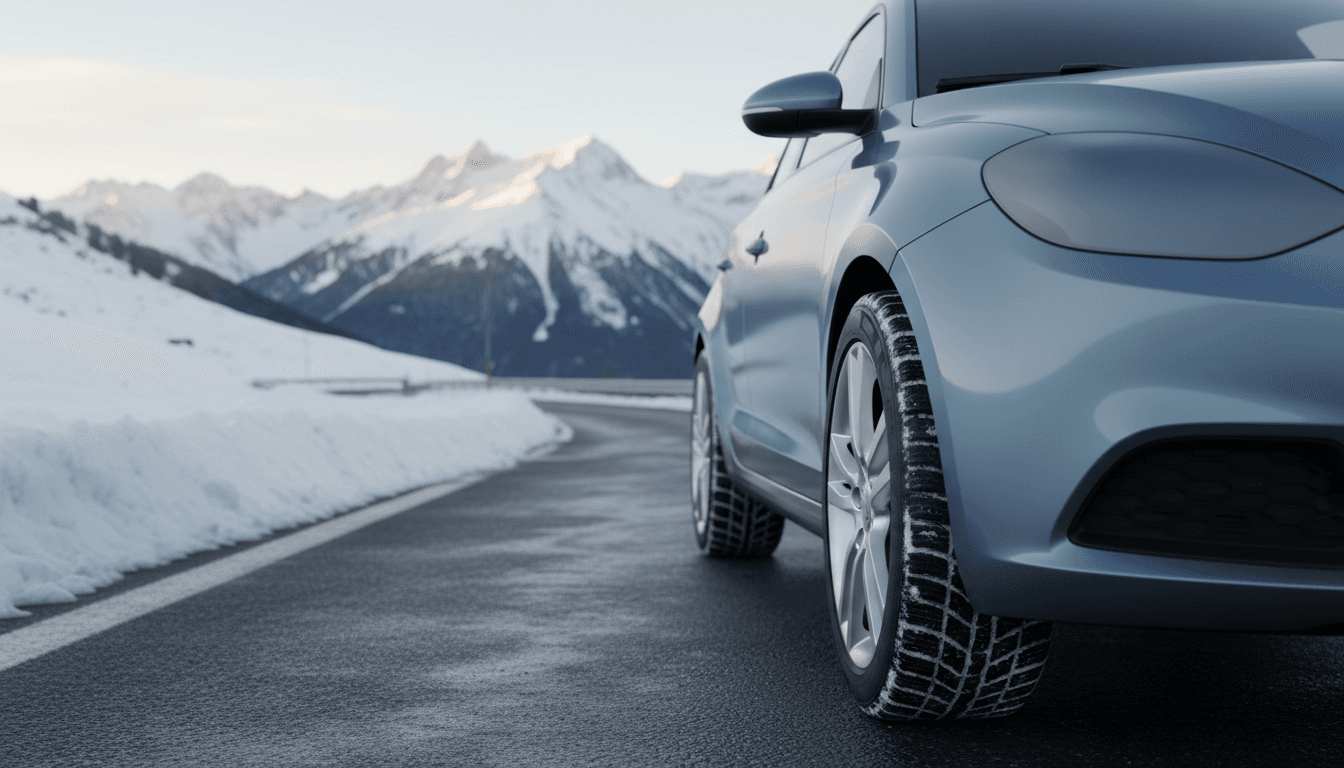
Every autumn drivers in Italy ask the same thing: when do I have to fit winter tyres, and what happens if I do not? For the 2026/2027 season the reference period runs from 15 November 2026 to 15 April 2027, but the rule is not the same everywhere and there is no single national obligation that applies on every road. Here is what the law actually says, what the fines look like and how to pick the right setup without overspending [1][2][3].
How the obligation really works
There is no blanket law covering every road. The duty comes from ordinances issued by the road owner or operator: ANAS, regional and provincial authorities, municipalities and motorway concessionaires. Article 6 of the Italian Highway Code lets them require winter tyres or snow chains on board on specific stretches. Where an ordinance applies there are road signs; where none exists, generally no obligation kicks in [3].
That is why the same car can be fully legal in Bari and non-compliant in Valle d'Aosta. Piedmont and Valle d'Aosta have very broad ordinances, while some southern provinces have none at all. Mountain passes can also switch the requirement on at any time as soon as snow or ice appears [2][3].
Dates to remember
- 15 October: you may fit winter tyres from this date, though you are not yet required to.
- 15 November 2026: start of the period in which you must be equipped where an ordinance applies.
- 15 April 2027: end of the standard period.
- 15 May: last day of the grace period for switching back to summer tyres without speed-rating issues.
Some areas start on 15 October or 1 November and run to 30 April. Before any mountain trip, check the provincial or ANAS website for your route [2][3].
The three legal options
1. Winter tyres on all four wheels. The safest choice: the compound stays soft below 7 °C and the sipes grip snow and slush. Look for the 3PMSF symbol, the snowflake inside a three-peak mountain, which certifies snow performance in standardised tests.
2. Snow chains on board. With summer tyres you can drive in ordinance zones as long as approved chains are in the boot. Fit them only when needed, on snow-covered roads and at low speed. Practise fitting them at home: doing it for the first time in the dark with snow falling is an experience best avoided.
3. Snow socks. Allowed if they meet UNI EN 16662-1:2020. They are easier to fit than chains but wear quickly on clean asphalt, so treat them as emergency equipment [2].
What about all-season tyres?
Approved all-season tyres with the M+S marking, ideally also the 3PMSF symbol, are generally accepted as an alternative, provided the load index and speed rating match the vehicle registration document. They make sense for low-mileage city drivers who do not head to the mountains: no seasonal swap. The trade-off is that on real ice and in summer rain they do not match a specialist tyre [1][2].
The speed rating trap: up to 1,731 euros
This is where many drivers slip. Winter tyres may carry a lower speed rating than the one in the registration document, but not below Q (160 km/h). That allowance only applies during the grace period, 15 October to 15 May. If you leave lower-rated winter tyres on in June, article 78 of the Highway Code applies: roughly 430 up to 1,731 euros, with possible withdrawal of the registration document [1][3]. Setting off on a summer holiday on winter tyres therefore risks far more than extra wear.
What you risk without equipment
If you drive in an ordinance zone without winter tyres or chains on board, the indicative fine is:
- inside built-up areas, roughly 41-42 to 173 euros;
- outside built-up areas, roughly 87 to 344 euros.
Amounts are updated periodically and sources quote slightly different figures, so always check the current value. Beyond the fine, police can stop you from continuing until you are compliant, which during a snowfall means being stuck at the roadside [1][2][3]. There is also an insurance angle: after a crash without the required equipment, the insurer may argue a larger share of fault.
Cost and how to save
A set of four winter tyres in a common compact size typically costs 300 to 600 euros plus the seasonal swap. Summer and winter sets wear in rotation, so the outlay evens out over time. A few practical tips:
- Buy tyres with a recent DOT code: rubber ages even in storage.
- Check tread depth: below 4 mm winter tyres lose much of their edge, even though the legal minimum is 1.6 mm.
- Use dedicated wheels if you swap often: it saves the tyre beads.
- If you drive under 8,000 km a year on the plains, consider all-season tyres.
Buying a used car: look at the tyres
If you are shopping for a used car in the coming months, ask what tyres it comes with and whether a second set is included. A good set of winter tyres is worth a few hundred euros in negotiation. Check the DOT date on the sidewall (four digits: week and year) and the speed rating against the registration document. Sellers on VendiVoce do well to mention included winter tyres in the listing: buyers look for it in autumn.
The bottom line
Look at where you will drive between 15 November and 15 April. If you stay in a lowland city, you probably need nothing special. If you head to the mountains or use roads with an ordinance, fit winter tyres by mid-November or carry approved chains. Remember to switch back to summer tyres by 15 May if your winter set has a lower speed rating than the registration document.
Sources
- SicurAUTO, Gomme invernali dal 15 novembre: cosa rischia chi guida senza (November 2025).
- Motor1 Italia, Gomme invernali 2026, da oggi si possono montare (October 2026).
- UnipolMove, Obbligo gomme invernali: quando scatta e cosa sapere (October 2026).
Further reading
Related articles

Winter Tyres in Italy 2026: Rules From 15 November
From 15 November 2026 to 15 April 2027 winter tyres or chains return: where the rule applies, which tyres to choose, speed index and fines.

Italy diesel excise cut ends: what changes Nov 8
Italy's diesel excise cut expired on 7 November 2026: what it was really worth, the history of this year's cuts, and what it means for anyone driving, buying or selling a used diesel.