Italy diesel excise cut ends: what changes Nov 8
Italy's diesel excise cut expired on 7 November 2026: what it was really worth, the history of this year's cuts, and what it means for anyone driving, buying or selling a used diesel.
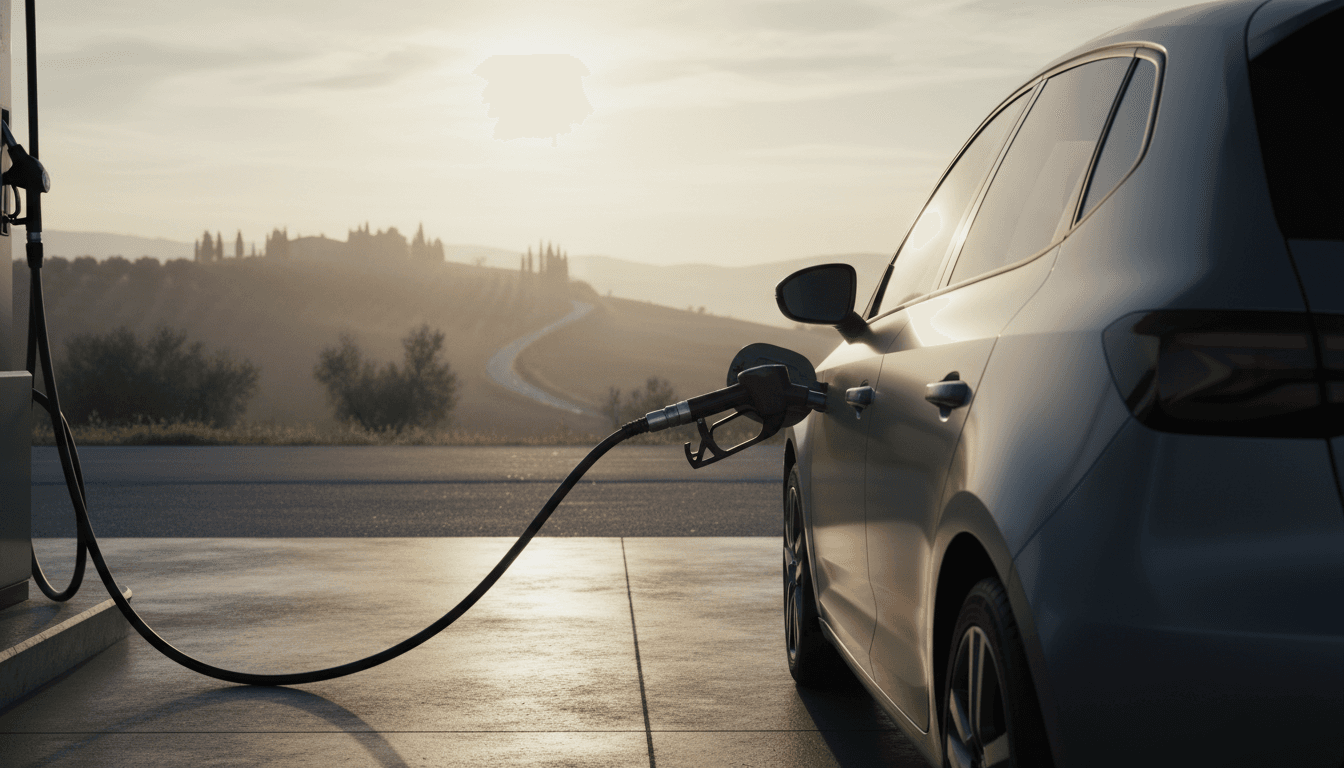
Italy's temporary cut to diesel excise duty expired on 7 November 2026, and as of today there is no official extension. For diesel drivers that means roughly 4.9 euro cents more per litre than last week, unless a new decree arrives. It is a small number, but the history of this year's cuts is a good reason to stop waiting for the next extension and work out what your car really costs to run.
What happened: the 28 October to 7 November cut
An inter-ministerial decree signed on 27 October by the Economy and Environment ministries and published in the Gazzetta Ufficiale on 28 October brought back a diesel excise reduction for eleven days, from 28 October to 7 November 2026 [1][2]. The rate fell from 672.90 to 632.90 euros per 1,000 litres: four cents per litre before VAT, which comes to about 4.88 cents at the pump, usually rounded to 4.9 [1][3].
The measure was funded with 38.7 million euros taken from extra VAT collected in September thanks to higher crude prices [1][2]. This is the so-called accisa mobile: when oil rises the state collects more VAT, and part of that surplus pays for the excise discount. Only diesel was covered, not petrol [1].
What it was actually worth
Simple maths. At 4.88 cents per litre, a 50-litre fill-up cost about 2.44 euros less. A driver covering 15,000 km a year in a diesel using 5 litres per 100 km burns about 750 litres, so the discount would have been worth a little over 36 euros over twelve months, had it applied all year. A van or a 30,000 km a year car doubles that, but it is still dwarfed by insurance, road tax or servicing.
In practice the discount was smaller than the normal price gap between one station and the next. How much of it reaches you also depends on each retailer: Eni's diesel price ceiling was reported at 2.19 euros per litre with the cut, while its petrol ceiling stayed at 1.99 euros [1].
An on-again, off-again series of extensions
The late-October cut is the latest chapter in a long sequence. After the US-Iran conflict began in late February 2026, the government introduced a 20-cent-per-litre discount on petrol and diesel from 19 March, then scaled it down step by step: 5 cents on petrol and 10 to 20 on diesel in May, 5 cents on both in June, then a pause and a new 14-cent diesel cut from 28 July, falling to 10 and then 5 cents between September and early October [1]. After the discount ended on 6 October, the next one only came back on 28 October, at just 4 cents [3].
According to Hdmotori, the cuts have cost the state about 2.7 billion euros since March [3]. The trend is clear: the discount is shrinking, and what happens after 7 November depends on October VAT receipts and available funds [1][3]. None of the sources we checked treats an extension as certain.
What changes now for diesel owners
From 8 November, without a new decree, diesel goes back to the full rate of 672.90 euros per 1,000 litres. Expect a pump price rise in the order of 4 to 5 cents, though crude oil moves and individual retailers can hide or amplify it. To check real prices near you, use the fuel price observatory run by Italy's Ministry of Enterprises and Made in Italy, which shows prices reported by stations.
For reference: diesel at 2.19 euros per litre with the discount would come back to around 2.24 euros, everything else equal. That is a worked example, not a price forecast.
Diesel, petrol or LPG: what it means when buying used
Excise news matters when you are choosing a used car. Diesel still suits high-mileage drivers thanks to lower consumption, but a few cents of discount does not change the equation. What counts is real fuel economy, purchase price, road tax, and the risk of costly work on the particulate filter and injection system if the car only does short trips.
Before you buy, think it through like this:
- estimate your real annual kilometres and multiply by the stated consumption, adding 10 to 15 percent for real-world use;
- compare fuel cost with a petrol or LPG car over the same distance;
- check the Euro class, because in several cities traffic restrictions hit older diesels;
- check the service history and the condition of the DPF and EGR valve, the items that weigh most on a used diesel.
An example: at 20,000 km a year, a diesel using 5.5 litres per 100 km burns 1,100 litres; a 0.05 euro difference per litre changes the annual bill by 55 euros. A gap of 1.5 litres per 100 km between two models is worth far more, around 300 litres a year. The model's consumption matters more than temporary taxation.
If you are selling a used diesel
Sellers should not fear a collapse in value because of a few cents of excise: market price depends mostly on mileage, age, Euro class and condition. What you can do is document the car well, with service records, invoices and any DPF work, to give buyers a reason to trust you.
The practical takeaway
Do not plan your car budget around a discount that lasted eleven days. Work out cost per kilometre at full prices, keep a margin for increases and, if you are weighing a used diesel, choose on fuel economy and maintenance condition. If a new extension comes, treat it as a small bonus, not a reason to buy or sell.
Sources
- Sicurauto, Taglio accise diesel dal 28 ottobre 2026: quanto si risparmia e durata, 28 October 2026.
- Open, Accise, il taglio sul gasolio: 4,9 cent in meno fino al 7 novembre, 28 October 2026.
- Hdmotori, Gasolio, accise mobili fino al 7 novembre, 28 October 2026.
Further reading
Related articles

Winter Tyres in Italy 2026: Rules From 15 November
From 15 November 2026 to 15 April 2027 winter tyres or chains return: where the rule applies, which tyres to choose, speed index and fines.

Used car in Rome: Fascia Verde and Euro class
What to check before buying a used car in Rome: permanent Fascia Verde bans, diesel smog blocks, ecological Sundays from 15 November 2026 and where to verify the current ordinance.