Why Replacing a Modern Car Key Costs So Much (and What to Check When Buying Used)
Transponder keys can cost over 300 euros to replace, and keyless car theft is rising in Italy. Here is why counting the keys is the first check to make before buying a used car.
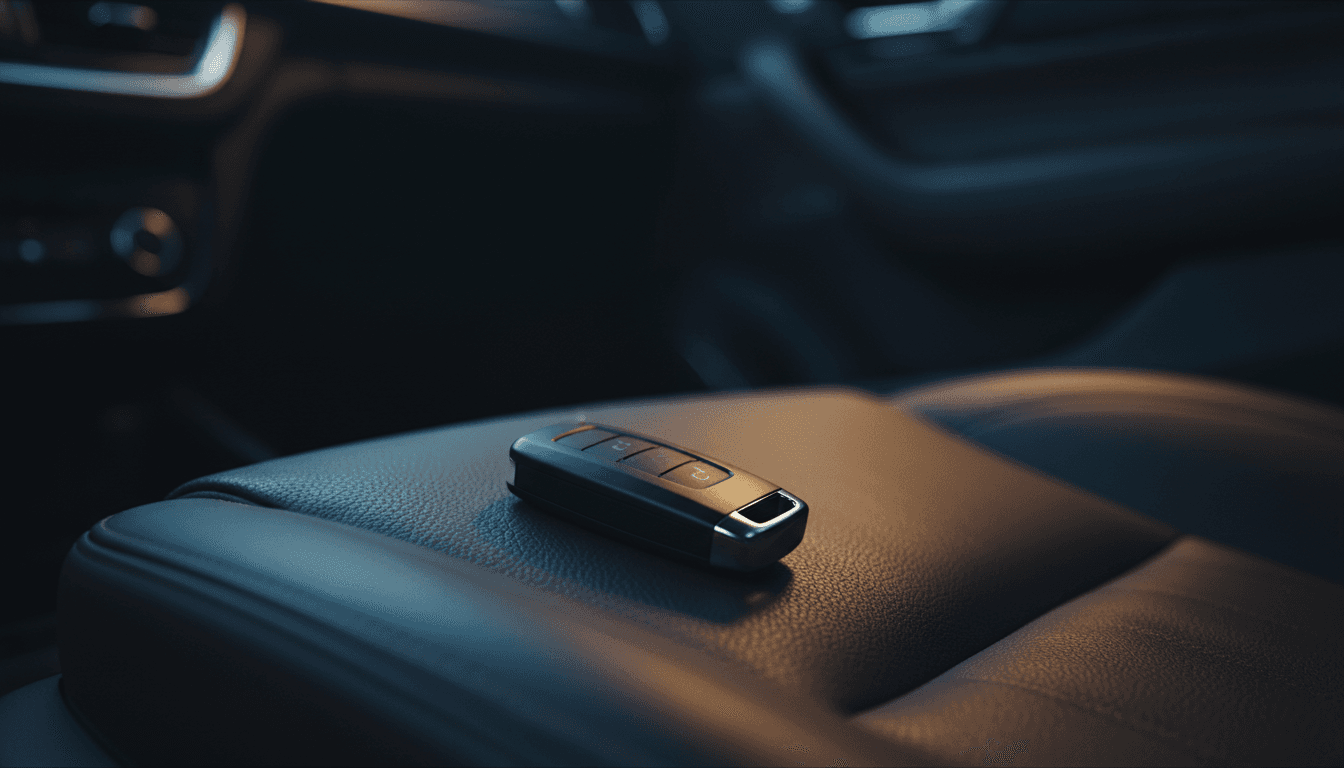
A key that is no longer just metal
Anyone who has tried to get a spare car key cut in the last few years has noticed it: this is no longer a ten-euro errand at the local hardware shop. Modern keys carry a transponder, a microchip that talks to the car's control unit and immobilizer to authorize the engine to start. Without the right code, the engine simply will not run, even if the key turns in the barrel or the start button gets pressed. The system has sharply cut classic wiring-based theft over the last two decades, but it has also shifted the cost, and the hassle, onto whoever needs that key replaced, duplicated, or reprogrammed.
What it actually costs, in real numbers
For older cars registered before electronic immobilizers became standard, a simple key without a transponder still costs between 20 and 60 euros. But most of the cars on the road today carry keys with a coded transponder, and that is where the price climbs: between 80 and 150 euros at specialized centers, with peaks above 300 euros for premium vehicles or whenever the so-called CODE card, handed over at purchase, has gone missing. That card, usually a small plastic slip delivered along with the owner's manual, is what lets a technician quickly program an extra key without opening up the control unit. Whoever loses it, or buys a used car without receiving it from the seller, almost always ends up paying the steeper bill, since programming without the code requires longer procedures and dedicated diagnostic tools.
The real financial hit: losing every key at once
The worst-case scenario is not a routine spare, but losing every available key at the same time. In that situation, programming a new chip is no longer enough: it often means replacing the ignition barrel, rewriting the immobilizer, or, on some models, working directly on the engine control unit. That means a tow to the workshop, hours of specialized labor, and, in some cases, parts the manufacturer only distributes through its official network. The final bill can far exceed the few hundred euros of a normal duplicate, which is one reason more drivers are turning to dedicated insurance cover.
The link to keyless theft
There is an extra reason the key topic is back in the news: the rise of relay-attack thefts, the technique that clones a keyless remote's signal from a distance. It takes just two accomplices and two cheap relay boxes to intercept the key's signal, even while it is hanging near the front door, and relay it to the car parked on the street: in under thirty seconds the car unlocks and starts, with no sign of forced entry. Italy's Interior Ministry figures are blunt: 94,626 car thefts in 2024, up 11.7% from 84,733 in 2023, the highest figure in a decade. Early 2026 data confirm the trend and point to widely-owned models like the Fiat Panda, Fiat 500, and Lancia Ypsilon among the most targeted, helped along by how common they are on the used market and how easily their electronics can be cloned.
Buying used: why counting the keys is the first check
For anyone weighing up a used car, this tangle of key cost and theft risk boils down to one very concrete check before signing anything: how many keys come with the vehicle? There is no legal minimum, but standard practice calls for at least two working keys, the main one plus a spare. If the seller only hands over one, or the programming code card is missing, treat it as a real bargaining point on price, not a minor detail: a replacement key, if one is ever needed, will almost certainly cost more than expected. It is worth testing both keys in front of the seller, checking that each unlocks and starts the engine without hesitation, checking the internal battery on remote-equipped keys, and asking directly whether any keys were ever lost and never recovered: a car whose keys were never formally logged can carry a higher-than-average cloning risk.
Lost-key insurance: when it is worth it
Many car insurance policies offer, as an add-on tied to fire-and-theft or unforeseen-events cover, a specific guarantee for lost keys: in case of loss or theft, the insurer reimburses the cost of the duplicate and, if needed, the lock replacement, against a police report and the receipts for the expenses incurred. Without a formal police report, most insurers will not pay out, so that step should never be skipped after a genuine loss. For anyone driving a recent car with an expensive transponder to replace, or anyone who has already found out how slow workshop reprogramming can be, this add-on, often just a few euros a year, can pay for itself the first time something goes wrong.
What to do before signing
Three simple steps sharply cut the risk of an unpleasant bill after a purchase: get both keys and the matching programming code handed over at the time of sale, test that both work before leaving the dealer or private seller, and immediately store a copy of the code somewhere safe, away from the car itself. Anyone with a keyless system can also consider a signal-blocking key pouch, a cheap Faraday-cage style sleeve that stops the key's signal from transmitting when it is not needed. These checks take only a few minutes, and on a used car they matter as much as checking the service history or the timing belt, because a lost key today is no longer a nuisance worth a few tens of euros, it is a line item that can genuinely dent the post-purchase budget.
Further reading
- Auto, i modelli piu rubati in Italia nel 2026 — Sky TG24
- Furti d'auto: i modelli piu rubati e a rischio anche nel 2026 — CercAssicurazioni.it
- Furti moto: i sistemi keyless sono meno sicuri della classica chiave? — InMoto.it
- Furti auto in crescita dell'11,7% nel 2024 — Assinews.it
- Smarrimento chiavi auto: duplicato, denuncia e assicurazione — 6sicuro.it
- Assicurazione chiavi auto: come funziona? — SicurAuto.it
- Duplicato chiavi auto: procedure, costi e consigli — Infomotori
Related articles

Winter Tires in Italy 2026: Dates and Fines
Italy's winter tyre law kicks in on 15 November 2026: dates, fines, the real difference between M+S and 3PMSF, and what to check on the tyres before buying or selling a used vehicle this season.

Diesel Particulate Filter: Warning Light and Cost
A lit DPF warning light is not a breakdown, it is an alert. Here is what cleaning, regeneration or replacement really costs, what to check before buying a used diesel, and why a removed filter costs far more than it seems to save, as inspection checks get stricter from 2026.