Tyres: when to change them and how to choose
The 1.6 mm legal limit, tyre age, summer versus winter versus all-season, load and speed ratings, and Italy's winter-tyre rules: a practical guide to knowing when to replace your tyres and how to choose the right ones.
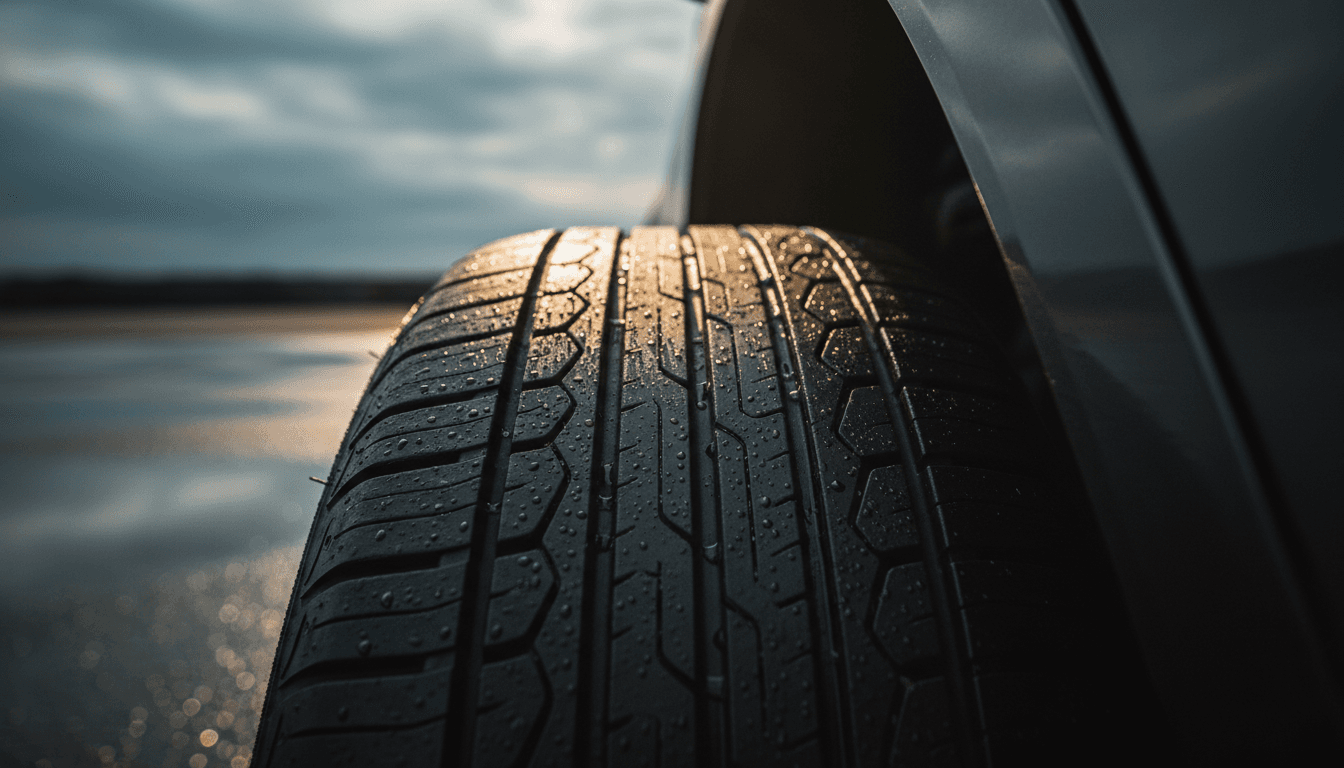
Why tyres deserve more attention than they get
They are the only four points of contact between your car and the road: four patches, each about the size of your palm, carry every bit of braking, steering and cornering grip. Yet tyres are usually the last thing we think about, until the revisione comes around or a wet-road stop feels a beat too long. Knowing when to replace them and how to choose new ones is not only about safety: the right tyres shorten braking distances, use less fuel, and keep you clear of fines and nasty surprises at inspection. Here is what actually matters, with concrete numbers and the rules that apply in Italy.
The legal limit and the signs of wear
In Italy the minimum legal tread depth is 1.6 mm across the full rolling surface. Below that the tyre is illegal and, above all on wet roads, can no longer push water out of the way: the risk of aquaplaning rises and braking distances stretch dangerously.
You do not need a mechanic to spot it. Every tyre has small raised bars inside the tread grooves, the tread wear indicators (TWI): when the tread wears down level with those bars, you are exactly at 1.6 mm and it is time to change. The old one-euro-coin trick works too, since the gold rim is about 3 mm tall: if it disappears into the groove, you still have margin.
In practice it pays not to reach the limit. Experts suggest replacing summer tyres at around 3 mm and winter tyres already at 4 mm, because below that they lose much of their ability to clear water and grip snow. Other warning signs: uneven wear (worn shoulders mean low pressure, a worn centre means over-inflation), cuts, sidewall bulges, vibration or cracking rubber.
Age matters: reading the DOT code
A tyre can still have healthy tread and yet be ready for the bin, because the compound ages. Over the years the rubber hardens, dries out and starts to crack, losing grip even when it looks new.
Age is written in the DOT code on the sidewall: the last four digits give the week and year of manufacture. For example, 2321 means the 23rd week of 2021. The rule of thumb: have tyres checked after 5 years and replace them within 10 years of manufacture regardless of tread. It is worth checking the date on brand-new tyres too, since one that sat in a warehouse for years is no longer truly new.
Summer, winter or all-season
The main difference is not the pattern but the rubber compound. Summer tyres use a harder compound that shines in mild and hot weather: precise, quiet, efficient. Below 7 degrees, though, a summer tyre stiffens and loses grip, even on dry tarmac.
Winter tyres use a softer compound that stays flexible in the cold, more sipes (the fine slits in the tread) that bite into snow and ice, and channels that clear water and slush. They are the right choice wherever winters are genuinely cold or snowy.
All-season tyres are a compromise: an intermediate compound and pattern, the M+S marking and often the 3PMSF snowflake. They work well in mild climates, for low-mileage drivers or city dwellers where snow is rare; at the extremes, high summer heat or real snow, they give up ground to a specialised tyre.
The Italian winter rule: dates and details
In Italy the winter-equipment requirement (winter tyres, or snow chains carried on board) runs from 15 November to 15 April on the stretches where local ordinances impose it, under the 2013 directive of the Ministero delle Infrastrutture e dei Trasporti. The law allows a month of tolerance at each end: you may fit winter tyres from 15 October and keep them until 15 May.
Tyres marked M+S count as winter tyres; the Ministry additionally recommends the 3PMSF symbol (the three-peak mountain snowflake), which certifies real snow performance. Watch the speed rating: with winter tyres you may fit a lower code than the one on the carta di circolazione, provided it does not drop below Q (160 km/h), and it is wise to place a reminder sticker within the driver's view. Driving without the required equipment where it is compulsory means a fine.
Reading the sidewall: size, load and speed
Everything you need is written on the sidewall. Take a code like 205/55 R16 91V:
- 205 is the tread width in millimetres
- 55 is the ratio of sidewall height to width, as a percentage (the sidewall is 55% of 205 mm)
- R marks radial construction
- 16 is the wheel diameter in inches
- 91 is the load index, the maximum weight per tyre (91 equals 615 kg)
- V is the speed rating, the maximum allowed (V equals 240 km/h)
A few speed codes worth remembering: T is 190, H is 210, V is 240, W is 270 km/h. The sidewall also carries the DOT code, the M+S and 3PMSF markings on winter tyres, and possibly XL (extra load, a reinforced casing). The fitted size must match one of those approved on your carta di circolazione.
How to choose the replacement
Always start from the size and approvals on the carta di circolazione: the load index and speed rating must be equal to or higher than those required (the only exception being winter tyres, as above). Then read the European tyre label, mandatory on every tyre: check fuel efficiency (A to E), wet grip (A to E) and noise in decibels; winter and all-season tyres also show snow and ice pictograms.
A few golden rules: replace tyres at least in pairs on the same axle, ideally all four, so you do not unbalance the grip; check the DOT to be sure they are recently made; choose for your real use (long motorway trips, city, mountains) rather than the lowest price. After fitting, have the wheels balanced and, if needed, the alignment checked. And remember that at the revisione, every two years after the first four, badly worn or damaged tyres will fail the car.
The practical takeaway
Check pressure once a month and before long trips, cold and following the values in your handbook, keep an eye on the TWI, on cuts and on the DOT date, and do not wait for the 1.6 mm limit to decide. The right tyres, fitted in good time and suited to the season, are the cheapest way to drive more safely. If you are weighing up a used car, a glance at the brand, age and wear of the tyres also says a lot about the care it has had: it is one of the first details to check as you browse listings, including on VendiVoce.
Further reading
Related articles

Winter Tires in Italy 2026: Dates and Fines
Italy's winter tyre law kicks in on 15 November 2026: dates, fines, the real difference between M+S and 3PMSF, and what to check on the tyres before buying or selling a used vehicle this season.
Diesel Particulate Filter: Warning Light and Cost
A lit DPF warning light is not a breakdown, it is an alert. Here is what cleaning, regeneration or replacement really costs, what to check before buying a used diesel, and why a removed filter costs far more than it seems to save, as inspection checks get stricter from 2026.