When to change car tyres: tread, DOT and fines
The legal limit is 1.6 mm, but it pays to replace tyres sooner. Safer thresholds, the DOT code, the fine and what to check on a used car.
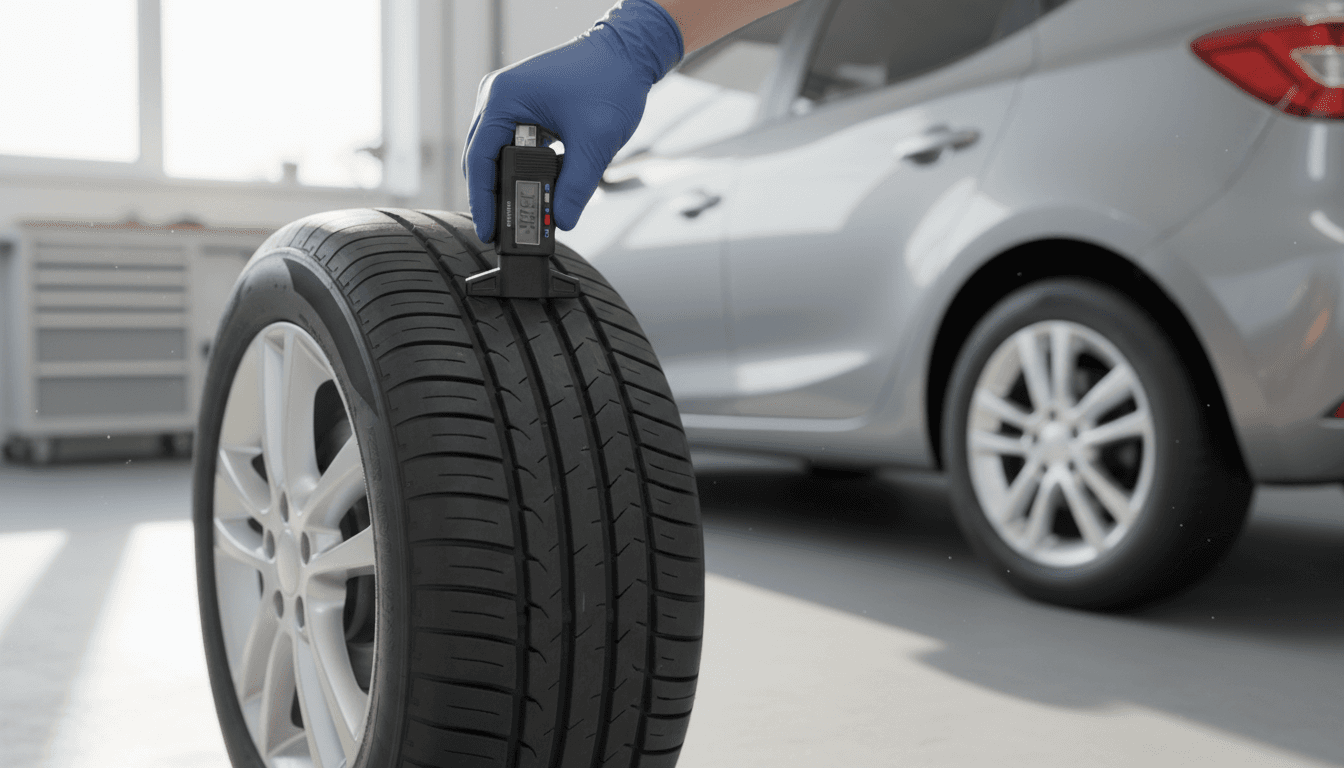
When should you replace your car tyres? The legal answer is simple: when the tread drops below 1.6 mm. The practical answer is different, because many tyres lose grip well before that point, and the age of the rubber matters too. This guide covers the legal limit, safer replacement thresholds, the DOT code and the fines, so you can decide with real numbers, whether you drive daily or are buying a used car in Italy.
The legal limit: 1.6 mm of tread
For passenger cars the Italian Highway Code sets a minimum tread depth of 1.6 mm. Driving on tyres below that is an administrative offence under article 79: the sources consulted give a fine of 87 to 344 euros, and in some cases 2 penalty points on the licence [1][3]. Amounts can be updated, so check the current text of the Code.
Beyond the fine, a tyre worn to the limit may fail the periodic inspection, and in an accident it can affect how responsibility is judged. But the legal figure is a minimum, not an optimal safety level.
Why replace earlier
Tread grooves evacuate water. The more worn they are, the higher the aquaplaning risk and the longer the braking distance in the wet. That is why manufacturers and motoring clubs suggest safer thresholds: according to the sources cited, about 3 mm for summer tyres and about 4 mm for winter tyres [1].
None of these is a legal duty; they are recommendations from makers and clubs. A balanced reading: below 3 mm start planning the replacement, especially if you drive a lot in the wet or on motorways; at 1.6 mm it cannot wait [1].
How to measure wear yourself
Three simple tools:
- Tread wear indicators (TWI): small ridges in the grooves, 1.6 mm high. When the tread is level with them you are at the limit.
- Depth gauge: costs a few euros and measures depth at several points.
- Visual check: look for uneven wear, worn shoulders, cracks, bulges or cuts in the sidewall.
Measure across the width: wear concentrated on one edge points to alignment or camber problems, and a geometry check can save you a set of tyres.
Age matters: the DOT code
A tyre can still be deep but old. On the sidewall you find DOT followed by a code: the last four digits give the week and year of manufacture, for example 2223 means week 22 of 2023 [1].
There is no legal age limit. Manufacturers differ: some suggest replacement within 10 years, others between 6 and 8 years [1]. Over time the compound hardens and loses grip, especially if the car sits for long periods or the tyres are exposed to sunlight.
Buying new tyres: what to read on the label
The European label shows rolling resistance, wet grip and noise. When choosing a new set, wet grip matters more than fuel savings. There are also developments in type-approval testing: the sources mention regulation R117-04, which concerns wet braking performance with tyres worn down to 1.6 mm [2].
Fitting four matching tyres is safest; if you replace two, the new ones go on the rear axle to keep the car stable in corners and under braking.
If you are buying a used car
Tyres are a hidden cost. A set of four can cost several hundred euros depending on size, and it belongs in the negotiation. Before buying:
- Measure the tread on all four tyres.
- Check each DOT code: mixed brands and years are a warning sign.
- Check the tyres match the size on the registration document.
- If tread is close to 3 mm, ask for a discount equal to the cost of replacement.
- Look for uneven wear: it can hide alignment problems.
Care and rotation
To make tyres last: check pressure monthly when cold, using the values on the door pillar or handbook; balance and align after hard impacts; rotate between axles when the manufacturer recommends it; store seasonal tyres somewhere cool and dry.
The bottom line
Do not wait for the fine. Measure the tread every two or three months, plan replacement at 3 mm for summer tyres and 4 mm for winter ones, and check age with the DOT code. If you sell or buy a car, state the tyre condition in the ad: it is a concrete detail that helps buyers looking for a reliable used car, including on VendiVoce.
Fonti / Further reading
- Quotidiano Motori, Pneumatici: quando cambiarli davvero, non solo quando dice la legge.
- Sicurauto, Pneumatici usurati: omologazione obbligatoria dal 1 luglio 2024.
- Brocardi.it, Pneumatici usurati, gomme lisce: multa e punti decurtati.
Further reading
Related articles

Car battery replacement: when to change and cost
How long a 12V battery lasts, the warning signs, real part and labour costs in Italy, EFB versus AGM and why a new battery must be registered on stop-start cars.

Car service in Italy: cost and how often
How often to service your car, what it costs in 2026 at a dealer or independent garage, and how to keep your warranty intact.