Buying a Used Tesla Model 3 in 2026: What to Check Amid Hardware 3, FSD and DIY Retrofits
A hobbyist just retrofitted a next-gen Hardware 4 computer into an old Model 3 by himself, while Tesla is rolling out FSD v14 Lite to Hardware 3 cars. Here is what that means if you are shopping for a used Model 3 in Italy: how to identify the hardware onboard, what unofficial modifications risk, and what European law actually says about assisted driving.
A hack that lit up the Tesla community
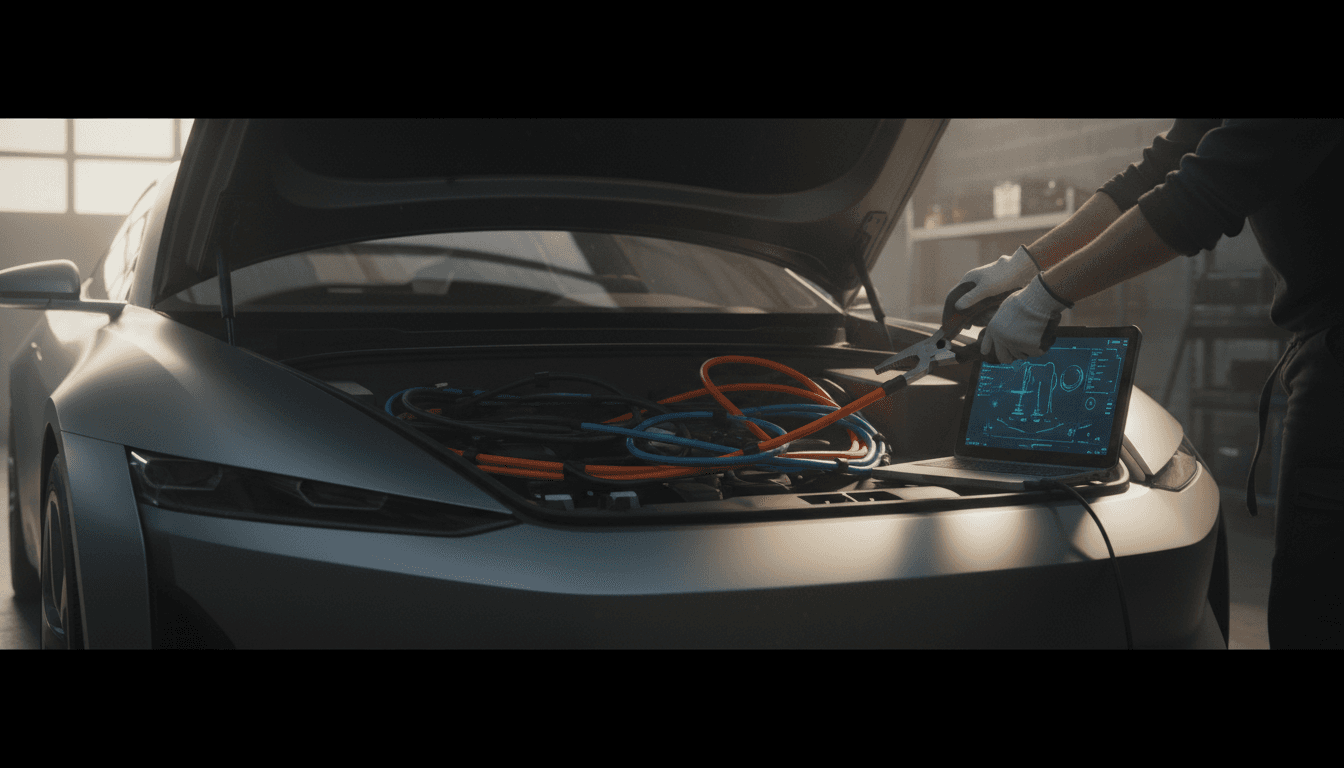
In mid-August 2026, hobbyist Michał Gapiński published the news that owners of older Tesla Model 3 cars had been waiting years for: he pulled the original Hardware 3 (HW3) computer out of a 2022 Model 3 and replaced it with the newer Hardware 4 (HW4) unit, the same computer that ships in current-generation cars. The job, reported by InsideEVs and Electrek, involved swapping the compute module, some rewiring to get the new board talking to the rest of the car's electronics, and camera adapters rather than replacing every camera outright. The result: a four-year-old car now running, at least in part, on next-generation hardware, with zero involvement from Tesla itself.
The story broke just as Tesla began rolling out FSD v14 Lite to HW3 cars, the first meaningful driver-assist update for the older hardware after months stuck on version 12.6. Tesla's AI lead, Ashok Elluswamy, confirmed the rollout, but the company itself admitted on its Q1 2026 earnings call that Hardware 3 will never reach so-called unsupervised FSD: its available memory bandwidth is roughly one-eighth that of Hardware 4. For the estimated four million HW3-equipped vehicles worldwide, that is bittersweet news — and it explains why someone like Gapiński reached for a screwdriver instead of waiting.
Hardware 3 vs Hardware 4: why it matters for a used-car buyer
If you are browsing used Model 3 listings, the onboard computer generation is one of the most important and most overlooked details. Nearly every Model 3 built through roughly mid-2023 shipped with Hardware 3; more recent cars, including the updated 2024-2026 range, ship with Hardware 4. The difference is not just about autopilot: it affects camera quality, headroom for future software features, and, as a result, the car's resale value down the line. Tesla has confirmed it plans to eventually offer an official hardware upgrade through dedicated conversion centers, with a discount for buyers who already paid for the FSD package, but timing and pricing remain unclear.
To find out which hardware a specific car has, ask the seller for the vehicle identification number (VIN) and check the production date, or check the car's own Software > Additional Vehicle Information menu if it is still powered on and accessible. It is a check worth doing before falling for a listing, especially when the Full Self-Driving package is bundled into the asking price: on an HW3 car, that package is objectively worth less than the same package on an HW4 car.
The risk of DIY modifications
Gapiński's retrofit is fascinating from an engineering standpoint, but for a used-car buyer it is mostly a warning sign. Swapping a driver-assistance computer for non-original components, without manufacturer sign-off, raises at least three concrete concerns. First, the warranty: any unauthorized work on active-safety systems can void whatever warranty remains, and Tesla can remotely detect non-original hardware through its software updates. Second, roadworthiness compliance: in most European markets, including Italy, a vehicle must retain the technical characteristics under which it was type-approved; a substantial change to active-safety systems could in principle affect roadworthiness and complicate a periodic inspection if it were ever flagged. Third, insurance: after a crash, a non-original driver-assistance computer can become a point of dispute with the insurer if any link, even a presumed one, emerges to how the accident happened.
No source suggests this kind of retrofit is currently widespread on the Italian used-car market, but history shows how quickly international enthusiast communities share these techniques. Anyone shopping for a used Model 3 should explicitly ask the seller whether the car's driver-assistance electronics have ever been modified and, if in doubt, have the computer's serial number checked at a Tesla service center or a specialized shop before signing anything.
What the law actually says in Europe and Italy
It is worth repeating, to avoid confusion: the Full Self-Driving package sold today remains a Level 2 system — supervised assisted driving, not autonomous driving. The driver must stay attentive and ready to retake control at any moment, cannot use a phone while it is engaged, and remains legally responsible for any crash regardless of what the software was doing at the time. In April 2026, the Dutch authority RDW granted a first approval to FSD Supervised after more than a year and a half of track and public-road testing, but that is a national green light, not yet extended EU-wide, and Italy is still waiting. The new European Driver Control Assistance Systems (DCAS) framework is specifically designed to allow more advanced systems like Tesla's while keeping human supervision mandatory — so do not expect a jump to true autonomous driving any time soon, in Italy or anywhere else in Europe.
The used market in Italy
According to data aggregated by AutoUncle, used Tesla Model 3 cars in Italy start at roughly 19,000 euros and run up past 40,000 euros, with hundreds of active listings across the main platforms. It is a broad, mature market where hardware generation, battery health, and whether the FSD package is bundled into the price are the three variables that move the valuation the most — often more than mileage alone.
What to do before you buy
If you are considering a used Model 3, three checks matter more than anything else: ask for the VIN and verify the hardware generation, ask explicitly whether the car's driver-assistance electronics have ever been modified outside an official Tesla service visit, and do not pay a premium for the FSD package on a Hardware 3 car expecting the capabilities promised for Hardware 4. Everything else — bodywork, tires, battery health — matters just as it would for any other used EV.
Further reading
- One Owner Just Did What Tesla Couldn't: Upgrade An Older Car To HW4 — InsideEVs
- Tesla owner says DIY upgrade to HW4 was easy... so why isn't Tesla doing it? — Electrek
- Tesla Announces HW3 Upgrade Plan, Trade-In Discount and Confirms No Unsupervised FSD for HW3 — Not a Tesla App
- Hardware 3 Tesla Vehicles Will Get Unsupervised Full Self Driving Via Hardware Updates? Who's Most Pissed? — CleanTechnica
- Tesla e guida autonoma, l'Europa frena: polemiche sull'omologazione del Full Self-Driving — Automoto.it
- Tesla Model 3 usata: prezzo da 19.000 euro, 639 auto in vendita — AutoUncle
Related articles
Free car tax under 80kW: what used buyers should know
A decree in force since 18 September exempts petrol, diesel and hybrid cars under 80 kW from the 2027 car tax, but not electric vehicles. Here is what used-car buyers and sellers need to check on the registration document.
Used Car Bank Transfer Scam: How to Avoid It
A seller near Parma lost both his car and 26,000 euros to a bank transfer that was cancelled after handover. Since 2025 banks must run Verification of Payee checks, but that alone will not save you: here is the difference between an urgent and an instant transfer, and the rules for selling a used car safely in 2026.