Free car tax under 80kW: what used buyers should know
A decree in force since 18 September exempts petrol, diesel and hybrid cars under 80 kW from the 2027 car tax, but not electric vehicles. Here is what used-car buyers and sellers need to check on the registration document.
What the new decree actually does
On 17 September 2026, Italy's Council of Ministers approved Decree-Law no. 162/2026, published in the Official Gazette and in force since 18 September. For the single tax year 2027, it exempts cars with an engine power of up to 80 kW, roughly 109 hp, from the annual car tax (bollo), along with all motorcycles. This is not a permanent abolition: the exemption applies only to bollo payments due between 1 January and 31 December 2027, part of a government package aimed at easing transport costs for Italian households [1][2].
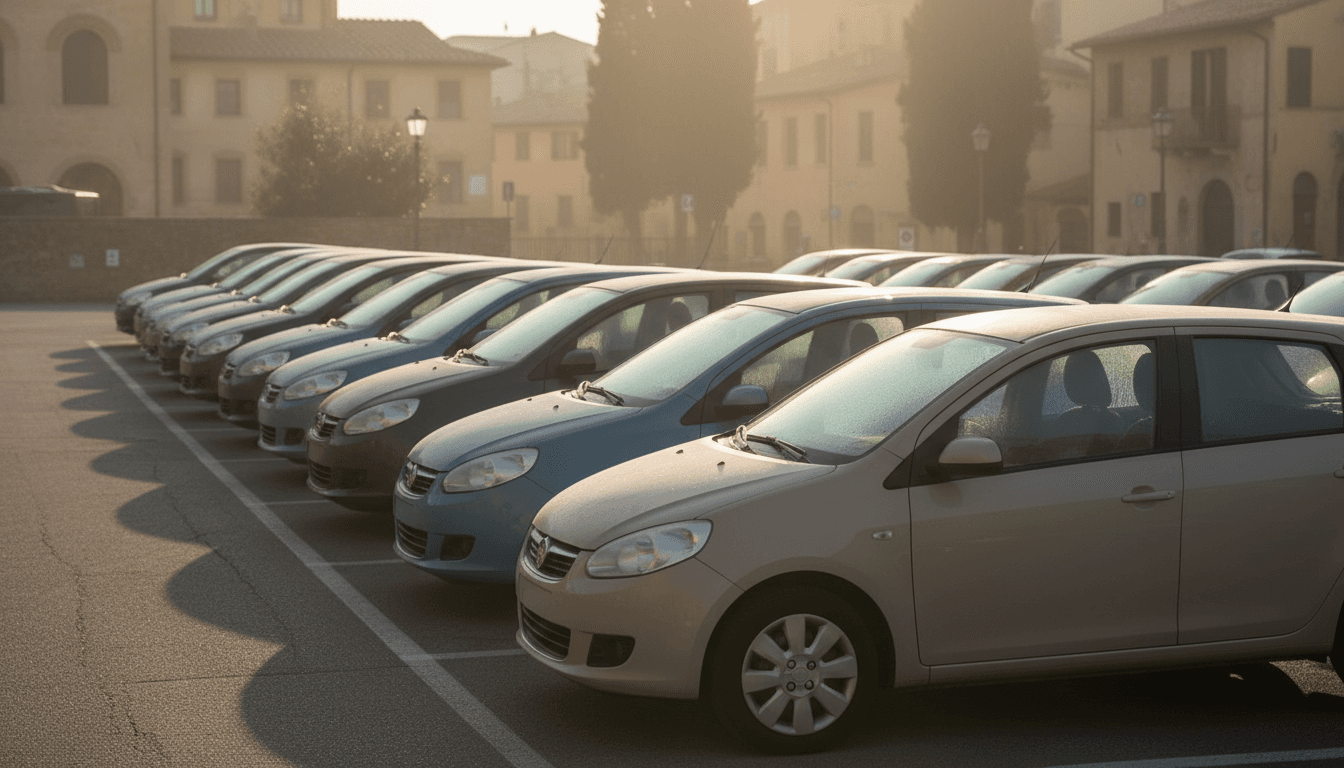
The scale is large. Government, regional authorities and ACI estimate that around 14.5 million vehicles qualify, 13.2 million cars and 1.1 million motorcycles, or more than 70 percent of Italy's circulating fleet [1]. That is squarely the segment where VendiVoce sees the most search traffic: budget city cars and everyday hatchbacks bought and sold second-hand.
Electric cars are left out, because they already have their own rules
One detail is tripping people up: electric vehicles are not covered by this new exemption. That is because EVs already sit under a separate regime, with an automatic bollo exemption for the first five years from first registration and, from the sixth year, a reduced rate equal to 25 percent of the ordinary tariff calculated on equivalent kW [1][4]. A handful of regions, notably Lombardy and Piedmont, go further and keep EVs permanently exempt regardless of age. If you are buying or selling a used electric car, this decree changes nothing for you, the rules you already knew still apply, and it is worth checking your region's specific policy.
The threshold follows the trim, not the model name
This is the part that matters most for anyone trading on the used market. The decree does not come with a fixed list of exempt models, the 80 kW cap applies to the specific engine variant printed on the vehicle's registration document, not to the model's commercial name. A Fiat Panda can be sold with several different engines depending on trim and model year, and the same is true of high-volume nameplates such as the Citroen C3, Dacia Sandero, Hyundai i20, Suzuki Swift, Volkswagen Polo, Toyota Aygo X, Yaris and Yaris Cross, plus the 100 hp petrol Grande Panda and the new Fiat 600 with its 74 kW Turbo 100 engine [1][5]. Two examples of the exact same model, wearing the exact same badge, can carry different power outputs, and therefore different tax treatment next year.
What to check before you buy or sell
If you are about to close a deal on a used car, there is one practical habit worth adopting: never trust the model name alone. Check the power field, marked P.2, on the libretto or carta di circolazione, that is the figure that determines whether a specific car falls under the 80 kW line, not the trim badge or the model year in general. If you are selling a car that qualifies, it is worth stating the exact kW rating in your listing: from January 2027 it becomes a genuine selling point, especially for buyers comparing the total running cost of a city car, bollo included.
One exemption per person, not per car
The decree limits the benefit to a single vehicle per person. If you own more than one car that falls under the threshold, only one gets the exemption, automatically the one with the lowest power, and in case of a tie, the one that would otherwise carry the lower bollo bill [2][3]. That detail matters for households with a car registered to more than one family member, or anyone weighing up a transfer of ownership between relatives: it can be worth thinking about which name the lower-power car ends up under.
Timing your transfer of ownership
One more thing to keep in mind: the exemption applies to the tax due in 2027, so it has no effect on the 2026 bollo you may already owe. If you buy a qualifying used car in the final months of 2026, the exemption simply kicks in from the first 2027 due date, provided the car is registered in your name by then. There is no need to rush the paperwork to grab the benefit early, but it is still worth completing the transfer of ownership properly and on time, so you are not left paying next year's bollo on a car you have since resold.
The likely effect on the used market
A threshold this wide, covering more than seven cars in ten on Italian roads, will not reshape the market overnight. But sellers listing city cars and hatchbacks in the 60 to 80 kW range should expect a bit more interest from cost-conscious buyers, particularly in regions where the bollo bites hardest on household budgets. Anyone shopping above roughly 110 to 120 hp for motorway driving will keep paying the tax exactly as before, the measure does not touch higher-power vehicles, and the luxury-car surcharge, the superbollo, still kicks in above 185 kW regardless of fuel type.
Bottom line
Before you close any used-car deal between now and the end of 2026, look up the actual kW figure on the registration document rather than trusting the trim name, and if you are selling a car under 80 kW, put that number in the listing, it is a real argument from January 2027 onward. For electric vehicles nothing changes, the existing five-year exemption, plus any regional top-up, still applies.
Sources
[1] Il Fatto Quotidiano, Dalla Panda alla Polo: ecco i modelli che beneficeranno dell'esenzione dal bollo, 17 September 2026, https://www.ilfattoquotidiano.it/2026/09/17/esenzione-bollo-auto-2027-limite-80kw-notizie/8509404/ [2] Sky TG24, Abolizione bollo auto, quali sono i modelli di potenza inferiore a 80kW che non lo pagheranno più, 17 September 2026, https://tg24.sky.it/motori/2026/09/17/abolizione-bollo-auto-quali [3] LavoriPubblici.it, Bollo auto 2027: esenzione fino a 80 kW, cosa prevede il decreto in Gazzetta Ufficiale, 18 September 2026, https://www.lavoripubblici.it/news/bollo-auto-2027-esenzione-80-kw-38750 [4] ACI - L'Automobile, Bollo auto 2027: modelli esenti, requisiti e moto, 19 September 2026, https://www.lautomobile.aci.it/attualita/bollo-auto-2027-quali-modelli-rientrano-nellesenzione-e-quando-vale-per-le-moto/ [5] Motor1 Italia, Tutte le auto che non pagheranno il bollo nel 2027, 18 September 2026, https://it.motor1.com/features/808591/bollo-auto-modelli-esenti-2027/
Further reading
- Dalla Panda alla Polo: ecco i modelli che beneficeranno dell'esenzione dal bollo — Il Fatto Quotidiano
- Abolizione bollo auto, quali sono i modelli di potenza inferiore a 80kW che non lo pagheranno più — Sky TG24
- Bollo auto 2027: esenzione fino a 80 kW, cosa prevede il decreto in Gazzetta Ufficiale — LavoriPubblici.it
- Bollo auto 2027: modelli esenti, requisiti e moto — ACI - L'Automobile
- Tutte le auto che non pagheranno il bollo nel 2027 — Motor1 Italia
Related articles
Used Car Bank Transfer Scam: How to Avoid It
A seller near Parma lost both his car and 26,000 euros to a bank transfer that was cancelled after handover. Since 2025 banks must run Verification of Payee checks, but that alone will not save you: here is the difference between an urgent and an instant transfer, and the rules for selling a used car safely in 2026.
How Much Is My Used Car Worth in 2026?
Eurotax, Quattroruote, mileage and service history: here is how a used car's value is really calculated in Italy in 2026, before you sell it or trust a single online quote.