Buying a Used Motorcycle in Italy in 2026: Highway Access, the Airbag Vest Rule, and Helmet Standards Explained
Motorways open to 125s since December 2024, a new airbag vest rule arriving through 2026, and ECE 22.06 helmets: what to actually check before buying a used motorcycle or scooter in Italy.
Why 2026 actually changes the used-motorcycle equation in Italy
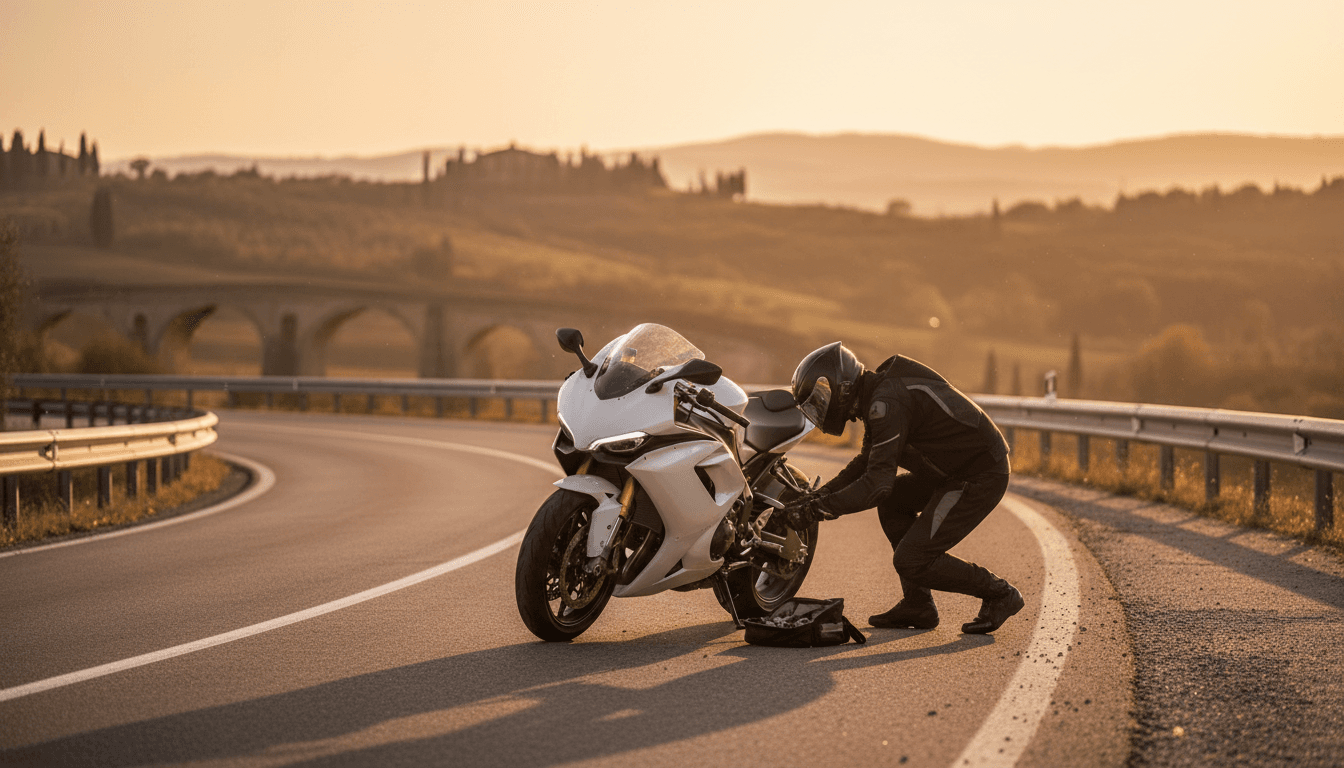
Anyone scrolling used motorcycle and scooter listings this year is looking at a different regulatory landscape than just two years ago. Between late 2024 and the summer of 2026, three things changed that genuinely affect what a listing is worth and what to check before you commit: where a 125 can legally ride, what riders above that class must wear, and which helmets remain street-legal. None of this is abstract policy chatter, it changes which model makes sense and what to verify before signing.
Highways open to 125s: the change already in force since December 2024
Law no. 177 of 25 November 2024, published in the Official Gazette on 29 November 2024, amended Italy's Road Code and took effect on 14 December 2024 [1][2]. From that date, motorcycles and scooters with an engine of at least 120cc (combustion) or at least 6 kW (electric) can use motorways and main extra-urban roads, provided the rider is an adult [1][2]. Before the reform the threshold was much higher, 150cc or 11 kW, and Italy had been the last EU country still barring 125-class bikes from its motorway network [2].
For a used-bike buyer the practical upshot is simple: a scooter or motorcycle with an actual displacement above 120cc, even when marketed under the commercial 125 label, is now genuinely more versatile because it opens up motorway and inter-city trips that were previously off limits. It is worth checking the registration document rather than trusting the model name alone, since some bikes sold as 125s have a slightly different actual displacement, and that number is what the law actually cares about.
The mandatory airbag vest: what the rule says, and why it is not fully enforced yet
This is the change causing the most confusion among used-bike shoppers right now. Multiple Italian motorcycling outlets report that EN 1621-4 certified protection is meant to become mandatory from 1 January 2026 for riders and passengers on motorcycles above 125cc, with fines between 250 and 1,000 euros plus a points deduction on the license for anyone riding without a certified airbag jacket or vest, alongside a purchase incentive of up to 300 euros [3].
What most headlines gloss over is that, as written, the rule's full effect is conditional on the Motorizzazione Civile activating its CED digital platform, and a further implementing decree with operational instructions is still needed before roadside checks and fines actually kick in, with legal analysts pointing to a realistic window no earlier than spring 2026 [4]. As of late August 2026, enforcement is therefore still in an administrative holding pattern rather than fully live. For a buyer, that is worth knowing but not a reason to panic: budget for EN 1621-4 certified gear when buying anything above 125cc, understanding that fines and checks will follow once the second implementing decree lands.
ECE 22.06 helmets: what actually happens to the seller's old helmet
Another recurring question concerns helmet certification. The ECE 22.06 standard, in force since 2021 and mandatory for all newly manufactured and sold helmets since 2022, replaced the older ECE 22.05 certification with tougher impact testing across more points on the shell [5]. The good news for used-bike buyers: helmets certified under ECE 22.05 remain fully legal to use, there is no retroactive requirement to replace them, and they can keep being ridden with until the end of their service life [5]. What changed is only on the retail side, a brand-new helmet sold today must carry the 22.06 certification, and 22.05 stock can no longer be sold as new.
So if a listing includes a helmet, the right question for the seller is not which certification it carries but how old it is and what condition it is in. Most manufacturers still recommend replacing a helmet every five years regardless of standard, simply because the interior liner degrades over time.
How the choice between a sub-120cc and an over-120cc used bike shifts
With motorways now open from 120cc upward, the old under-125-or-bigger hierarchy is less useful as the only decision criterion. Buyers who only need a city runabout can still reasonably pick a 50cc or a modestly-displaced 125, keeping insurance and the annual road tax low. Anyone who also expects regular inter-city or motorway trips should check the actual displacement on the registration document rather than the commercial name, to make sure the bike genuinely clears the 120cc threshold set by Law 177/2024.
Watch for scams when a listing looks too good
Motorcycle marketplaces report a rise in scam attempts clustered around prices well below market, sellers claiming to be abroad or in a rush to sell, and requests for a deposit before the bike is seen in person [6]. Warning signs worth taking seriously include listings with only a few photos or a single angle, refusal to let an independent mechanic inspect the bike before purchase, and pressure to use untraceable payment methods. Before any negotiation it is worth checking the frame number against the registration document and asking for the service history.
A practical checklist before you sign
Pulling this together, here is what actually matters when shopping a used motorcycle or scooter in the second half of 2026: the real displacement on the registration document, not the commercial name, to know whether it clears the 120cc motorway threshold; the age and condition of any airbag jacket or vest included, while still budgeting for EN 1621-4 certified gear on anything above 125cc; the age of any included helmet rather than its certification code; and the standard anti-scam checks, from the frame number to arranging an independent mechanical inspection before paying.
None of these should be a dealbreaker on an otherwise good bike, but each one is worth a few euros or an extra week of patience if skipped. In a used-motorcycle market that remains one of the most active in Europe, knowing these three regulatory shifts before you start browsing listings is still the simplest way to buy well.
Further reading
- Moto e scooter 125 in autostrada, da oggi si puo. E legge il nuovo Codice della Strada — inSella
- Scooter 125 in autostrada: dal 14/12 via libera anche per gli elettrici — Exelentia
- Airbag obbligatorio in moto: arriva la nuova legge — Moto Excape
- Il nuovo decreto attuativo per la patente moto: tutte le novita in 70 caratteri — Studio Legale Lavoro Spoltore
- Nuova omologazione casco ECE 22-06 e le novita per la sicurezza — CuboAuto
- Comprare e vendere moto usate online senza cadere nelle truffe — Dueruote
- Legge 25 novembre 2024, n. 177 recante modifiche al Codice della Strada, circolare esplicativa — Ministero dell'Interno - Prefettura
Related articles
BMW Electric Scooters: CE 04 vs CE 02 Guide 2026
CE 04 vs CE 02 compared: 2026 prices, licenses, range, and how the trade-in Ecobonus can make a new one almost as cheap as a used one.
Scooter 125 Ownership Transfer: 2026 Costs
Bought or sold a used 125cc scooter? Here is what the 2026 ownership transfer really costs, which documents you need under the Documento Unico, and what happens if you miss the 60-day deadline.