Used LPG Car: Is It Worth It? Costs and Checks
Cheaper fill-ups, but the tank expires after 10 years and costs 500-600 euros to replace. How to run the numbers and what to check before buying a used LPG car.
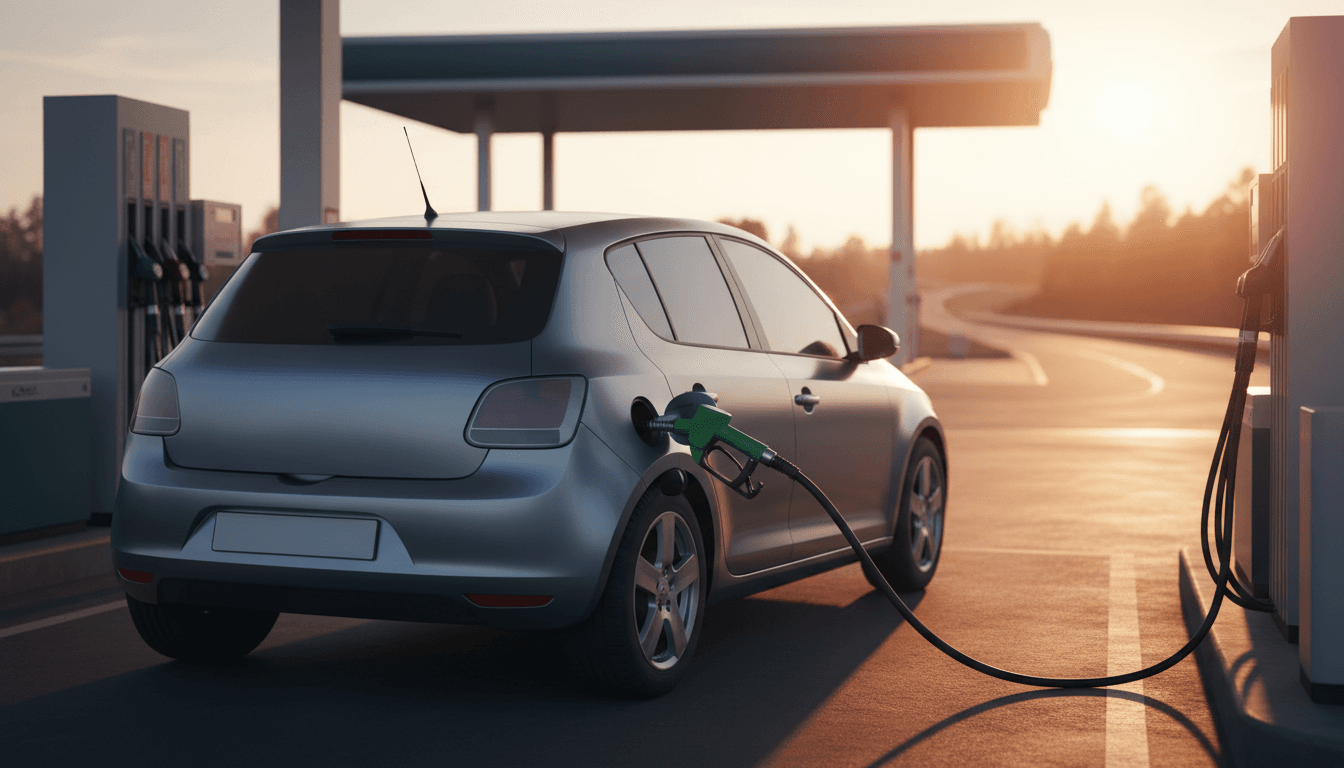
Looking at a used LPG car because filling up is cheaper? Fair, but the saving is not automatic. It depends on how far you drive, who fitted the system and, above all, on a date few buyers check: the expiry of the gas tank. This guide lines up the costs, checks and traps before you sign.
What LPG really costs in 2026
Monthly averages published by Rivaluta (VAT and excise included) put autotrazione LPG at 0.6923 euros per litre in January 2026, a peak of 0.8274 in May and 0.7758 in October, about 11.6% above the same month of 2025 [3]. Gas is still cheaper than liquid fuels, but it is no longer the bargain of a few years ago and it can move a lot within a few months.
Also remember that for the same distance an LPG car burns more litres than a petrol one, because LPG holds less energy per litre. The right comparison is cost per kilometre, not price per litre.
Working out the saving, with an example
Take two working assumptions, to be replaced with your own pump prices: petrol at 1.80 euros per litre using 7 litres per 100 km, LPG at 0.78 euros per litre using 8.5 litres per 100 km. Cost per 100 km is about 12.60 euros on petrol against 6.60 on gas, a six-euro gap. Over 15,000 km a year that is roughly 900 euros. At 5,000 km a year it drops to 300, and then system maintenance and the tank replacement eat much of the benefit. These are illustrative numbers, not a survey: redo the sum with your own consumption.
The rule of thumb: used LPG makes sense if you cover high mileage, if the car costs only slightly more than the petrol version and if the system is in good order. For low-mileage drivers, a plain petrol car can be the calmer choice.
The tank expiry date: check number one
An LPG tank is valid for 10 years. The clock starts at the system inspection date if it was fitted after first registration, or at first registration if the car left the factory with gas [1]. It is the heaviest single cost: replacement averages 500 to 600 euros including tank, labour and paperwork [1]. On an old small car that can be a meaningful share of the asking price.
Before buying, ask for:
- the first registration date and, for an add-on system, the inspection date shown in the documents;
- if the tank was already replaced, the installer's invoice and the update on the registration document;
- the years left: with under two or three, treat the tank cost as a discount to negotiate.
Driving with an expired tank exposes you to a fine: SicurAuto cites a range of 87 to 344 euros under article 71, paragraph 6 of the Highway Code [1]. Other sources quote higher amounts and document withdrawal, so figures differ by source. The safe takeaway is not to take the risk, since it can also stop you at the periodic inspection.
Factory bi-fuel or retrofitted?
A car that is bi-fuel from the factory, as many Dacia, Opel and Fiat models are, carries a homologated system and usually a cleaner service history. A retrofit needs closer attention: the conversion must appear on the registration document and the work must be done by an authorised installer. Since 2021 the Motorizzazione inspection for a tank replacement is no longer mandatory and the update is recorded with an adhesive sticker on the registration document [1], but rules change, so have the workshop confirm the current procedure.
On a factory bi-fuel model, replacement may need an equivalent tank and sometimes the manufacturer's approval. Ask the official dealer network for a quote rather than assuming the average cost.
What to check on the test drive
- Start-up: the car starts on petrol and switches to gas once the engine and reducer warm up [2]. The change should be smooth, with no jerks and no warning light.
- Running on gas: drive at least ten minutes, in town and out of it. A car that stutters only on gas probably needs solenoid valves, injectors or mapping attention.
- Smell: no gas odour in the cabin or the boot.
- Boot: the tank often takes the spare wheel well, replaced by a repair kit [2]. Check that the remaining space suits you.
- Service book and invoices: look for gas filter changes and valve checks. A system with no history is an unknown.
- Inspection: according to AlVolante the first is due 4 years after registration, then every 2 [2]. See when the last one was and whether anything was flagged.
Pros and cons at a glance
Pros: a much cheaper fill-up than liquid fuels, lower emissions than petrol, and in many regions road-tax exemptions or discounts, which you should verify on your region's website because rules are not uniform [2]. Cons: fewer filling stations, some limits in underground car parks and on ferries, slightly lower performance and the periodic tank cost [2]. And as the 2026 data show, the gas price itself moves.
How much to pay and how to negotiate
The premium for a used LPG car over the identical petrol model should be small. If the seller asks a lot more, the sums do not work. Use the tank expiry as leverage: if only months remain, subtract the 500 to 600 euros. If you are selling, have the system invoices and the expiry date ready; an informed buyer will ask for them first.
Bottom line
Buy a used LPG car if you drive plenty of kilometres and the tank and system are documented. Before signing, check the tank expiry, ask for the service history, test it on gas and redo the saving with real prices. If any of those points fails, there is almost always a simpler petrol or hybrid alternative for the same budget.
Fonti / Further reading
- SicurAuto, Serbatoio GPL auto scaduto: sanzioni e rischi, 23 March 2023.
- alVolante, Impianto GPL auto: costo, quanto si risparmia, pro e contro, 20 October 2022.
- Rivaluta, Prezzi GPL autotrazione, 2026 monthly averages.
Further reading
Related articles
Used automatic car: what to check before buying
Torque converter, CVT or dual clutch? Maintenance costs, licence code 78, paperwork checks and a test-drive routine for buying a used automatic without surprises.

Used motorcycle checklist: what to check before buying
Paperwork, frame number, chassis, tyres, test ride, inspection and ownership transfer: the complete checklist for buying a used motorcycle in Italy without surprises.