Used motorcycle checklist: what to check before buying
Paperwork, frame number, chassis, tyres, test ride, inspection and ownership transfer: the complete checklist for buying a used motorcycle in Italy without surprises.
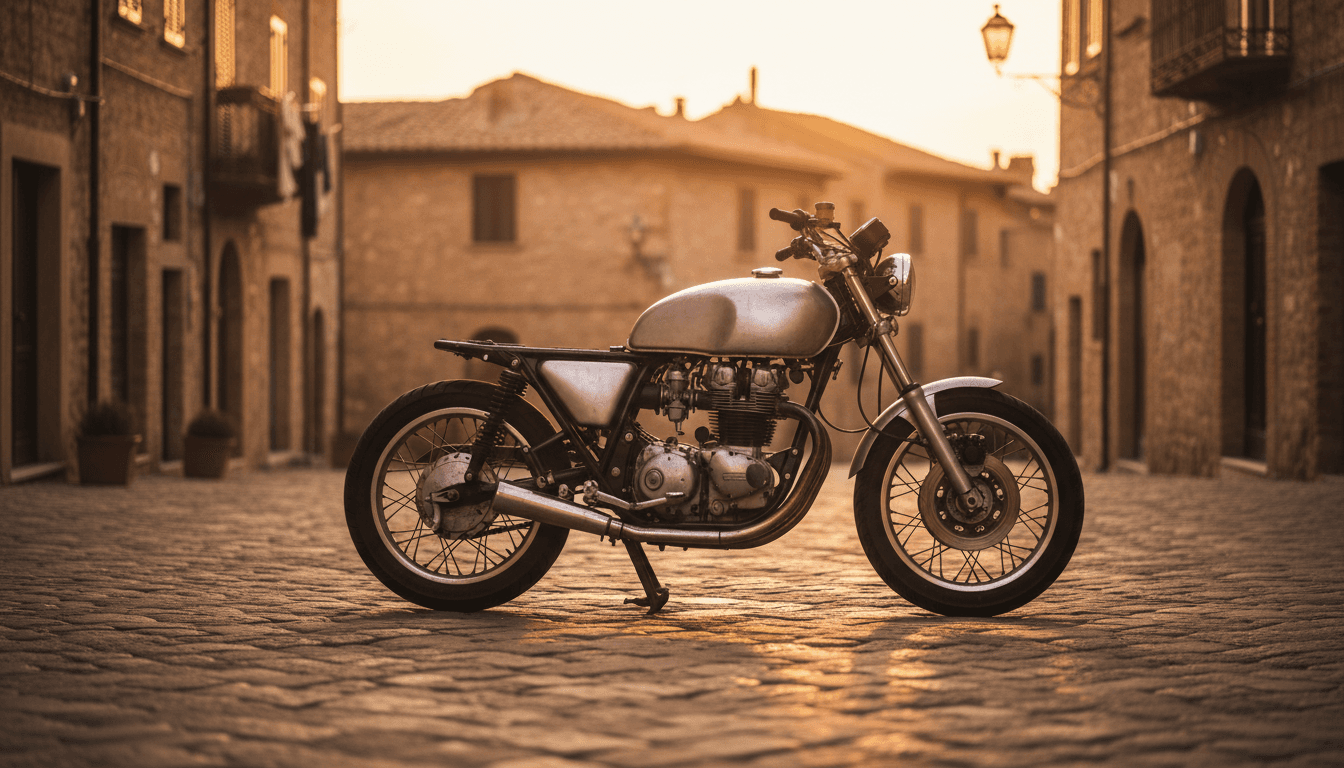
Buying a used motorcycle in Italy? The gap between a bargain and an expensive headache almost always comes down to the checks you make before handing over the cash. This guide follows the right order: paperwork first, then the bike itself, then the test ride, and finally the ownership transfer. Half an hour of attention avoids most nasty surprises [1][2].
Start with the paperwork, not the bike
A gorgeous bike with the wrong papers is a problem. Before you fall for it, ask to see:
- the registration document (carta di circolazione, or the single document) and the certificate of ownership if it is still on paper;
- the service booklet and invoices for work done;
- the report from the last roadworthiness inspection (revisione);
- the seller's ID.
Check that the seller is really the registered owner at the PRA, Italy's vehicle registry. If the person in front of you is not the owner, the deal stops there unless they hold a proper power of attorney. ACI services and the Portale dell'Automobilista let you check registration date, emissions class and last inspection, while the PRA is the reference for liens and encumbrances. With an administrative lock (fermo amministrativo) the vehicle may not be driven, so always request a registry check before agreeing a price [2].
The frame number must match
Compare the frame number stamped on the bike with the one printed on the registration document. Even a tiny mismatch is a red flag: suspend the purchase and clear it up with the Motorizzazione or the PRA. On Vespas and classic bikes the number is often stamped on the body or frame, so read it in good light, with a torch if needed, and look for grinding or re-stamping marks [2].
Frame and chassis: signs of a crash
Walk around the bike slowly. Look at the frame, the base of the tank and exposed bolts: rust, oxidation or crude, uneven welds point to amateur repairs. Panels that do not line up, cracked plastics or mismatched screws can also reveal a past fall [1].
For the suspension, press firmly on the seat: the bike should rebound smoothly with no creaking. Too little or too much resistance means the shocks need attention. Check the fork legs: oil traces mean seals to replace, a cost you can use as a bargaining chip.
Drivetrain, tyres and brakes
The chain should be neither too slack nor too tight and should have no rusty spots. Sprockets with worn, hooked or broken teeth must be replaced together with the chain: that is the full kit, and its price comes off the asking price [1].
On the tyres, read the DOT date on the sidewall: beyond 5 years of age they are best replaced even if the tread looks fine. Wear on the edges with bluish tinting suggests overheating or track use; wear only in the centre suggests a bike ridden gently or rarely [1].
For the brakes, check pad thickness, disc condition (deep grooves or a pronounced lip) and the hoses, which must not leak. If the lever travels all the way to the bar, something is wrong.
Engine and mileage: read the numbers sensibly
Look for oil leaks on the crankcase, the head joint and around the filter. A little grime is normal; fresh oil is not. If you can, start the bike from cold: blue smoke, persistent white smoke, metallic noises or an uneven idle are reasons to dig deeper.
Do not stop at the odometer. A well-kept bike with over 50,000 km and documented servicing can be a better buy than one with 15,000 km and obvious neglect [1]. A documented service history matters more than the number on the clock. Be wary of impossibly low mileage with no history: on bikes, as on cars, clocked odometers exist.
The test ride
Always ride the bike before buying it. During the ride:
- the brake lever should not go to the end of its travel;
- there should be no odd noises from the engine, drivetrain or chassis;
- briefly and safely loosen your grip to see whether the bike pulls left or right;
- gears and clutch should engage without jerks;
- warning lights and the dash should work.
If the seller refuses a test ride, that tells you something. If you are unsure, bring a mechanic friend or pay a workshop for an inspection: a few euros that can save hundreds.
Inspection, price and negotiation
Know the inspection rules: the revisione is due within four years of first registration and every two years after that, in the corresponding month. The most recent sources quote 79.02 euros at an authorised workshop and 45 euros at the Motorizzazione Civile; an expired inspection carries a fine of 173 to 694 euros [3]. Check the date on the report: if it is close, factor it into the price.
For pricing, compare bikes of the same model, year and mileage across several listings. A price that is too low almost always hides something [2]. List the defects you found (old tyres, drivetrain kit, overdue service) and turn them into a discount.
Ownership transfer: timing and costs
Once you agree, do the transfer right away. The cost is a fixed part plus the provincial transcription tax (IPT), which depends on kW and province. Estimates point to just over 100 euros at an STA (Sportello Telematico dell'Automobilista) and about 200-220 euros through a vehicle-paperwork agency or an ACI branch [4]. The deadline is 60 days from the authentication of the seller's signature, with fines of 363 to 1,813 euros for delays [5]. Get the signature authenticated and keep a copy of the deed: until the transfer, the seller remains the registered owner and you can run into trouble with insurance and fines.
Final checklist
Before paying, make sure you have: seller = registered owner, frame number matching the papers, no lock or lien, service records and invoices, a valid inspection, a completed test ride, and defects reflected in the price. Pay with traceable methods and get a signed receipt listing the bike's details. Avoid advance bank transfers to strangers. Follow these steps and buying a used motorcycle becomes a predictable process instead of a gamble.
Further reading
- InMoto, Cosa controllare prima di comprare una moto usata (2025)
- ACI, Auto usate: cosa controllare prima dell'acquisto
- Segugio.it, Revisione moto 2026: scadenze, controlli e sanzioni
- Segugio.it, Passaggio di proprietà motociclo e ciclomotore 2026
- QuotidianoMotori, Passaggio di proprietà auto 2026
Further reading
- Cosa controllare prima di comprare una moto usata: guida all'acquisto — InMoto
- Auto usate: cosa controllare prima dell'acquisto, la guida in 7 passi — ACI - L'Automobile
- Revisione moto 2026: scadenze, controlli e sanzioni — Segugio.it
- Passaggio di proprietà motociclo e ciclomotore 2026: dove farlo e quanto costa? — Segugio.it
- Passaggio di proprietà auto 2026: quanto costa davvero e la multa da 1.813 euro — QuotidianoMotori
Related articles

Used cars for new drivers in Italy: kW limits
Since 14 December 2024 Italian new drivers face 75 kW/t and 105 kW for three years. How to check them on the registration certificate and which used cars to pick.
Buying a Used LPG Car in 2026: Does It Pay Off?
Before buying a used LPG car in 2026, here is what actually matters: tank age, system testing, regional road tax and traffic bans, and how many kilometres it takes to break even.