Used Fiat Panda: what to check and known faults
Panda 169 or 312, which engine to pick, faults from the TUV Report 2025 and from mechanics, recalls, and a test-drive checklist before you buy.
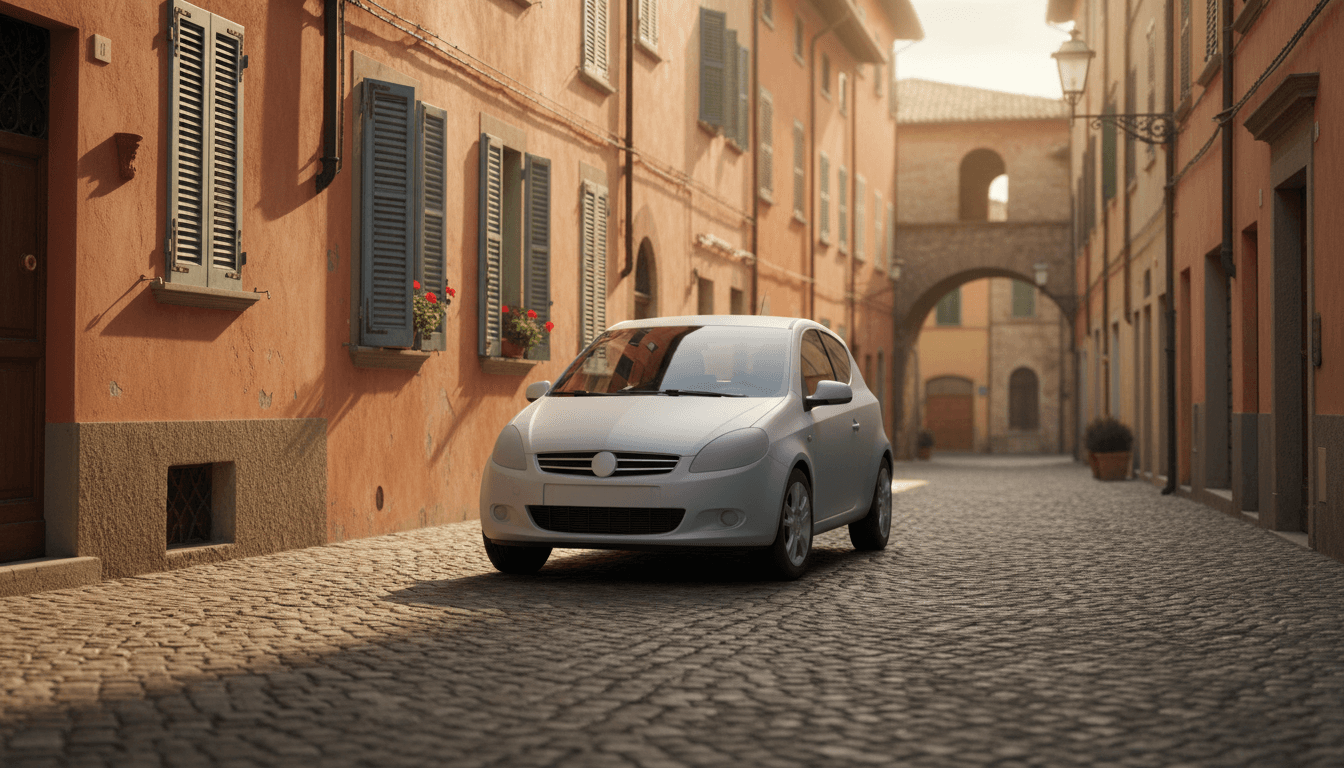
The Panda is the small Italian car everyone knows, which is exactly why people buy it with too much trust. On paper it is simple, cheap to run and parts are everywhere. In practice a used one can be a bargain or a slow drip of small bills. This guide covers which generation and engine to look at, which faults show up in the most solid sources, and how to set up a test drive that tells you the real condition of the car.
Which used Panda: the 169 or the 312
Two main generations share the used market. The Panda 169 (2003-2012) is about 3.54 metres long, with engines from a 54 hp 1.1 up to a 100 hp version. The Panda 312 (2012-2023) is about 3.65 metres and runs from a 69 hp 1.2 petrol to a 95 hp 1.3 Multijet diesel; a hybrid arrived in 2020, a 4x4 is offered, and a facelift followed in 2021.
Entry prices quoted by Autoblog, based on the TÜV Report 2025, are about 850 euros for the 169 and about 3,800 euros for the 312. These are starting points: a well-kept car with low mileage and a documented service history costs more. The trade-off is clear. The 169 is a rock-bottom runabout, while the 312 is newer, safer and easier to resell.
What the TUV data says about faults
The TÜV Report 2025 is German and built on roadworthiness inspections, so it measures objective defects rather than owner impressions. For both generations the defect rate is above average. On the 169, significant problems affect over 36% of inspected cars, with weak spots in suspension and trailing arms, corrosion, and some sensor and fuel pump faults.
On the 312 the most reported problems are springs and shock absorbers, the exhaust, and the quality of finish and assembly. On newer cars the braking system often draws negative remarks in early inspections, while the handbrake is rated well. Rust remains an issue on older cars, and exhaust faults increase with age, especially on the second generation.
What mechanics say
Mechanics quoted by HDMotori paint a gentler picture. To them the Panda is an honest car: simple to repair, with cheap parts that are easy to find because so many are on the road. The most frequent jobs are clutch and transmission, front suspension, electric power steering, the cooling system and electrical faults. According to the article, most of this comes from city use, which stresses steering, shocks and gearbox, rather than from design flaws. Replacing the clutch at around 100,000 km is described as normal wear.
One practical consequence: low mileage is not automatically a guarantee. A Panda that only did short trips can have more tired suspension, clutch and battery than one with more kilometres on mixed roads. Service history matters more.
Choosing the right engine
The engine changes the kind of trouble you can expect:
- 1.2 petrol: the most common and simplest choice. It has its quirks but is the least complicated base for low-mileage drivers.
- TwinAir Natural Power (methane): the typical fault is the gas pressure regulator. Ask whether the gas system has been checked and when.
- 1.3 Multijet diesel: typical issues are a clogged diesel particulate filter and EGR valves, worse on mostly short trips. Autoblog still calls the Euro 6 version a well-balanced choice.
- Panda Hybrid: the mechanics consulted by HDMotori rate it very well, with solid mechanics, no structural defects and good long-distance durability.
If you only drive in town and cover few kilometres a year, the diesel is almost always the wrong pick because of the particulate filter. If you do a lot of motorway driving, it is worth considering.
Safety and recalls
An often overlooked point: on the 312, ESP became standard only from 2014, so an earlier car may not have it. On the 169, ABS was optional until 2004. For the 312, recalls have covered side airbags, seatbelts and, on newer cars, cameras and rear lights; for the 169, a 2007 recall covered brake lines and possible water getting into the ABS module. Before buying, have the VIN checked to confirm the recalls were carried out.
The pre-purchase checklist
- Service book and invoices. Check the sequence is consistent, look for oil-change stickers and, if you can, ask for the dealer history. On a cheap car, real condition matters more than the claimed mileage.
- Cold start. Ask to see the car with the engine off. Most reported problems appear when cold and on short trips.
- Suspension. On a rough road, listen for dull thuds from the front and check the car does not keep bouncing after a bump.
- Clutch and gearbox. The biting point should not be too high and the gear changes should be clean. If the clutch slips uphill, budget for it.
- Exhaust and underbody. Check for rust and mountings, especially on a 169 or an early 312.
- Tyres. If they look fine but are older than five or six years, they still need replacing, so factor in the cost.
- Brakes. Discs and pads, but also how the car behaves under braking.
- Paperwork and history. Confirm there are no administrative holds or other encumbrances on the vehicle before you close the deal.
What to keep aside after buying
Even with a healthy car, set aside money for early costs: a service, tyres and possibly suspension or clutch work. On cars under 5,000 euros the commonest mistake is spending the whole budget on the price and having no margin. A prudent rule is to hold back a share of the purchase price for the first months, and to use any faults found on the test drive as leverage to negotiate.
The bottom line
A used Panda remains a sensible choice if you want simplicity and low running costs, but it is not a car to buy blind. Pick the generation by budget and the safety you want (ESP from the 2014 312 onward), the engine by your real usage, and insist on a documented service history. Do the cold-start test, check suspension, clutch and exhaust, verify recalls by VIN, and keep a cushion for the first expenses.
Sources
- Autoblog, Fiat Panda fa scalpore al TÜV (18 September 2025)
- HDMotori, Fiat Panda and Pandina: reliability and mechanical faults
- BusinessOnline, Fiat Panda: what mechanics really think
- Autoblog, Fiat Panda: what mechanics think after years in the workshop
Further reading
- Fiat Panda fa scalpore al TÜV: tanti pregi ma anche pesanti difetti — Autoblog
- Fiat Panda e Pandina: affidabilità e difetti meccanici — HDMotori
- Fiat Panda, acquisti record ma cosa ne pensano davvero i meccanici — BusinessOnline
- Fiat Panda, cosa ne pensano davvero i meccanici dopo anni di officina — Autoblog
Related articles
Opel Frontera Manual 2026: New or Go Used?
Opel just launched the Frontera Start, a 100-hp manual entry point priced from 17,900 euros on promotion. Here is what the fine print hides, and when a used compact SUV still wins.
Best Cheap Used City Cars in Italy 2026
With no new city car left under 10,000 euros in Italy, used is the only route to a cheap runabout. Here is what a used Panda, 500, Aygo X, Picanto or i10 really costs, what insurance and road tax add on top, and what to check before you sign.