Buying a Used Car as a New Driver in Italy: The Two Limits Almost Everyone Miscalculates
Horsepower alone is not the test. A new Italian driver must satisfy two conditions at once: a 105 kW power ceiling and no more than 75 kW per tonne of kerb weight. Since December 2024 the restriction lasts three years, not one. Here is how to check it on a used car.
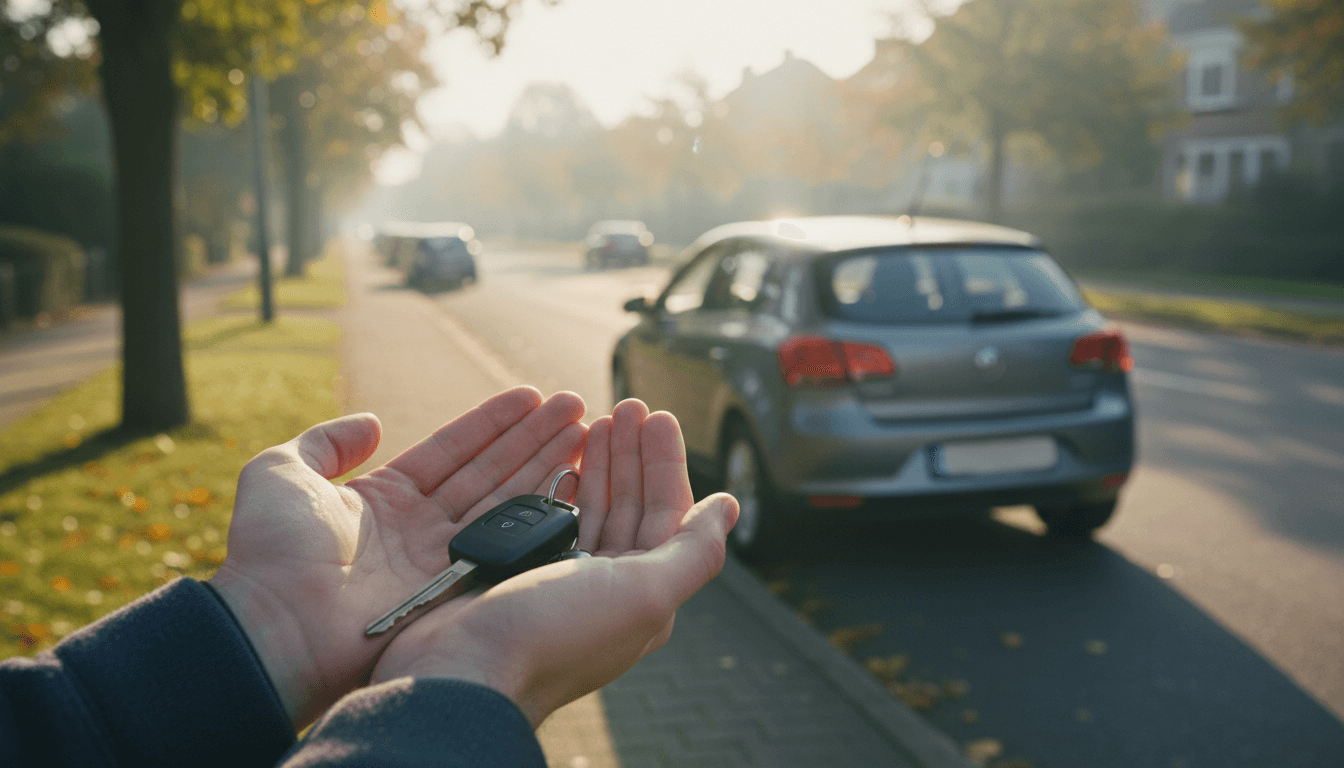
Two limits, not one: the most common mistake
The question every Italian family asks when a first car comes up is always the same: which used car can a newly licensed driver legally use? The answer circulates in simplified and wrong forms, along the lines of maximum 70 horsepower or no diesels. The actual rule is different and worth understanding properly, because getting it wrong means buying a car the new driver cannot legally drive.
A new driver holding a category B licence may drive M1 passenger cars that satisfy two conditions simultaneously: maximum engine power no greater than 105 kW, equivalent to about 142 hp, and a power-to-kerb-weight ratio no greater than 75 kW per tonne, roughly 102 hp per tonne [1][2].
The operative word is simultaneously. A car that breaches even one of the two parameters is out [1]. And that is exactly where the mistakes cluster.
Why the second limit is the one that rules cars out
The 105 kW ceiling is easy and rarely the problem: very few used superminis exceed it. The constraint that genuinely filters the market is the power-to-weight ratio.
The calculation is simple: take power in kW and divide by kerb weight expressed in tonnes. A 1,100 kg supermini with 85 kW lands at roughly 77 kW/t, so it is out despite modest absolute power. The same drivetrain in a 1,400 kg saloon gives about 61 kW/t and is comfortably allowed.
The practical consequence is counterintuitive: for a new driver, a larger and heavier car is often easier to qualify, from a regulatory standpoint, than a light and lively city car. Small hot hatches and the punchier versions of B-segment models are the first to fall outside.
Where to read the figures, properly
This is the operational point that makes the difference when looking at a listing. Neither value should be estimated: both are printed on the vehicle registration document.
Power in kW appears in field P.2, and kerb weight in field G. Divide the first by the second converted to tonnes. It is a thirty-second calculation, and it must be done on the document for the specific car being sold, not on a generic spec sheet for the model: different trim levels of the same model can carry different kerb weights and flip the result.
One frequent misconception is worth correcting: for cars, Italian law sets no engine displacement limit at all [1]. Only power and its ratio to weight count. A 1.6 diesel is permitted or excluded on exactly the same basis as a 1.0 petrol, according to its own numbers.
How long the restriction lasts
An important and often overlooked change concerns duration. Since 14 December 2024, new-driver status lasts three years from the issue of the licence, and the power limits apply throughout that period [1][3].
For buyers that reframes the economics. If the car has to serve the driver for three years rather than one, there is far less sense in settling for something too small or too old on the assumption it will be replaced shortly. Better to pick something that will last the full three years, possibly slightly larger, taking advantage of the fact that extra weight helps satisfy the kW/t ratio.
The exemption almost nobody knows about
The rules include an exception. The power limit does not apply when a supervising passenger sits alongside the new driver, provided that person is no older than 65 and has held a valid licence for the same category for at least ten years, or holds a higher category [1].
In practice that means the more powerful family car can be used by the new driver as long as a qualifying supervisor is present. Useful to know, but it does not solve the question of which car they can drive alone.
The other rules that come with the purchase
Two further constraints matter because they shape driving habits rather than model choice. For anyone under 21 or holding a licence for less than three years, the blood alcohol limit is zero: no alcohol whatsoever before driving [1]. Reduced speed limits for new drivers also remain in force on main roads and motorways.
The pre-purchase checklist
- Always ask for a photo of the registration document for that specific car and check fields P.2 and G.
- Do the kW divided by kerb weight in tonnes calculation yourself, without relying on generic model spec sheets.
- Check the licence issue date and count three years forward to see how long the restriction will apply.
- At equal power, prefer the heavier body style: it helps satisfy the ratio.
- Remember the limit has nothing to do with engine displacement, so do not rule out larger but low-output engines.
The bottom line
Choosing a used car for a new driver is not a question of horsepower but of two numbers read off the registration document and divided by each other. The more selective constraint is the 75 kW per tonne ratio, which penalises precisely the small and lively cars eighteen-year-olds tend to want, and with the three-year duration introduced at the end of 2024 the decision needs to be made with the medium term in mind. Thirty seconds of arithmetic on one document prevents buying a car that ends up parked.
Further reading
- Il Giornale Digitale, New-driver limits 2026: power, kW and which cars you can drive, 2026
- 6sicuro.it, New drivers 2026: power and displacement limits and how to choose the right car, 2026
- Automobilista.it, New drivers 2026: new power limits, three-year duration and updated rules, 2026
- Autoscuola Driving, New-driver limits 2026: power in kW, speed and alcohol, 2026
- Autobro.it, New-driver limits: what to know in 2026, 2026
Further reading
- Limiti neopatentati 2026: potenza, kW e quali auto puoi guidare — Il Giornale Digitale
- Neopatentati 2026: nuovi limiti di potenza e cilindrata, come scegliere l'auto giusta senza sbagliare — 6sicuro.it
- Neopatentati 2026: nuovi limiti di potenza, durata di 3 anni e regole aggiornate — Automobilista.it
- Limiti Neopatentati 2026: Potenza kW, velocita e alcol — Autoscuola Driving
- Limiti neopatentati: cosa sapere nel 2026 — Autobro.it
Related articles
Buying a Used LPG Car in 2026: Does It Pay Off?
Before buying a used LPG car in 2026, here is what actually matters: tank age, system testing, regional road tax and traffic bans, and how many kilometres it takes to break even.
Odometer Fraud: How to Spot It Before You Buy Used
A survey published today finds nearly one in three used-car buyers runs into a tampered odometer. Here's how to check for free before you sign, and what a seller risks for doing it.