The checklist to inspect a used car before buying
A practical guide to inspecting a used car before you buy: bodywork and rust, tyres, brakes, engine and fluids, electronics, mileage plausibility, documents and the test drive, with the Italian rules that matter.
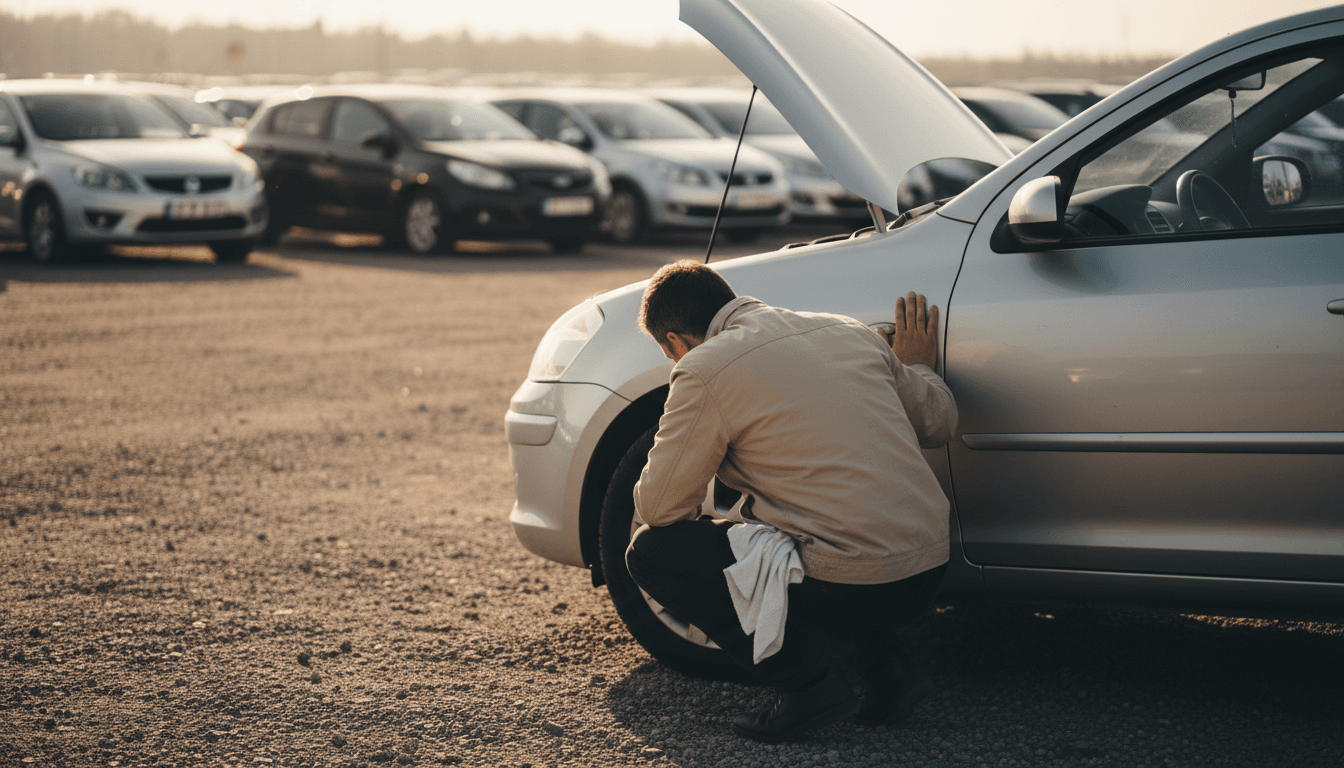
Why a checklist changes everything
Buying a used car in Italy almost always means dealing with a private seller or a small dealer, usually in a single afternoon with no second chance to come back and look again. A structured checklist turns excitement into method: you know what to look at, in what order, and which numbers have to add up. You do not need to be a mechanic. You need twenty focused minutes, a torch, a clean rag and the willingness to walk away. What follows are the checks that genuinely matter, from the paperwork to the test drive, with the Italian rules that shape a car's real cost.
Documents, VIN and passaggio di proprietà
Start with the paper, not the metal. Ask for the carta di circolazione (the logbook) and the digital Certificato di Proprietà, and confirm the seller is actually the registered owner. Match the VIN — the 17-character chassis number stamped on the body, usually visible under the windscreen and in the engine bay — against the number printed in the logbook: they must agree character for character. Check the date of first registration, the emissions class (Euro 4, 5, 6), which governs access to the ZTL and low-emission zones of many Italian cities, and the revisione (roadworthiness test) expiry. Remember that the first revisione falls four years after registration, then every two years; an expired one is a bargaining point. Budget for the passaggio di proprietà too — the IPT, stamp duty and ACI fees that vary by province and engine power — and run a PRA check to rule out outstanding liens or an administrative hold (fermo amministrativo).
Bodywork, paint and rust
Look at the car in daylight, clean and dry, and sight down the flanks at a shallow angle: rippled reflections, orange-peel texture or slightly mismatched shades between panels betray a respray, often the sign of an accident repair. Open and close every door, the bonnet and the boot: the gaps between panels should be even and symmetrical. Rust is the number-one enemy. Inspect the door edges, the wheel arches, the sills under the mats, the boot perimeter and the area around the fuel filler. A surface blister can be treated; corrosion that has eaten through the metal or reached the chassis rails is structural, and a reason to walk away. A small magnet helps reveal thick filler hiding under the paint.
Tyres and brakes
Tyres tell a long story. The legal tread limit is 1.6 mm, but for safety it is wise to replace them at around 3 mm; watch for uneven wear, which points to alignment or suspension trouble. Read the DOT code on the sidewall: the last four digits give the week and year of manufacture (for example 2523 means the 25th week of 2023). Tyres older than six or seven years harden even with plenty of tread left. For the brakes, look through the wheel spokes: the disc should be smooth, with no deep lip at the outer edge and no heavy scoring; a sharp ridge or a badly grooved face means the discs are near the end. On the drive, a spongy pedal or vibration under braking is a warning sign.
Engine, fluids and underbody
Open the bonnet with the engine cold. The oil on the dipstick should be amber to brown, never milky (a sign of water in the oil) nor thick and crusted. Check the coolant in the expansion tank and look for stains, drips or crust around gaskets and hoses. Underneath, fresh dark patches point to an oil leak; pale marks may be brake or power-steering fluid. Ask when the timing belt (cinghia di distribuzione) was last changed: many engines need it every four to six years or between 60,000 and 120,000 km, and it is an expensive job if neglected. On a cold start, persistent white, blue (oil) or black (fuel) smoke deserves attention.
Electronics, lights and warning lamps
With the ignition on, every warning lamp should light up and then go out as the engine starts; a check-engine, ABS or airbag light that stays on is a problem you should not ignore. Try every function: dipped and main beam, indicators, side and brake lights, rear fog, air conditioning (it must actually get cold), windows, wipers, stereo, parking sensors and camera if fitted. On newer cars, test the ADAS features too. A heavily worn seat and steering wheel on a car advertised as low-mileage is a contradiction that needs explaining.
Mileage and service history
A private car in Italy covers roughly 10,000 to 15,000 km a year. A ten-year-old car showing only 60,000 km is not impossible, but it needs a credible story. Ask for the stamped service book and the invoices for maintenance and repairs; consistency between mileage, wear and paperwork is the best way to expose a wound-back odometer. Each revisione records the mileage, so comparing those figures over time can reveal discrepancies. Be wary of a missing history or vague answers.
The test drive: what to listen and feel for
Drive for at least fifteen minutes, mixing town, a faster stretch and a few bumps. From cold, listen for metallic noises on start-up. On the move, the car should hold its line without pulling to one side when your hands are light on the wheel; potholes and corners bring out worn suspension or joints. A manual gearbox should engage without crunching, the clutch bite around the middle of the pedal travel and never slip; on an automatic or dual-clutch, harsh shifts or hesitation are suspect. Brake firmly and, where it is safe, feel the ABS work on a loose surface. Turn the radio off: silence is your best diagnostic tool.
The bottom line: how to decide
No used car is perfect, and it does not need to be. The point of the checklist is to separate the normal marks of age and use — light surface rust, tyres due for replacement, a revisione about to expire — from the structural or costly faults: rotten chassis rails, smoke from the engine, an incoherent history, documents that do not line up. Photograph everything, give yourself time to reconsider, and for a significant purchase consider a pre-purchase inspection by a trusted mechanic: it costs little against the risk. When the numbers add up and the test drive convinces you, you can negotiate on the price with facts rather than feeling. That is how you buy well — even while scrolling the listings on VendiVoce with a sharper eye.
Further reading
- Costi del passaggio di proprietà — Automobile Club d'Italia (ACI)
- Revisione periodica dei veicoli (art. 80 Codice della Strada) — Ministero delle Infrastrutture e dei Trasporti
- Acquisto auto usate: targa, telaio e controlli essenziali — Quattroruote
- Spessore del battistrada e limite legale — Michelin Italia
- Legge e burocrazia: guide e consigli per l'automobilista — alVolante
Related articles
Buying a Used LPG Car in 2026: Does It Pay Off?
Before buying a used LPG car in 2026, here is what actually matters: tank age, system testing, regional road tax and traffic bans, and how many kilometres it takes to break even.
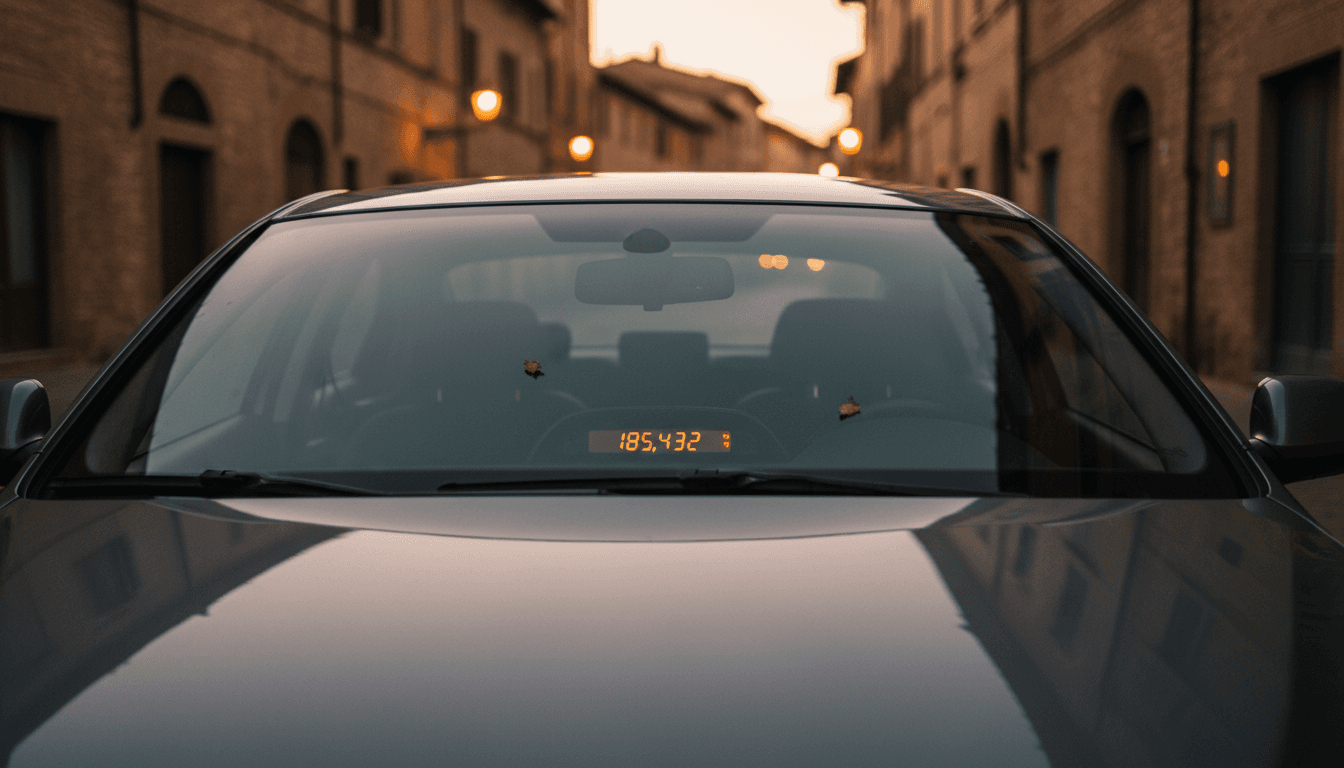
Odometer Fraud: How to Spot It Before You Buy Used
A survey published today finds nearly one in three used-car buyers runs into a tampered odometer. Here's how to check for free before you sign, and what a seller risks for doing it.