Scrapping Your Petrol Car for an EV Really Does Help the Climate, a New Science Study Finds
A study published on August 6, 2026 in Science recalculates how quickly scrapping a working petrol car for an EV pays off for the climate. The findings carry real implications for anyone buying or selling a used car in Italy.
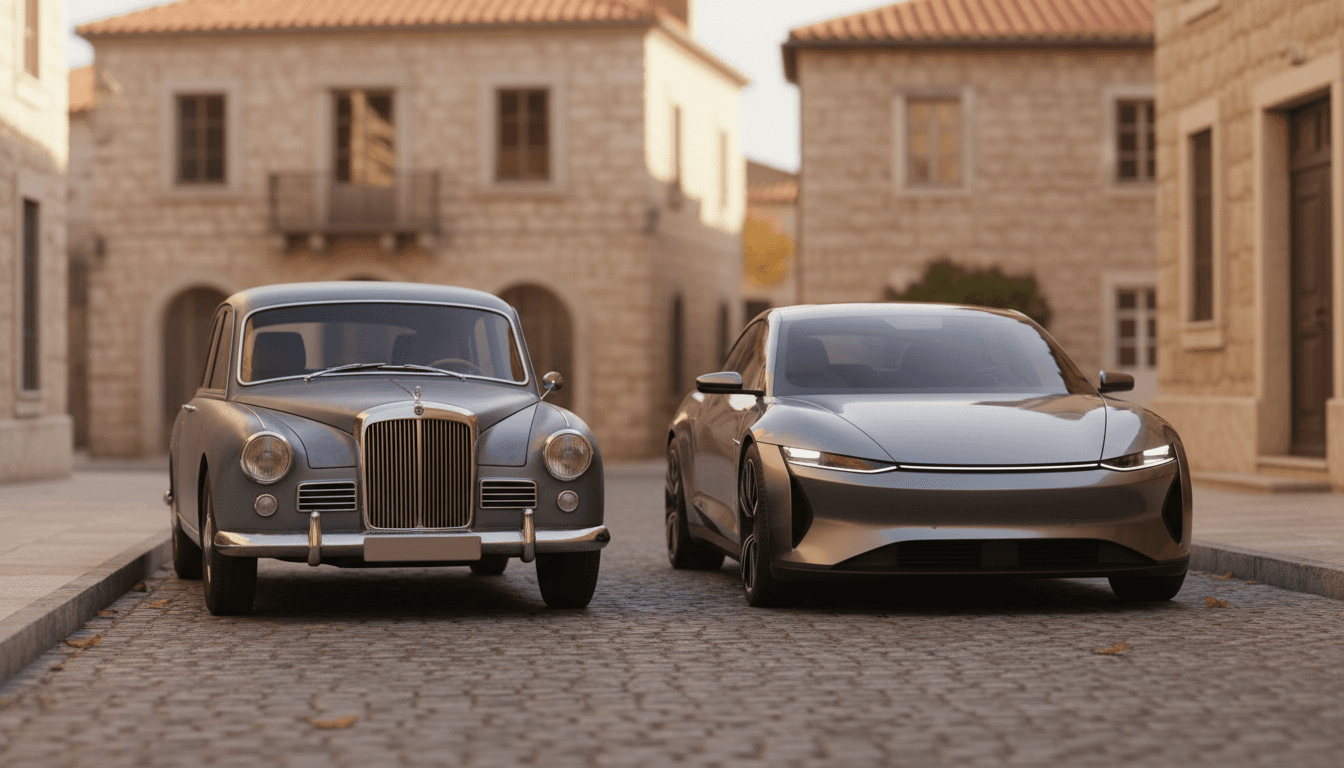
A New Science Study Rewrites the Climate Math on Scrapping Your Petrol Car
On August 6, 2026, the journal Science published a study that answers a question a lot of drivers quietly wrestle with: if my petrol car still runs fine, does scrapping it for an EV actually help the climate, or am I just moving the pollution from the road to the factory? The answer, from researchers J. Elliott Campbell (UC Santa Cruz) and Roland Geyer (UC Santa Barbara), turns out to be more clear-cut than most earlier estimates suggested — in the large majority of scenarios, retiring a working combustion car early is good for the climate, and the payoff arrives sooner than expected.
How the researchers approached it
Campbell and Geyer went well beyond a generic petrol-versus-electric comparison. They modeled more than 400 combinations of combustion and battery-electric vehicles, cross-referencing grid electricity mix, engine efficiency, annual mileage, battery size, and the manufacturing emissions of both vehicle types. Their time horizon runs sixteen years — a realistic span covering a car's life across a first and second owner. The paper, titled The climate benefits of retiring a fully operational internal combustion engine vehicle, appeared in Science, issue 6811.
The key numbers: 92 out of 100, payback in three years
The headline result: scrapping a fully functional petrol car and replacing it with an EV lowers lifetime emissions in 92 out of 100 modeled scenarios. The carbon debt from building the new EV, battery included, is typically repaid after about three years of driving. From there the advantage compounds quickly — for a representative SUV on the average grid, retiring the combustion car in its second year cuts cumulative emissions by 44 percent over sixteen years. Retire it in year one, and the reduction climbs to 58 percent. Those figures land well ahead of several earlier studies, which tended to push the climate break-even point out past five or six years.
Where the math stops working
This is not a blanket case for scrapping everything. The researchers point to three conditions under which the climate benefit shrinks or disappears: charging the replacement EV on a grid still heavily reliant on coal or gas, comparing against an efficient plug-in hybrid rather than a conventional petrol car, and driving the replaced car very little, under roughly 7,000 kilometers a year. In those cases the upfront emissions from building the battery weigh proportionally more against the savings from actually using the car, and payback stretches out considerably.
Scrap it or sell it: the detail that changes everything for the used market
One line in the paper matters enormously for anyone buying or selling used cars: the climate benefit only holds if the petrol car is genuinely scrapped, not resold. If the vehicle stays on the road under a new owner, it simply keeps producing its emissions somewhere else, and the net climate gain of the swap shrinks sharply or vanishes, because at a system level no polluting car left the road, a clean one was just added on top. The authors themselves are direct about where the practical takeaway lands: it is a policy conclusion more than an individual one. Scrappage incentives, when tied to genuine disposal of the replaced vehicle, are a powerful climate lever, far more effective than a generic subsidy for buying a new EV.
The Italian angle: what the 2026 incentives actually require
In Italy, the link between scrapping and the EV incentive is already the rule rather than the exception. The 2026 social bonus for electric cars, reserved for households with an ISEE up to 40,000 euros, offers up to 11,000 euros for an ISEE below 30,000 euros and up to 9,000 euros for an ISEE between 30,000 and 40,000 euros, on condition that a combustion vehicle is scrapped and the new EV is priced under 35,000 euros plus VAT. Scrap a genuinely old vehicle, up to Euro 2, and the Ecobonus can stack up to 13,750 euros. Read against Campbell and Geyer's findings, those conditions make more sense than they might have a year ago: they are not just an income-support or industrial-policy mechanism, they are what makes the climate benefit real, by preventing the scrapped car from simply continuing to drive around under someone else's name.
What this means if you are weighing the switch
If your petrol car is recent, efficient, and rarely used, the study suggests there is no rush. Waiting a few more years before switching does not meaningfully hurt the climate math, while scrapping it today with few kilometers on the clock wastes most of its remaining useful life. If instead you drive a lot, your car is already old, and you live somewhere the grid is relatively clean, the picture flips: scrapping it and switching to electric, using ISEE-linked incentives where you qualify, is very likely the choice that cuts the most emissions over time. If you would rather keep your current car but still want a gradual shift, a used EV instead of a new one is worth a look. Buying a vehicle that already exists adds no fresh manufacturing emissions to the ledger, which is exactly where a serious used marketplace like VendiVoce is useful, both for selling a petrol car to someone who still needs one and for finding a used EV at a friendlier price.
The bottom line
The Science paper is not an argument for scrapping every petrol car on the road tomorrow. It says something more precise, and ultimately more useful: the right moment to switch depends on how the car is actually driven, where the electricity charging its replacement comes from, and above all what physically happens to the car being replaced. In a market like Italy's, where incentives already tie an EV purchase to genuine scrappage, the science finally lines up with the paperwork: whoever actually scraps the car, not just on paper, is making the choice that matters most for the climate.
Sources
- EurekAlert!, UC Santa Cruz / UC Santa Barbara press release, August 2026
- Tech Xplore, August 2026
- CleanTechnica, August 16 2026
- Motorbox, August 2026
- Quotidiano Motori, August 2026
- MotorAge New Generation, 2026 incentives guide
Further reading
- Thinking about trading your car in for an EV? Here's a compelling new reason to do it now — EurekAlert!
- Thinking about trading your car in for an EV? Here's a compelling new reason to do it now — Tech Xplore
- New Science Says Scrapping A Working Gas Car For An EV Is Usually Greener — CleanTechnica
- Rottamare l'auto a benzina (anche se nuova) per l'elettrica conviene al clima. Lo studio. — Motorbox
- Rottamare l'auto termica per l'elettrica conviene al clima? — Quotidiano Motori
- Incentivi auto elettriche e ibride 2026: la guida completa per scegliere consapevolmente — MotorAge New Generation
Related articles
Buying a Used LPG Car in 2026: Does It Pay Off?
Before buying a used LPG car in 2026, here is what actually matters: tank age, system testing, regional road tax and traffic bans, and how many kilometres it takes to break even.

Odometer Fraud: How to Spot It Before You Buy Used
A survey published today finds nearly one in three used-car buyers runs into a tampered odometer. Here's how to check for free before you sign, and what a seller risks for doing it.