Plug-in Hybrid Cars: Are They Worth It in Italy?
How a plug-in hybrid works, how much electric range it really has, when it pays off (regular charging, short trips) and what to check when buying used.
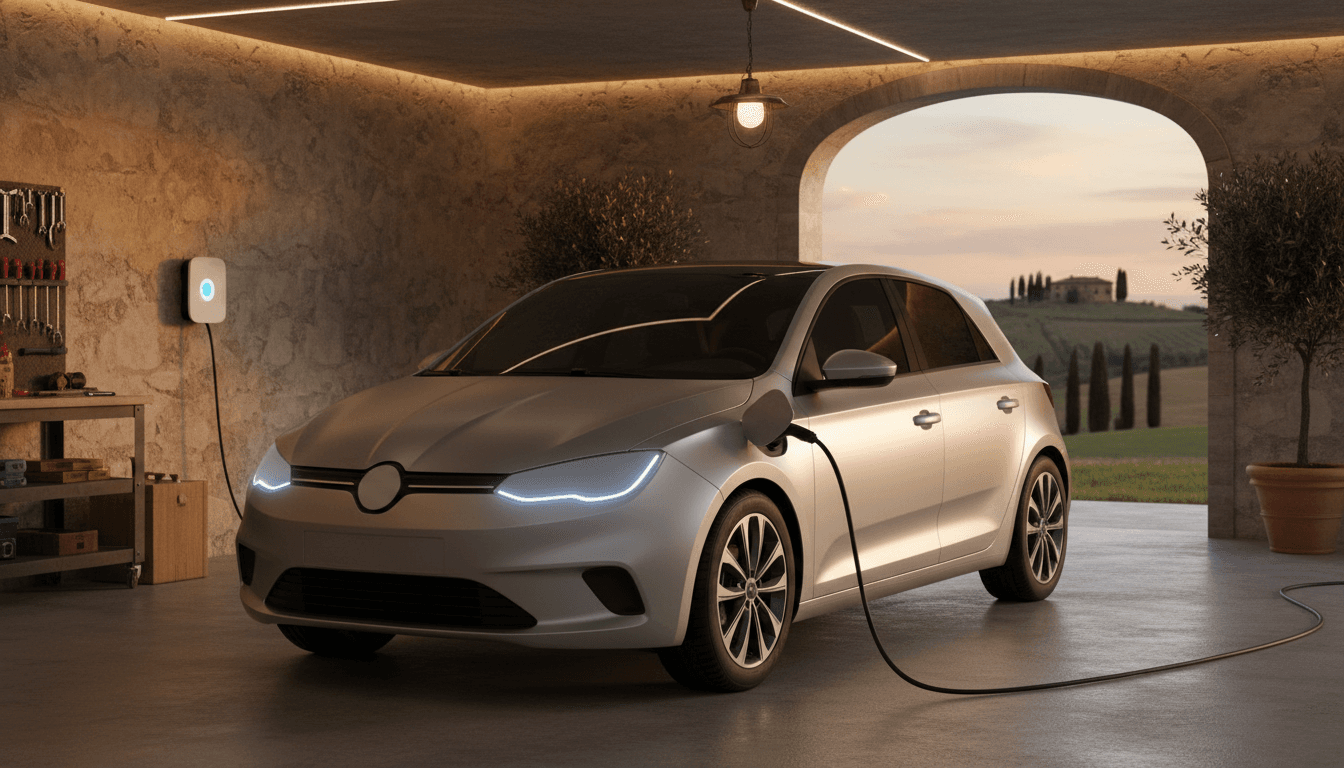
Is a plug-in hybrid worth it in Italy? It comes down to one thing more than price or brand: how often you plug it in. Charged every night and used for short trips, it behaves almost like an electric car; never charged, it is an expensive, heavy petrol car. Here is how it works, what range to really expect and who should buy one, new or used.
How a plug-in (PHEV) works
A plug-in hybrid combines a combustion engine, an electric motor and a battery larger than a regular hybrid's, which you can recharge from a socket. It can run like an ordinary car, in electric mode while the battery lasts, or blend both power sources. Charging is typically AC only, around 3.7 to 7.4 kW, and DC fast charging is rare. A home wallbox, or even a household socket, can refill the battery overnight.
Electric range: claimed versus real
Industry analyses put the average electric range of plug-ins on sale in 2026 at roughly 50 to 80 km on the WLTP cycle, with some models above 100 km; more cautious data sheets say 30 to 80 km. WLTP is a type-approval benchmark, not a promise: driving style, outside temperature, load and use of climate control all cut real range, especially in winter and on motorways.
For Italian drivers this matters less than it seems. About 70 percent of daily trips stay under 50 km, so a plug-in with 50 to 60 real km covers a commute without starting the engine, provided it is charged.
When it makes sense
A plug-in works if:
- You can charge at home or work regularly, ideally every day.
- Your daily trips are short (under 40 to 50 km) with the occasional long drive, where the engine removes range anxiety.
- You want lower urban consumption and emissions but have no public charger nearby.
It does not make sense if you will not charge: the extra battery weight raises petrol consumption while you paid a purchase premium. One analysis describes it as an expensive hybrid used like an ordinary petrol car.
Costs: price, road tax, incentives
A plug-in costs more upfront than a regular hybrid or a comparable petrol car, and the mechanics are more complex, with two powertrains and a high-voltage system. On the tax side:
- Incentives: for 2026 there appear to be no active national incentives for private buyers of plug-ins; check local schemes and manufacturer offers.
- Bollo (road tax): it is a regional tax, so breaks for plug-ins vary widely from region to region. Check your Region or ACI before buying.
Emissions: the critical view
The environmental benefit depends on usage. One source estimates a regularly charged plug-in falls to 30 to 50 g/km of CO2 in real use, but a European Commission study, cited in Italian media, questions the benefit when real consumption strays far from WLTP figures, typically because owners rarely charge. In short, a plug-in rewards those who use it like an electric car.
Buying a used plug-in
The used market offers plug-ins a few years old at saner prices. Before signing:
- Battery health: ask for a remaining-capacity test and check the battery warranty, which many makers cover for several years or a set mileage.
- Charging cable and connectors: confirm the original cable is present and the socket works.
- Service history: regular servicing of both the engine and the electric system.
- Real consumption: ask for average consumption and whether the car was charged regularly; a trip computer with many electric kilometres is a good sign.
- Paperwork: check the registration document, emissions class and liens with a PRA search.
Plug-in, full hybrid or electric?
- Full hybrid: no charging needed, low city consumption, modest cost. The simplest choice if you cannot plug in.
- Plug-in: best if you charge often and also drive long distances; worst if you do not charge.
- Electric: lowest cost per kilometre if you charge at home, but it demands firmer habits and infrastructure.
The takeaway
Before buying a plug-in, do an honest calculation: where will you charge, how many kilometres do you drive daily and what is your regional road tax. If those three answers are good, a plug-in can be the best choice; otherwise a full hybrid costs less and does the same job. When buying used, battery health and charging history make the difference.
Further reading
- Auto.it, Auto ibride plug-in: quanto conviene davvero nel 2026?
- AutoScout24, Plug-in hybrid (PHEV): autonomia, consumi e convenienza
- Sicurauto, Auto ibride plug-in: significato, come funzionano, vantaggi e svantaggi
- Smartworld, Le ibride plug-in così come sono non servono a niente
Further reading
- Auto ibride plug-in: quanto conviene davvero nel 2026? — Auto.it
- Plug-in hybrid (PHEV): autonomia, consumi e convenienza — AutoScout24
- Auto ibride plug-in: significato, come funzionano, vantaggi e svantaggi — Sicurauto
- Le ibride plug-in così come sono non servono a niente: lo studio della Commissione Europea — Smartworld
Related articles
Used electric car: battery SoH and warranty checks
What to check before buying a used electric car in Italy: battery SoH and test cost, 8-year warranty and transferability, real range, charging, PRA search, road tax and insurance.
Home EV Charging in Italy: Costs, Wallbox, Bonus
What home charging really costs in Italy in 2026: price per kWh, charging times by wallbox type, the 3 kW meter, installation costs, condominium rules and the status of the 80% bonus.