Home EV Charging in Italy: Costs, Wallbox, Bonus
What home charging really costs in Italy in 2026: price per kWh, charging times by wallbox type, the 3 kW meter, installation costs, condominium rules and the status of the 80% bonus.
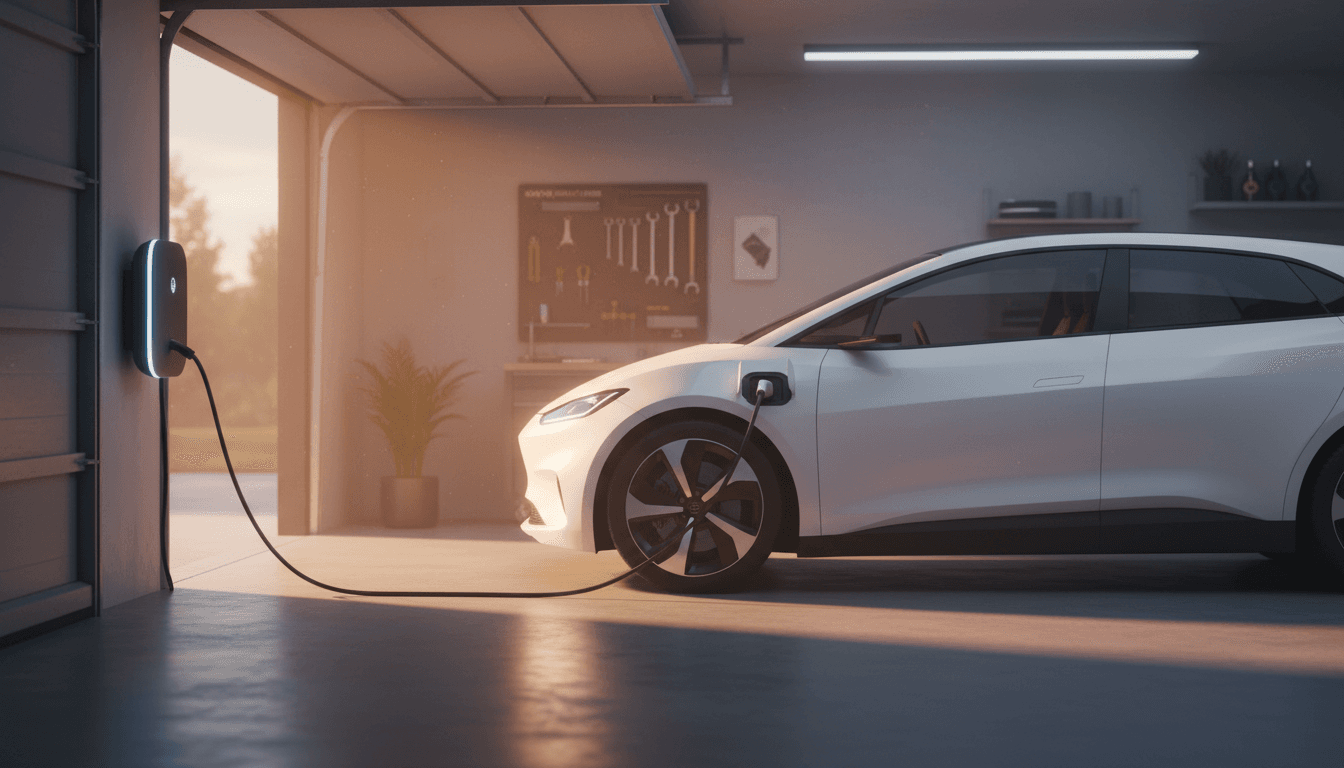
Charging an electric car at home is the cheapest way to fill up, but the real saving depends on three things: your price per kWh, your meter power and the type of socket or wallbox you use. This guide lays out costs, charging times, installation, condominium rules and the state of the bonus, with mid-2026 figures for Italy.
What home charging costs
The home price depends on your contract. ARERA says that from 1 April 2026 the reference price for the standard vulnerable customer on the regulated tariff is 30.24 euro cents per kWh, taxes included; free-market offers can differ a lot. Industry guides usually work with a range of 0.20-0.30 euros per kWh.
With a consumption of 16 kWh per 100 km, the typical example used in a Rinnovabili.it guide, 0.20-0.30 euros per kWh works out at roughly 3.20-4.80 euros per 100 km. A 50 kWh charge costs 10 euros at 0.20 euros per kWh and 12.50 euros at 0.25, as Che Auto Compro illustrates.
Home versus public charging
At public chargers the bill climbs. According to Che Auto Compro, in February 2026 public AC charging up to 22 kW cost up to 0.69 euros per kWh, DC up to 100 kW reached about 0.79 euros and above 100 kW up to 1.00 euro. Rinnovabili.it reports an average AC price of about 0.62 euros per kWh in October 2025, close to 10 euros per 100 km against 3-5 euros at home. Operator subscriptions lower the price but usually stay above the home tariff.
The practical comparison: someone who charges mostly overnight in their own garage spends about a third of what a driver relying on the public network pays. If you have no parking space where a charge point can go, expect much higher rates and choose your tariff carefully.
Socket, wallbox and charging times
A standard Schuko socket delivers about 2.3 kW: for a 50 kWh battery that means 15-25 hours, says Rinnovabili.it. A 3.7 kW single-phase wallbox takes 12-14 hours, a 7.4 kW one 6-8 hours and a three-phase 11 kW unit 5-6 hours. The 11 and 22 kW wallboxes need a three-phase supply and a car that accepts that AC power: many cars top out at 11 kW.
Edilizia.com offers a useful example: with a 60 kWh usable battery, going from 20% to 80% takes about 40 kWh from the grid, which means roughly 11 hours at 3.7 kW, 5.5 hours at 7.4 kW and about 4 hours at 11 kW. The real speed is always the lowest of the wallbox setting, the power available in the building, the car's onboard charger and the cable limits.
For everyday use, when the car sits all night, a 3.7 kW or 7.4 kW unit is almost always enough. Paying more for 11 kW only makes sense if the property is already three-phase and the car can use it.
The 3 kW meter question
The standard home supply in Italy is 3 kW. You can install a wallbox on it, but it will be set to a lower current and will not charge reliably at 3.7 or 7.4 kW. If you switch on the oven or washing machine while the car charges, you risk tripping the meter, which is why dynamic load management is recommended: it lowers charging power when other appliances need it.
Raising contracted power mainly increases the fixed part of the bill, not the price of each kWh. Che Auto Compro estimates about 25 euros more per year for every extra kW: a 15 kW contract for an 11 kW wallbox would cost roughly 200 euros a year more, whatever you use. At 6 kW, Rinnovabili.it says a 0-100% charge takes about 7-8 hours without interruptions.
There is also the ARERA-GSE trial that allows up to 6 kW at night and on holidays without changing your contract: new applications to GSE closed on 30 June 2026, while approved setups continue until 30 June 2027.
What a wallbox installation costs
Edilizia.com gives indicative ranges: a basic 3.7-7.4 kW wallbox between 400 and 900 euros, a smart 7.4-11 kW one between 700 and 1,600 euros, and dual or 22 kW units from 1,500 to 3,500 euros and up. A simple installation costs about 500-1,200 euros, a complex one from 1,200 to 4,000 euros or more, with digging, distance from the fuse board and cabling as the main items. These are orders of magnitude, not a price list: always get two or three quotes after a site visit.
The work must be done by a qualified firm under DM 37/2008, with a declaration of conformity. Inside private property, without significant building work, a building permit is normally not needed; for external excavation, structural work or common areas a CILA or SCIA may be required.
Living in a condominium
If you live in a condominium, work on common parts needs assembly approval by the majority set out in article 1136, second paragraph, of the Civil Code, under article 17-quinquies of DL 83/2012. If the condominium refuses or does not decide within three months of a written request, the owner can go ahead at their own expense, respecting article 1102 and the other legal conditions. It is wise to send a written request with a technical report, cable route, power and costs borne by you.
The wallbox bonus: where it stands
Under the DPCM Automotive of 10 June 2026, an 80% contribution on purchase and installation is planned, valid until 31 March 2030, capped at 1,500 euros for individuals and 8,000 euros for condominium common parts. The same update, dated 29 July 2026, adds that the application window is not yet open and the operating rules have not been published. The previous window closed on 27 May 2025. Before you sign a quote, check the ministry and GSE sites to see whether applications have opened and whether buying first would disqualify you.
Before you buy a wallbox
- Work out your average consumption per 100 km and the real price per kWh on your bill.
- Check your meter power and whether the system is single or three-phase.
- Check how many kW your car accepts on AC.
- Ask for quotes with a site visit and dynamic load management.
- Check the bonus status before buying so you do not lose the contribution.
In short: home charging costs about 3-5 euros per 100 km against 10 or more at public chargers, and a 7.4 kW wallbox on a suitable system solves almost every daily need.
Further reading
Further reading
Related articles
Plug-in Hybrid Cars: Are They Worth It in Italy?
How a plug-in hybrid works, how much electric range it really has, when it pays off (regular charging, short trips) and what to check when buying used.
Used electric car: battery SoH and warranty checks
What to check before buying a used electric car in Italy: battery SoH and test cost, 8-year warranty and transferability, real range, charging, PRA search, road tax and insurance.