Superbollo in Italy: How It's Calculated and Reduced
20 euros per kW above 185: worked examples, age-based reductions, F24 payment and what to check before buying a powerful used car.
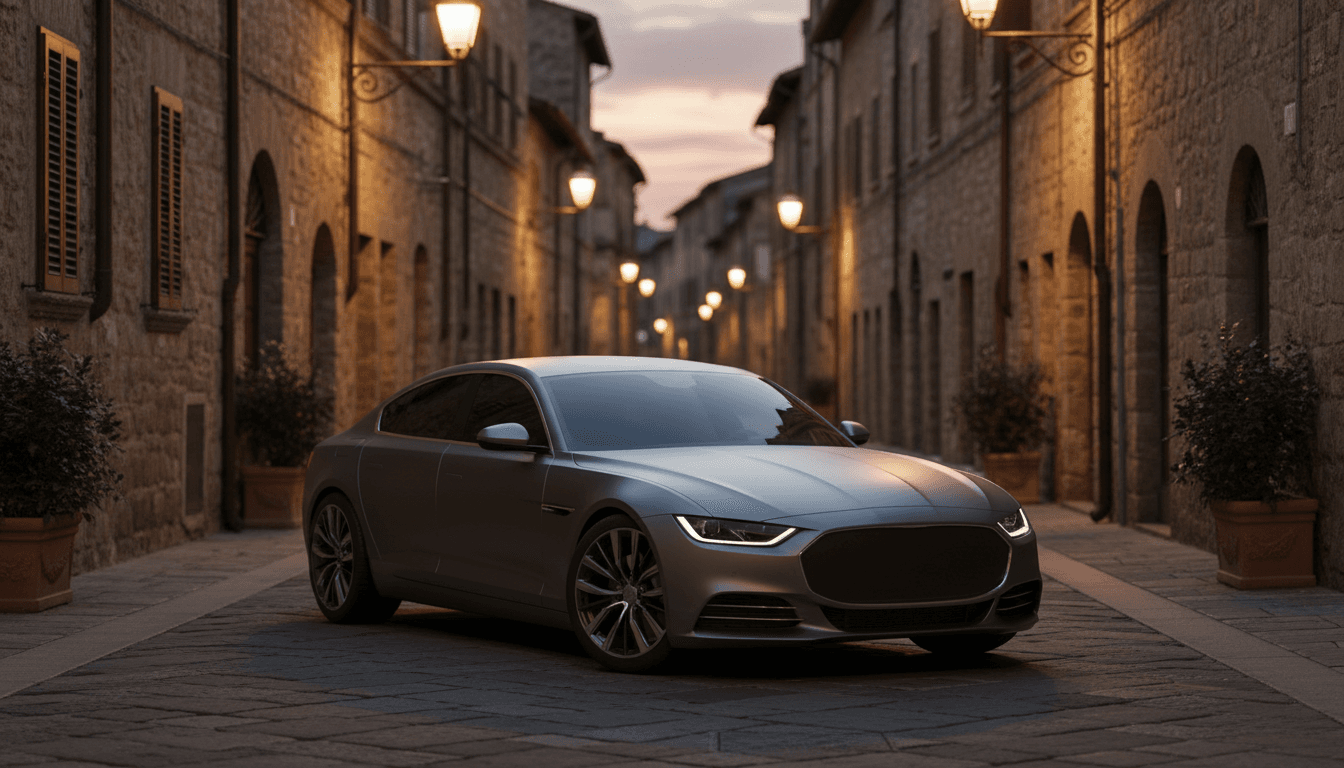
Eyeing a powerful used car and wondering how much the superbollo really costs? Many buyers only find out after the purchase, when an F24 payment form for a few hundred euros shows up. The superbollo, or state surtax, hits cars above a certain power, but it shrinks as the vehicle ages and disappears entirely after twenty years. Here is how it works, how to calculate it and how to price it in before you buy.
What the superbollo is and who pays it
The superbollo is a state surcharge added to the ordinary road tax (bollo auto) for vehicles with more than 185 kW. It is calculated only on the power above the threshold: 20 euros for every kW over 185 [1][2]. It does not depend on engine size or fuel: what counts is the power shown on the registration document, field P.2.
Unlike the ordinary road tax, which goes to the Region, the superbollo goes to the State and is paid with an F24 form [1]. Its deadline follows that of the road tax, so it depends on the registration month and on the rules of your region.
How to calculate it: concrete examples
The formula is simple: (car kW - 185) x 20 euros. A few examples:
- 200 kW: 15 excess kW x 20 euros = 300 euros a year.
- 220 kW: 35 excess kW x 20 euros = 700 euros a year.
- 260 kW: 75 excess kW x 20 euros = 1,500 euros a year.
These amounts add to the ordinary road tax, which is already scaled by kW and emissions class. A big diesel SUV or a sporty saloon can cross the threshold without the owner noticing. Always check the P.2 value in the listing and do not rely on horsepower alone: 1 kW is about 1.36 hp, so 185 kW is roughly 252 hp.
Reductions with age
The good news for used buyers is that the superbollo falls as the car ages, counting from its manufacture date. The most cited scheme is 12 euros per kW after 5 years, 6 euros after 10 years and 3 euros after 15 years, down to zero beyond 20 years [1][3]. In percentage terms that is a 40%, 70% and 85% reduction, and full exemption at 20 years. Some sources give slightly different percentages in their summaries, but the per-kW amounts match this scheme: if in doubt check the Revenue Agency or ACI website.
A practical example: the same 260 kW car carries 1,500 euros of superbollo when new, about 900 euros after five years, about 450 euros after ten and about 225 euros after fifteen. So an older used car with plenty of power can be much more sustainable than you think, provided maintenance and fuel costs stay within budget.
How and when to pay
The superbollo is paid by F24 with its dedicated tax code, by the road tax deadline. It cannot be paid through the usual regional channels: the distinction matters, because paying only the ordinary road tax leaves the superbollo unpaid. If in doubt, a vehicle-paperwork agency or tax assistance centre can compute the exact amount and fill in the form. Keep the receipt after paying.
What happens if you forget
Non-payment leads to an assessment notice, penalties and interest. Penalties vary with the delay, so check current rules before deciding to pay late. In general, voluntary correction (ravvedimento operoso) lets you regularise with reduced penalties if you act early: the longer you wait, the more you pay.
Buying and selling: who pays what
The superbollo, like the road tax, is owed by the owner shown in the vehicle registry for the tax period. If you buy a used car, ask the seller for proof of payment for recent years and check by registry search that no demands are pending. If you sell, remember that until the transfer is recorded you remain the owner and the requests may come to you. That is why you should complete the ownership transfer promptly.
The practical takeaway
Before viewing a used car, read the P.2 value and do the sum: (kW - 185) x 20, then apply the age reduction. Add the result to the ordinary road tax, insurance and servicing, and compare the yearly total with an alternative just under 185 kW. Often a 180 kW version offers similar performance without the surtax, and that saving is a strong argument in negotiation.
Further reading
- Altroconsumo, superbollo auto: https://www.altroconsumo.it/auto-e-moto/automobili/consigli/superbollo-auto
- Segugio.it, superbollo: what it is and how to calculate it: https://assicurazioni.segugio.it/guide-assicurazioni/superbollo-auto-cos-e-e-come-si-calcola.html
- SicurAuto, superbollo: exemptions, reductions and where to pay: https://www.sicurauto.it/guide-utili/superbollo-auto-esenzioni-riduzioni-e-dove-si-paga/
- Money.it, superbollo 2026: how it works and when to pay: https://www.money.it/superbollo-2026-come-funziona-quando-paga-addizionale-erariale
Further reading
Related articles

Winter Tyres in Italy 2026: Rules From 15 November
From 15 November 2026 to 15 April 2027 winter tyres or chains return: where the rule applies, which tyres to choose, speed index and fines.
Italy diesel excise cut ends: what changes Nov 8
Italy's diesel excise cut expired on 7 November 2026: what it was really worth, the history of this year's cuts, and what it means for anyone driving, buying or selling a used diesel.