Flush Door Handles: China Recalls 4.3 Million EVs, and What to Check Before Buying One Used
The world's largest recall over flush door handles hits Tesla and eight other Chinese automakers. Europe still has no binding rule, so here is what to check before buying a used EV with electronic handles.
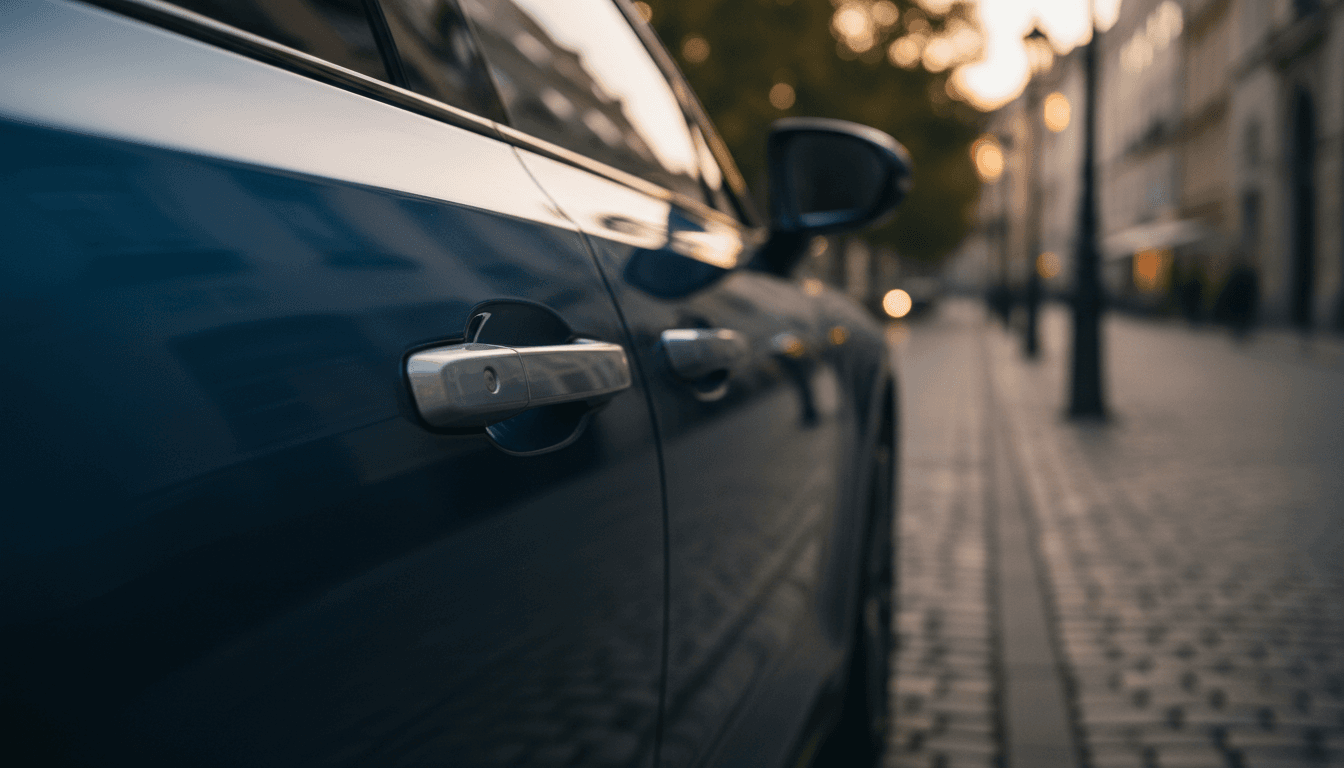
The biggest handle-related recall in EV history
On August 21, 2026, China's State Administration for Market Regulation (SAMR) published a wave of recalls covering more than 4.3 million electric vehicles [2][3]. The bulk belongs to Tesla: nearly 3 million units, including 973,156 China-built Model 3s and 1,956,713 Model Ys, plus another 46,041 imported cars (Model 3, Model X and Model S) [1]. The physical fix rolls out from September 25, but Tesla is far from the only name on the list: Xiaomi, Leapmotor (over 371,000 units, the C01 and C11), XPeng (roughly 264,000 units across the G6, P7+ and X9), Zeekr (over 92,000 units, the 007 and X), plus Geely, Chery, Dongfeng, BAIC BluePark and FAW all appear too [2][3].
The technical reason is the same across every brand: the mechanical emergency releases, meant to open a door even with the electrical system dead, are hard to find because they are colored to match the interior trim, and in a crash that knocks out the low-voltage system they can delay occupants getting out or rescuers getting in [1][2]. For Tesla, the fix agreed with SAMR is twofold: a free warning label placed near the handle, plus an over-the-air software update that adds a strategy to automatically lower the windows after a collision [1].
Why China moved now: what NHTSA found
The Chinese recall did not appear out of nowhere. In the US, the National Highway Traffic Safety Administration opened a rulemaking process after a preliminary review linked flush, electrically-actuated handles to at least 15 deaths across roughly a dozen crashes where occupants or first responders could not get doors open [4][6]. NHTSA's stated cause is nearly identical to China's: the handles can stop working once the auxiliary battery voltage drops below what is needed to trigger the electronic release [4]. Congress, meanwhile, is weighing the SAFE Exit Act, which would require a clearly marked mechanical release on every car fitted with electronic handles, along with guaranteed access for first responders [4].
Europe is debating, not deciding
Europe's position is still unsettled. In February 2026, MEPs Valérie Devaux and Grégory Allione filed a formal question to the European Commission over flush-handle risk, prompted by the first reported incidents in China [5]. The Commission has not issued a binding directive: for now the real battleground is the update to the General Safety Regulation (GSR 2) and the parallel discussion inside UNECE and Euro NCAP protocols, which could eventually require a mechanical emergency release that still works after an impact, though the timeline remains open [5]. China, for its part, has already gone further: from 2027, fully recessed handles will be banned outright on new EVs sold in the country, not just retrofitted on cars already on the road.
What this actually means for Italy
None of these cars have been formally recalled in Europe: the SAMR order covers Chinese registrations, not the Teslas or Zeekrs sold in Rome or Milan. But the handle mechanism is identical worldwide, and at least one recalled brand is already on Italian roads with the same design: Zeekr, which entered Italy through Jameel Motors across a 52-dealer network, sells the X, one of the two models named in the Chinese recall [3]. Leapmotor, distributed in Italy through the Stellantis network, currently lists different models (the T03 and C10) than the ones recalled in China (the C01 and C11), so the direct impact on our market stays limited for now. Tesla is the real elephant in the room, though: the Model 3 and Model Y are among the most searched used EVs in Italy, and they share the same electric-release principle as the Chinese-built cars, even when assembled elsewhere.
What to check before buying a used EV with flush handles
Until a binding European rule arrives, the burden of checking the emergency release falls on the buyer. Before signing for a used EV with flush or electronic handles, these checks are worth doing even on an ordinary test drive:
- Ask the seller to physically show the mechanical release on every door, front and rear: on many Teslas it is a small lever tucked inside the front door pocket, while the rear release can require removing a small cover or panel.
- Try opening a door from the inside with the key removed and, if possible, with the car fully powered down rather than just parked with the engine off, since that best simulates an actual electrical failure.
- Check the health of the low-voltage auxiliary battery (usually a 12V unit), since its degradation is the technical cause cited most often by both NHTSA and SAMR; a recent service record on that battery is a good sign.
- Run the VIN through the manufacturer's own recall lookup tool, even for a private sale, to confirm the car is not sitting on an open recall campaign, and do it before you buy, not after.
- Ask whether any safety-related software updates have been installed, such as the post-crash window-lowering strategy Tesla just rolled out, since many of these fixes arrive over the air and leave no visible trace.
The next 18 months will decide the design
Between China's outright ban on recessed handles from 2027, a possible US federal standard, and the GSR 2 update working its way through Brussels, flush handle design is likely to change substantially by the end of 2027. For anyone selling a used EV today, that makes a visible, working mechanical release, ideally documented with a photo in the listing, a genuine selling point: it shows the car already meets a standard that, sooner or later, is likely to become mandatory in Europe too.
Further reading
- Quasi 3 milioni di Tesla richiamate in Cina per le maniglie di emergenza — ANSA
- Richiamo record per 4,3 milioni di auto: Tesla, Xiaomi e altri marchi nel mirino — Quattroruote
- Tesla e otto case cinesi richiamano oltre 4 milioni di EV per le maniglie a scomparsa — Start Magazine
- Maniglie auto, cosa vogliono cambiare gli USA dopo il caso Tesla — Motor1 Italia
- Intrappolati in auto: le maniglie elettriche saranno vietate in Europa dopo alcuni incidenti in Cina — Automoto.it
- Maniglie a scomparsa, negli USA in arrivo nuove regole dopo gli ultimi incidenti. E in Europa? — Motorbox
- Millions Of EVs Recalled In China Over Hard-To-Find Mechanical Door Handles — InsideEVs
- In Cina 4,3 milioni di auto, soprattutto Tesla, saranno richiamate per sistemare le maniglie a scomparsa giudicate poco sicure — Il Post
Related articles
Buying a Used LPG Car in 2026: Does It Pay Off?
Before buying a used LPG car in 2026, here is what actually matters: tank age, system testing, regional road tax and traffic bans, and how many kilometres it takes to break even.
Odometer Fraud: How to Spot It Before You Buy Used
A survey published today finds nearly one in three used-car buyers runs into a tampered odometer. Here's how to check for free before you sign, and what a seller risks for doing it.