Does Ultra-Fast Charging Really Wreck an EV Battery? What the Data Actually Shows for Used Buyers
BYD fast-charged one of its EVs over 350 times in nine days and lost just 1.3% of battery capacity. Independent data from 22,700 vehicles tells a more nuanced story. Here is what actually matters when you are shopping for a used EV.
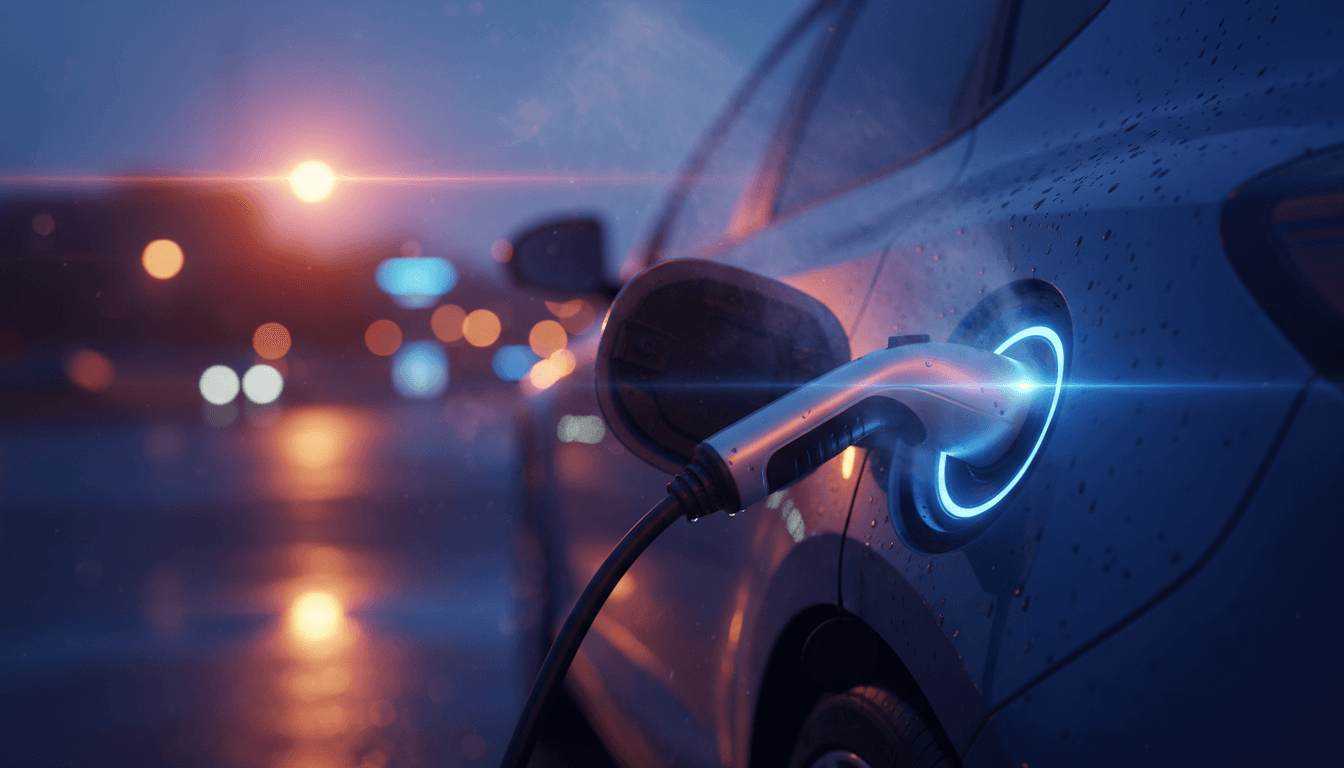
BYD's extreme test: 350 fast charges in nine days
In just over eight days and nineteen hours, a Yangwang U7 sedan from BYD covered 30,000 kilometres at a steady cruising speed close to 240 km/h, with the air conditioning running the whole time, outside temperatures above 36 degrees Celsius and 80 percent humidity. Along the way the car stopped more than 350 times for ultra-fast charges, drawing on the megawatt-class flash-charging network BYD is building alongside the launch of its Blade Battery 2.0, which the company says can take a pack from 10 to 97 percent in roughly nine minutes.
When the test wrapped up, published on August 26, 2026, BYD reported that the battery had lost just 1.3 percent of its original capacity, finishing at 98.7 percent state of health (SOH). If confirmed, that figure would push back hard against one of the most common fears among EV shoppers: that frequent fast charging wrecks a battery pack far faster than slow charging at home.
One caveat matters here: this was an in-house test, run and published by BYD itself on a single vehicle, under conditions built to showcase its new flash-charging technology at launch. No independent third party has verified the numbers yet, and nine days of stress testing is not the same as years of ordinary ownership.
What the independent data says, at a much larger scale
For a less lab-like picture, look at Geotab, the telematics company that published one of the largest battery degradation analyses to date on January 13, 2026: more than 22,700 electric vehicles across 21 models, tracked under real, everyday use.
The picture that emerges is more nuanced than BYD's test suggests. Average annual degradation rose to 2.3 percent, up from 1.8 percent in the 2024 analysis, driven largely by the growing share of DC fast charging. The more telling figure concerns the heaviest users: vehicles with more than 40 percent of their charging sessions above 100 kW showed degradation rates as high as 3.0 percent per year, nearly double the roughly 1.5 percent recorded for vehicles charged mostly on AC, at home or at work. Heat plays a role too, adding roughly 0.4 percentage points of annual degradation in hot climates versus mild ones — worth noting for a market like Italy, especially in the south and during longer, hotter summers.
Extrapolating those rates, Geotab projects that an average battery retains 81.6 percent of its original capacity after eight years — a figure that still sits comfortably within the warranty thresholds most manufacturers offer, typically at least 70 percent retained capacity at 8 years or 160,000 km, whether the badge on the bonnet is Tesla, Volkswagen, Hyundai or BYD itself.
AC and DC are not the same thing, and that is the explanation
AC charging, the kind delivered by home wallboxes or 7-22 kW public points, passes through the car's onboard charger, which meters the energy flow so the battery pack is never under real stress. DC charging, from 50 kW rapid chargers all the way up to megawatt-class flash systems like the one BYD just tested, bypasses the onboard charger and pushes current directly into the cells: faster, but hotter and more electrochemically demanding. That extra heat, repeated hundreds of times over years, is exactly why habitual fast charging tends to age a battery faster than slow charging — even though, as BYD's test shows, a single intensive session will not damage it dramatically.
Why the two stories do not actually contradict each other
BYD's test shows that ultra-fast charging engineering has reached the point where, with a battery pack and cooling system built for it, a single intensive session will not fry the cells. That is a genuine technical milestone, reassuring for anyone worried that one highway fast-charge stop could damage their car over a single weekend.
Geotab's data tells a different story: what happens over years of repeated use, with hundreds of fast-charge cycles layered on top of heat, cold, long idle periods at low state of charge, and high mileage. Here the gap between charging habits shows up clearly, and it is nearly double. In short: an occasional fast charge leaves no measurable mark; making it the dominant charging method for years accelerates degradation over time.
What this means for used EV buyers in Italy
For anyone browsing the used market, the right question is no longer whether a car has ever used fast charging, but how much and how often. A small electric city car driven mostly around town and charged overnight at home or at the office will generally reach the used market with a healthier battery than an identical car put through long motorway trips with habitual rapid charging, even at the same mileage and registration year.
The most reliable way to check is to ask for a battery state-of-health (SOH) reading, now available through OBD diagnostics, manufacturer apps (Tesla, Volkswagen and BYD apps all show charging history, among others) or certifications offered by some dealers and independent specialist platforms. As industry guides note, an SOH above 95 percent is considered excellent, while anything below 75 percent is a red flag worth negotiating on, not just a polite question to ask the seller.
Three practical checks before you sign
First, always ask for a current SOH report rather than trusting mileage or age alone — two cars with identical odometers can carry very different batteries depending on how they were charged over the years.
Second, ask about the previous owner's charging habits where possible. A car used mostly for local trips with home charging tends to age better than one worked hard on long journeys with frequent rapid-charge stops.
Third, do not be scared off by the odd fast charge on the car's history. As both BYD's test and Geotab's data show, the issue is not occasional use on a road trip, but years of relying on it as the default way to charge.
On VendiVoce, sellers listing a used electric car can note the battery's state of health in the ad — a figure that, in light of these numbers, now carries as much weight as mileage in a buyer's decision, if not more.
Further reading
- BYD's Yangwang U7 battery capacity dips 1.3% after 30,000 km and 350+ flash charges in 9 days — CarNewsChina
- Does Ultra-Fast Charging Ruin An EV Battery? BYD Did It 350 Times In 9 Days To Find Out — InsideEVs
- 350 cargas rapidas parecian una receta para degradar una bateria; la nueva de BYD demuestra lo contrario — Motor.es
- New Geotab data shows EV battery health remains strong as fast charging use increases — Geotab / GlobeNewswire
- Auto Elettriche Usate 2026: Guida Acquisto, Prezzi e Batteria — GuidaAutoElettrica.it
Related articles
Timing Belt: When to Change It and What It Costs
Real replacement intervals by brand, preventive costs versus a breakage, and what to check before buying or selling a used car.
BMWs Third Fire Recall of 2026 Just Landed, and This Time It Is the Older Cars
On September 3, 2026, BMW opened a new recall covering 189,130 3, 5 and 7 Series built between 2014 and 2020 over a starter fire risk. Heres what to check before you buy, sell, or keep driving one of these used sedans.