Euro 6e-bis: The Quiet EU Rule That's Cutting Horsepower From Italy's City Cars
As of January 1, 2026, the Fiat Pandina makes 65 hp instead of 70. It is not a marketing downgrade, it is the Euro 6e-bis emissions rule at work. Here is what that means if you are shopping for a new or used city car in Italy this year.
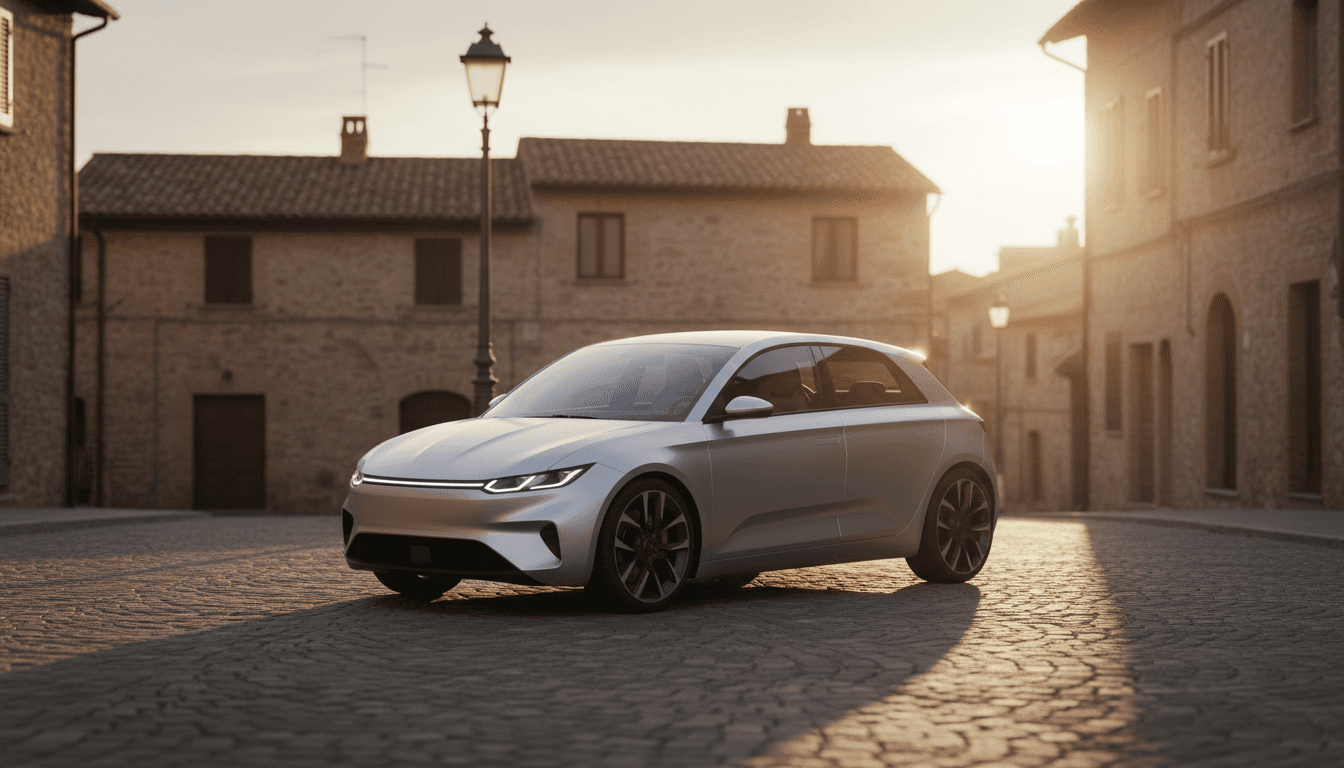
A City Car Loses Horsepower, and It Is Not a One-Off
Since January 1, 2026, anyone ordering a Fiat Pandina, the new name for the veteran Panda since the launch of the larger Grande Panda, drives away with a slightly less powerful car than the one sold a year earlier. The 1.0-litre three-cylinder FireFly mild-hybrid engine, rated at 70 hp through 2025, is now rated at 65 hp. Same engine, same displacement, same mild-hybrid layout: five horsepower gone on paper, without Fiat touching a single bolt under the bonnet.
The cause is not marketing, it is regulation: the January 1, 2026 entry into force of the Euro 6e-bis standard, also called 6EB, for all new vehicle registrations across the EU. It is the first time a rule designed to measure emissions has ended up quietly rewriting the declared output of one of Italy's best-selling city cars.
What Euro 6e-bis Actually Changes
Euro 6e-bis is not a new emissions ceiling in the traditional sense. It does not lower the grams of CO2 or NOx allowed per kilometre compared with the previous Euro 6e. What it changes is how those figures get measured, pushing the type-approval cycle closer to real-world driving: the test cycle is extended to up to 2,200 km, up from 800 km previously, and for plug-in hybrids the reference distance rises from 800 km to 2,000 km. The rule also mandates on-board monitoring, known as OBM, that continuously tracks actual nitrogen oxide and particulate emissions for the vehicle's entire life.
The practical effect: an engine that comfortably cleared 70 hp under the old lab protocol struggles to hold the same output within the same declared emissions limits once tested under the longer, stricter new cycle. The fastest technical fix, the one Fiat applied to the Pandina, was to trim peak power slightly, down to 65 hp, rather than re-engineer the whole combustion calibration or chase a fresh homologation at the old power figure.
The Pandina, in Detail
The Model Year 2026 Pandina range comes in three trims, Pop, Icon and Cross, all fitted with the 1.0 FireFly Hybrid making 65 hp, paired exclusively with a six-speed manual gearbox, the only powertrain currently on the price list. List prices start at roughly 15,950 euros for the Pop, rise to 16,900 euros for the Icon, and top out at 19,150 euros for the Cross, the rugged-looking trim aimed at buyers after a small urban crossover feel. On safety, the 2026 Pandina still ships with a solid standard driver-assistance package, including automatic emergency braking, active lane-keeping, traffic-sign recognition and driver-attention monitoring.
It is not an isolated case within the wider Stellantis lineup, either: the same updated engine, again rated at 65 hp, also powers the new Fiat 500 Hybrid unveiled in Turin, a sign that the downward revision is not a Panda-only quirk but the systemic effect of having to re-homologate an entire engine family against the same regulatory deadline.
A Second Regulatory Deadline Lands in July
Anyone shopping for a new city car in 2026 should also watch a second, related deadline: from July 7, 2026, a broader package of ADAS features becomes mandatory on all newly registered vehicles across the EU, under the second phase of Regulation (EU) 2019/2144 on general vehicle safety. The changes strengthen Advanced Driver Distraction Warning and extend automatic emergency braking to detect pedestrians and cyclists, while introducing a first-time requirement for an Emergency Stop Signal, the flashing brake-light warning triggered under hard braking. The rule applies to newly registered M1 and N1 vehicles, meaning passenger cars and light commercials; owners of cars already on the road face no retrofit obligation.
Taken together, the two deadlines, Euro 6e-bis in January and expanded ADAS in July, mean Europe's city cars effectively get two spec-sheet updates in the same calendar year, without the model itself being formally redesigned.
New or Pre-2026 Used, Which Makes More Sense?
For used-car shoppers, this raises a concrete question: chase a first-hand Pandina, or hunt for a pre-restyling Panda registered before January 1, 2026, which still delivers the original 70 hp? The answer depends on how the car gets used. Drivers who mostly stay in town, where a 5-hp difference on a 1.0-litre engine is barely noticeable, can comfortably go for a pre-2026 used example, often priced more aggressively precisely because it looks outdated on paper. Buyers who prioritise the newest safety kit, or who spend more time on faster roads where a few extra horsepower actually shows up in overtaking response, are better served by a car homologated to the latest standard.
One practical tip for anyone browsing listings: declared power alone does not reveal the homologation cycle a car was tested under, since the registration document shows the first-registration date but not always the test-cycle version. It is worth asking the seller for the type-approval date, field B on the Italian libretto di circolazione, and comparing the declared output against that model year's official listing: a 5-hp gap on an otherwise identical car is almost always the signature of a regulatory update, not a fault or a modification.
The Bigger Picture
The Pandina case is likely the first of several. With Euro 6e-bis now fully in force for new registrations, and other manufacturers working through the same re-homologation of their own engine families across Europe, it is reasonable to expect similar adjustments, small cuts to declared power and occasionally to declared consumption too, on other A- and B-segment models through 2026, as carmakers renew approval for their older engines. For anyone buying or selling a used car, the practical advice stays the same as ever: look past the number on the spec sheet and judge the car by how it actually drives, which is, fittingly, exactly what Euro 6e-bis is meant to measure more honestly.
The Takeaway
Five fewer horsepower on the Fiat Pandina is not a downgrade Fiat chose to make, it is the side effect of an EU rule designed to bring type-approval testing closer to real-world driving. For anyone buying a city car in 2026, the lesson is that a spec sheet can change without the model itself being redesigned, and that checking the homologation date against the declared output tells you more than the horsepower number on the brochure ever will.
Sources
- L'Automobile (ACI), La Fiat Panda si trasforma in Pandina perdendo 5 cavalli, October 7, 2025
- HDmotori.it, Nuova FIAT 500 ibrida, il motore non cambia ma con 65 CV e meno potente della Panda, September 19, 2025
- Quattroruote, Con il Model Year 2026 la piccola Panda diventa Pandina, October 9, 2025
- ANSA, Con arrivo delle norme Euro 6e-bis omologazioni piu vicine alla guida reale, January 20, 2026
- NewsAuto.it, ADAS obbligatori UE dal 7 luglio 2026: cosa cambia per le auto nuove, June 22, 2026
- L'Automobile (ACI), Adas obbligatori: cosa cambia dal 7 luglio, June 29, 2026
- SicurAuto.it, Fiat Panda: quanto costa con l'offerta di Agosto 2026?, August 2026
Further reading
- La Fiat Panda si trasforma in Pandina perdendo 5 cavalli — L'Automobile (ACI)
- Nuova FIAT 500 ibrida, il motore non cambia ma con 65 CV e meno potente della Panda — HDmotori.it
- Con il Model Year 2026 la piccola Panda diventa Pandina — Quattroruote
- Con arrivo delle norme Euro 6e-bis omologazioni piu vicine alla guida reale — ANSA
- ADAS obbligatori UE dal 7 luglio 2026: cosa cambia per le auto nuove — NewsAuto.it
- Adas obbligatori: cosa cambia dal 7 luglio — L'Automobile (ACI)
- Fiat Panda: quanto costa con l'offerta di Agosto 2026? — SicurAuto.it
Related articles
Italy Home EV Charger Bonus 2026: Apply Now
From today, 22 September 2026, Italian residents and condominiums can apply for a grant covering 80% of the cost of installing a home EV charger, up to 1,500 or 8,000 euros. Here is how it works, and why it matters even if the car you're buying is used.
Electric car tax in Italy 2026: what you pay by region
Five years of national exemption, then it is down to the region: from zero euros in Turin to hundreds elsewhere for the identical used EV. Here is how the 2026 electric car tax really varies by region.