Italy Home EV Charger Bonus 2026: Apply Now
From today, 22 September 2026, Italian residents and condominiums can apply for a grant covering 80% of the cost of installing a home EV charger, up to 1,500 or 8,000 euros. Here is how it works, and why it matters even if the car you're buying is used.
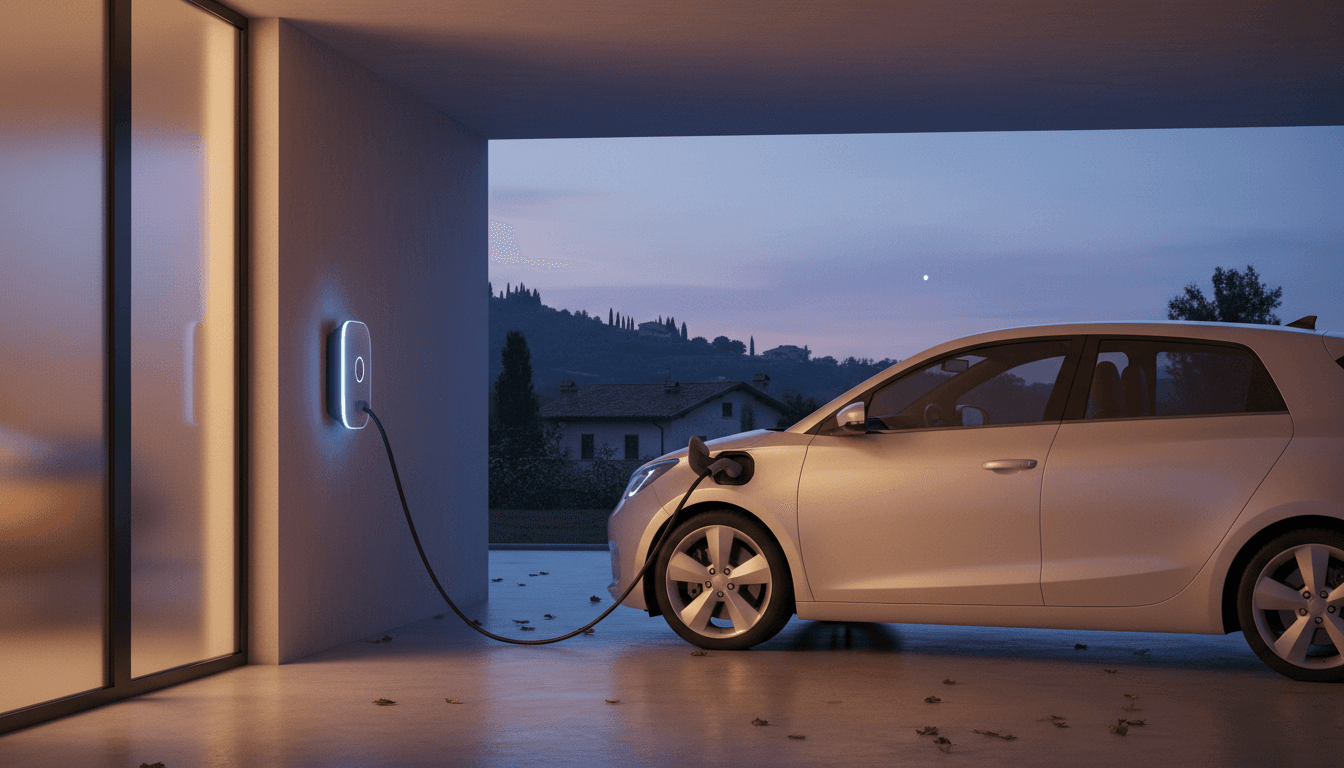
Applications open today for Italy's home EV charger bonus
As of noon today, 22 September 2026, the Invitalia online platform is accepting applications for a government grant that covers installing an electric vehicle charge point at home or in a condominium's shared areas. The grant covers 80% of the cost, up to 1,500 euros for individuals and 8,000 euros for condominiums. Italy's Ministry of Enterprises and Made in Italy (MIMIT) had run this scheme before; this is a fresh application window after months in which people who had already installed a charger were waiting to find out when they could claim reimbursement.
How it works: percentages, caps, eligible costs
The mechanics are simple in the numbers, strict in the timing. The grant covers 80% of the cost of purchasing and installing the charging equipment, net of VAT. For an individual, the cap is 1,500 euros, meaning a project costing up to roughly 1,875 euros gets fully covered at the 80% rate, with anything above that left to the applicant. For condominiums the cap rises to 8,000 euros, sized for larger installations serving multiple parking spaces or garage units. Only expenses incurred between 26 June 2026 and 31 December 2026 qualify: anyone who has already installed a charger in that window can apply now, and anyone installing one in the coming weeks still has time before the scheme closes.
Who can apply, and who is excluded
The grant is limited to individuals legally resident in Italy who install a charger for strictly private use, not accessible to the public, and to condominiums installing one in the building's shared areas. Companies and sole proprietors (ditte individuali) are excluded: a business wanting to install charging for a fleet needs to look at a different scheme, not this one. It is worth getting that distinction straight before starting the paperwork, since an application from an ineligible applicant gets rejected outright.
The technical requirements for the charger
Buying any wallbox will not do. The equipment must be brand new, rated at standard power under the relevant technical rules, installed within Italy, and compliant with current electrical safety and building regulations. For individuals, the charger has to remain for strictly personal use — a charge point open to the public, or shared with third parties for a fee, does not qualify. It is worth keeping the invoice, the system's compliance declaration, and photographic documentation of the installation on hand, since these are the attachments the application asks for.
How and when to apply
Applications go in exclusively online, through the Invitalia platform, authenticating with SPID, CIE or CNS (Italy's digital identity systems). The window runs from noon on 22 September 2026 to noon on 31 January 2027. It is not a competitive click-day in the strict sense, but the funding pool is capped, so it is worth not leaving it to the last week, especially if the installation is already finished and the paperwork is ready.
The funding available, and the risk it runs out early
The 2026 allocation is 15 million euros, made up of 10 million in unspent 2025 funds plus 5 million in new-year funding. According to official communications, the wider programme envisages up to 68 million euros through 2030. Anyone who has followed Italy's car incentive schemes this year knows that capped funding and tight windows have already exhausted other measures early — from EV purchase ecobonus schemes to PNRR-linked public charger grants. There is no guarantee this bonus stays open until its formal 31 January 2027 deadline: anyone who already meets the requirements and has the paperwork ready has a real incentive not to wait.
Why it matters even if the car you're buying is used
This grant is about infrastructure, not the car purchase, but the link to the used market is direct. Anyone weighing a used electric or plug-in hybrid car often runs into a practical, not financial, obstacle: where and how to charge it. A home charger cuts the cost per kilometre compared with public charging, removes dead time by charging overnight so the car is ready in the morning, and makes a used EV a realistic option even for someone living in a condominium, not only for those with a private garage. For anyone about to buy a used electric car, checking whether their condominium has already started or could start an installation in the coming weeks can be the difference between a convenient purchase and an inconvenient one for months to come.
The takeaway
From today until 31 January 2027, Italian residents can apply for up to 1,500 euros (individuals) or 8,000 euros (condominiums), covering 80% of the cost of a home EV charger installed from 26 June 2026 onward. Funding is capped, and the recent history of Italian incentive schemes suggests moving early: anyone with the paperwork ready would do well to apply now rather than wait for the final week.
Sources / Further reading
- MIMIT - Bonus colonnine domestiche - Ministry of Enterprises and Made in Italy, 2026
- Invitalia - Bonus colonnine domestiche, FAQ - Invitalia, 2026
- Newsauto.it - Bonus colonnine 2026: how to apply for the 80% wallbox incentive - Newsauto.it, 2026-09-17
- InsideEVs Italia - Bonus colonnine 2026: how it works and how to apply - InsideEVs Italia, 2026-09-18
- Idealista News - The 2026 EV charger bonus is live: when and how to apply - Idealista.it, 2026-09-17
Further reading
- Bonus colonnine domestiche — MIMIT - Ministero delle Imprese e del Made in Italy
- Bonus colonnine domestiche - FAQ — Invitalia
- Bonus colonnine 2026: come richiedere l'incentivo per la wallbox dell'80% — Newsauto.it
- Bonus colonnine 2026, come funziona e come fare domanda — InsideEVs Italia
- Bonus colonnine elettriche 2026 al via, quando e come fare domanda — Idealista.it
Related articles
Electric car tax in Italy 2026: what you pay by region
Five years of national exemption, then it is down to the region: from zero euros in Turin to hundreds elsewhere for the identical used EV. Here is how the 2026 electric car tax really varies by region.

Italy scraps car tax for 2027: who is exempt
On 16 September 2026 Italy's Council of Ministers approved a decree scrapping the car ownership tax for vehicles up to 80 kW and for every motorcycle, but only for 2027. Here is who actually saves, how much, and what it means if you are buying or selling a used vehicle.