Electric Scooters Without a License in Italy
Plenty of listings promise electric scooters with no license, plate or insurance needed. Here is what the Italian Highway Code actually says, and how to spot a properly road-legal used scooter before you buy.
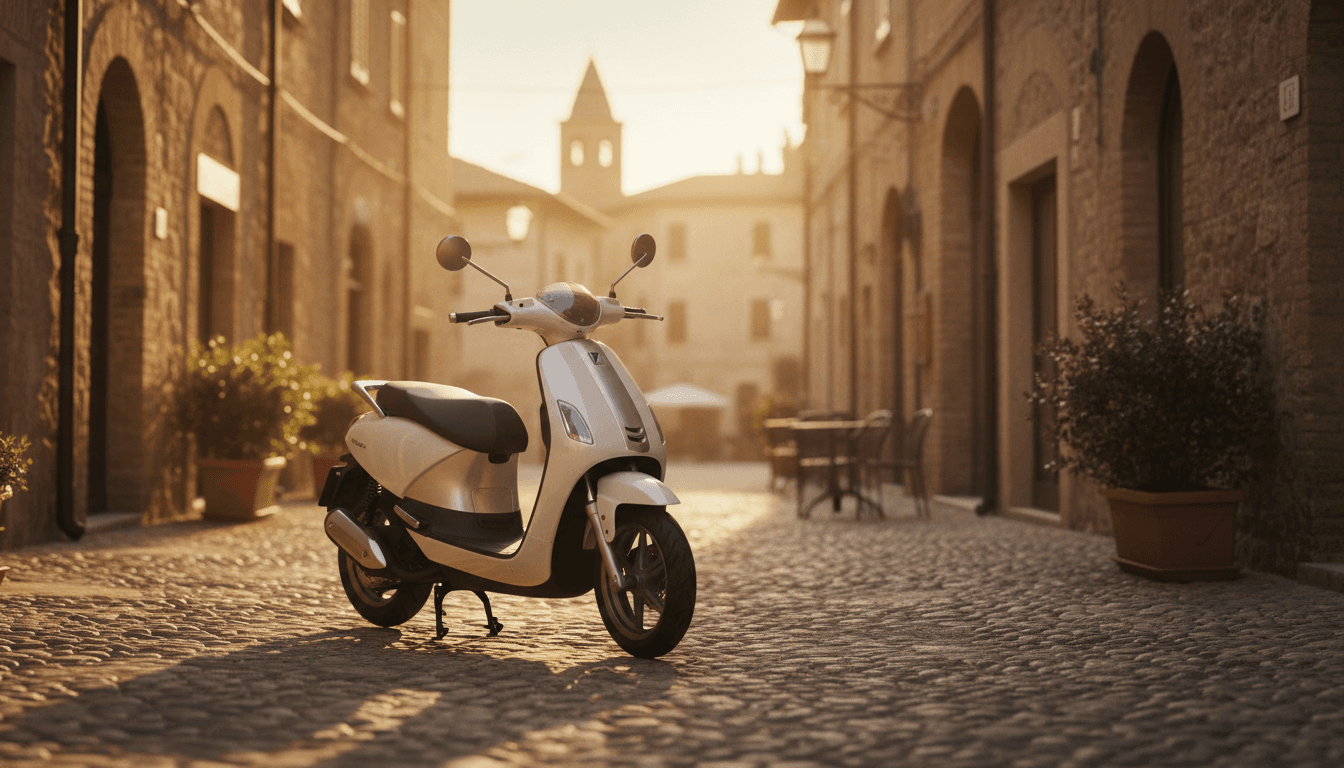
The “no license, no plate” scooter myth
Search “scooter elettrico senza patente” on any Italian marketplace and you will find dozens of listings promising total freedom: no test, no plate, no insurance, prices under 1,500 euros. It is an appealing pitch for someone who lost their driving licence, a new driver trying to save money, or a parent shopping for a fourteen-year-old. The trouble is that most of that pitch does not match the actual Highway Code, and buyers who fall for it risk having the vehicle seized, facing steep fines, and ending up with something that cannot legally be insured or resold with proper paperwork.
What the Italian Highway Code actually says
The classification that matters is ciclomotore (category L1e): a two-wheeler capped at 45 km/h and, for electric motors, under 4 kW of power [1][2]. Riding one legally requires an AM licence, available from age 14 after a mandatory theory course. Here is the detail most listings leave out: anyone who already holds a full car licence (category B), or any higher category, already carries the AM qualification, because it is bundled into every higher licence [2]. In practice, any adult with a car licence can hop on a 45 km/h electric scooter with no extra exam — but not without a plate, insurance and a helmet, all of which remain mandatory regardless of licence. Riding a ciclomotore without even the AM qualification carries a fine that can exceed 2,700 euros [1].
The one genuine exception: pedal-assist bikes
The only electric two-wheeler that is truly free of a licence, plate and insurance is the pedelec: continuous power capped at 250 W, delivered only while pedalling, with assistance cutting out at 25 km/h [5]. Cross that speed threshold, or add a throttle that moves the bike without pedalling, and the Code reclassifies it as a ciclomotore, with every obligation that implies [5]. Plenty of mini electric scooters marketed as licence-free already exceed those limits on their spec sheet — at which point selling them as an unregulated vehicle is simply inaccurate, and riding one on a public road is a violation, not a loophole.
When a scooter stops being “for everyone”
Beyond 4 kW and 45 km/h, a vehicle leaves the ciclomotore bracket entirely and becomes a full motorcycle (class L3e). That means an A1, A2 or A licence depending on power output, with age limits and the tighter restrictions for newly licensed riders introduced by the Highway Code reform that took effect in mid-December 2024 [1][3]. On major extra-urban roads and motorways, only electric vehicles rated at 6 kW or more, ridden by adults, are allowed at all [1] — one more reason to read the technical spec sheet closely rather than trust a model name that a previous, lower-powered version of the same badge might have made you assume is entry-level.
The listing that is too good to be true
The biggest practical risk for a used-market buyer is a scooter that was never type-approved for use on Italian roads: a product built for private land or for a different market, resold with the promise that there is no paperwork to sort out. Without type approval there is no valid registration document, without that document there is no plate, and without a plate no insurer can write a valid liability policy [6]. The result is a vehicle that gets impounded the moment it is stopped, and one the seller can never transfer to you through a proper ownership transfer. Before handing over a deposit, always ask to see the original registration document and check that its listed category is genuinely L1e or L3e, not some vague “for private use” wording.
The used electric scooter checklist
On top of the usual mechanical checks for any secondhand scooter, an electric one adds a decisive one: battery condition. Battery packs start showing a noticeable range drop around the three-year mark regardless of mileage — a scooter that barely left the garage can have a more tired battery than one ridden hard, because prolonged inactivity stresses a pack almost as much as heavy use [7]. Before buying: ask for the first-registration date and, if the seller knows it, the number of full charge cycles; check whether the battery warranty is still active and transferable to a new owner; and take it for a ride on a partial charge, so you get an honest read on remaining range rather than the manufacturer's original claim. Then confirm the frame number matches the registration document, check there are no outstanding liens, and get an insurance quote before you sign — on some models, cover costs more than buyers expect.
What it costs in 2026
With national purchase incentives now exhausted, properly type-approved entry-level electric ciclomotori start around 1,950 euros and climb to 3,500-4,000 euros for longer-range versions [3]. Listings under roughly 1,500-1,700 euros advertised as licence-free and plate-free deserve real scrutiny: they are almost always either the unapproved vehicles described above, or pedelecs marketed as if they were full scooters. On the used market, a properly registered electric ciclomotore that is three years old or more sells for noticeably less than new, but any savings should always be weighed against battery risk.
The practical takeaway
Before buying or selling an electric scooter, the document that matters is not the ad copy but the registration certificate: it is the only thing that actually tells you whether a vehicle is a real ciclomotore, a real motorcycle, or nothing road-legal at all. Every used scooter and motorcycle listing on VendiVoce carries the category, plate status and mileage the seller declares, so buyers can compare vehicles that are genuinely road-legal instead of finding out the hard way after paying.
Further reading
- Codice della Strada: la riforma è legge. Ecco tutte le novità — L'Automobile (ACI)
- Riforma del Codice della Strada 2024: cosa cambia per le due ruote? — CercAssicurazioni.it
- Incentivi finiti? Gli scooter elettrici più economici, anche senza bonus — Moveo by Telepass
- Scooter elettrico senza patente: è possibile? — Motoblog.it
- Bici elettriche: quando sono considerate ciclomotori — ConTe.it
- Si può guidare lo scooter elettrico senza patente? — Wise Society
- Come comprare elettrico usato — Vaielettrico
Related articles
BMW Electric Scooters: CE 04 vs CE 02 Guide 2026
CE 04 vs CE 02 compared: 2026 prices, licenses, range, and how the trade-in Ecobonus can make a new one almost as cheap as a used one.
Scooter 125 Ownership Transfer: 2026 Costs
Bought or sold a used 125cc scooter? Here is what the 2026 ownership transfer really costs, which documents you need under the Documento Unico, and what happens if you miss the 60-day deadline.