Electric Scooter Without a License in Italy 2026: What You Can Actually Ride
As Italy's new plate-and-insurance rule for e-scooters lands on May 16, 2026, confusion is spreading to seated electric scooters too. Here is the clear breakdown of power limits, the AM license, mandatory insurance and the 2026 Ecobonus.
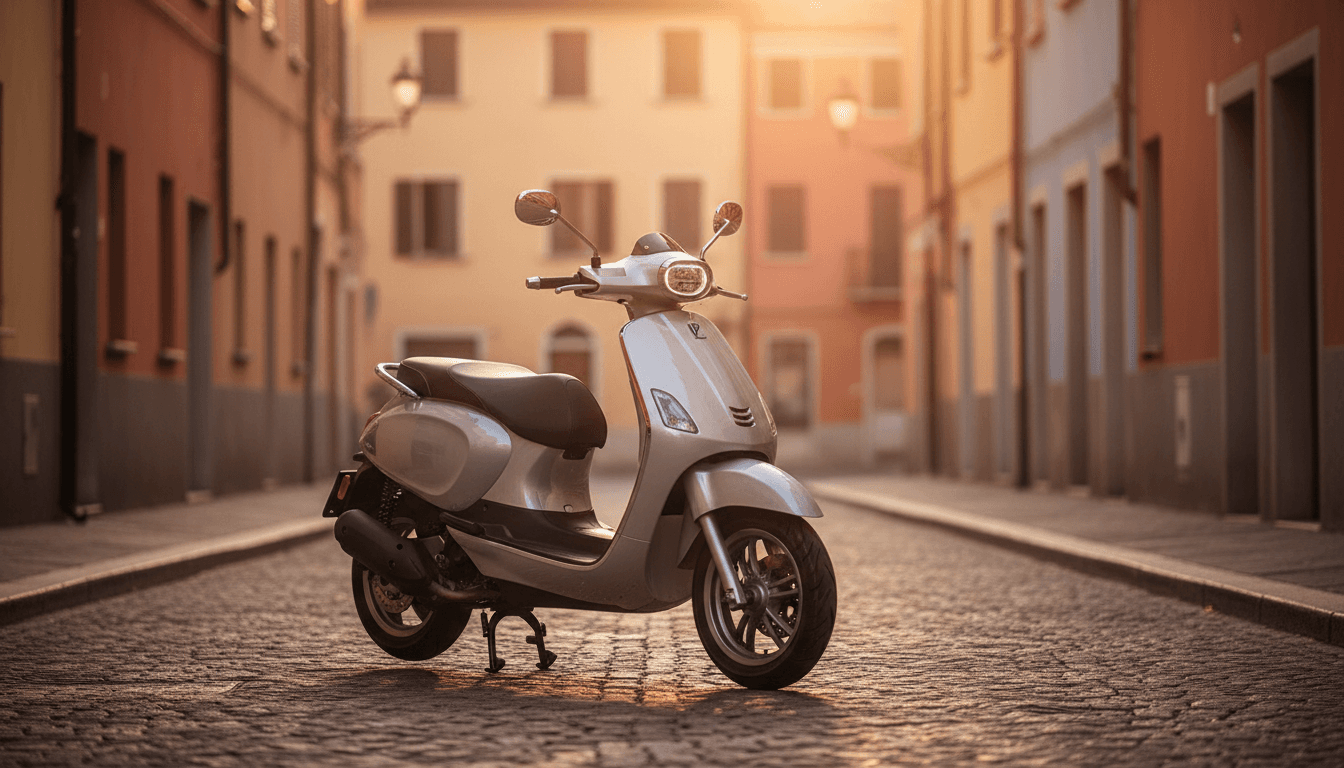
Why this is suddenly a hot search
For the past few months, the word plate has been dominating conversations about electric two-wheelers in Italy. Starting May 16, 2026, electric kick scooters (monopattini) will need an identification plate and mandatory third-party liability insurance, with fines between 100 and 400 euros for riding without either. Insurance-industry press has covered the change widely, and it has produced a predictable side effect: owners and prospective buyers of seated electric scooters, the kind with a saddle and a footboard, are now asking whether the same rules apply to them, or whether there is truly a way to ride one without a license.
The short answer is that seated electric scooters have followed a different, older, and in some respects stricter set of rules for years. It is worth understanding clearly, because it determines what you can legally ride, at what age, and how much you will pay in insurance, road tax and possible state incentives.
The real license-free threshold
Italian traffic law treats an electric two-wheeler as equivalent to a pedal-assist bicycle only when its nominal power stays at or below 0.25 kW and its assisted top speed does not exceed 25 km/h. Below that specific technical threshold, and only below it, a two-wheeler can circulate without a license, without a plate and without mandatory insurance, exactly like an e-bike. In practice, very few products sold as scooters, meaning vehicles with a saddle, footboard and moped-style bodywork, actually fall into this bracket: most models on the market deliberately exceed 25 km/h, because anything slower would be nearly unusable in real urban traffic.
The real 50cc-equivalent bracket: L1e category and the AM license
Almost every electric scooter sold in Italy that is marketed as a 50cc equivalent falls under the L1e type-approval category: maximum power of 4 kW and a speed capped at 45 km/h. Riding one requires at least an AM license, which can be obtained from age 14 after a theory and practical course at an authorized driving school or motor vehicle office. Riding without it carries a fine that can exceed 2,700 euros, plus impoundment of the vehicle.
There is a common misunderstanding worth clearing up here: anyone who already holds a higher category license, such as a standard car (category B) license, is automatically entitled to ride these electric mopeds without separately obtaining the AM. That is why many riders who never sat a specific moped exam are, in fact, riding perfectly legally.
Above 45 km/h: the L3e category and the 125cc threshold
More powerful electric scooters, built to replace a 125cc petrol model, fall under the L3e category. Riding one requires an A1 license, available from age 16, or a car (B) license once the rider meets the driving code's age and holding requirements. Declared power climbs noticeably in this bracket, and so does the purchase price and the insurance cost.
Plates and insurance: no shortcuts here
This is the point that causes the most confusion with the new kick-scooter rule: an L1e or L3e type-approved electric scooter is, to every legal effect, a moped or a motorcycle. That means a mandatory plate, formal registration, and mandatory third-party insurance from day one on the road, regardless of the vehicle's top speed. There is no tolerance threshold for these vehicles comparable to the one designed for kick scooters: the rule applies identically to a 4 kW electric moped and to a petrol-powered one of equivalent displacement. Insurance premiums for an electric moped vary considerably by province, rider age and bonus-malus class, but they tend to run lower than for a comparable petrol scooter, partly because insurers assign newer, typically more carefully ridden electric models a lower statistical risk.
The 2026 Ecobonus: how much you can save by buying now
Buyers who purchase an electric scooter or motorcycle in 2026 without scrapping an old vehicle can receive a state contribution equal to 30 percent of the list price, up to a maximum of 3,000 euros. Those who scrap a Euro 0, 1, 2 or 3 approved moped or motorcycle that has been registered in their name, or a cohabiting family member's name, for at least 12 months see the contribution rise to 40 percent, up to a maximum of 4,000 euros. The old vehicle must then actually be scrapped within 30 days of the new scooter's delivery. Anyone weighing a purchase would do well not to wait too long: early indications about the scheme set to replace the current Ecobonus from 2027 point to lower percentages, around 20 percent without scrapping and 30 percent with it, alongside lower spending caps.
Buying a used electric scooter: what actually matters
With entry-level list prices already starting under 2,000 euros and higher-range versions running past 3,500 to 4,000 euros, the used market is filling up quickly with models from brands such as Piaggio, NIU, Askoll and Govecs. Before buying a secondhand electric scooter, three checks matter most: the type-approval category printed on the vehicle's registration document, L1e or L3e, since it determines which license you actually need and does not always match what the seller states informally; the battery's condition, ideally asking for an estimated charge-cycle count or the real-world range the previous owner experienced versus the original rated figure; and continuity of insurance and road-tax payments, which can be verified through the public vehicle registry (PRA) before the ownership transfer. On VendiVoce, every electric scooter listing states its type-approval category and declared power up front, so buyers know from the search results whether a given scooter matches the license they already hold or plan to get.
The practical takeaway
If you are genuinely looking for a scooter you can ride with zero license, the technical threshold exists but is extremely narrow: 0.25 kW and 25 km/h, effectively absent from the seated-scooter market. For the overwhelming majority of electric scooters on sale, you need an AM license from age 14, or you already qualify if you hold a car license. Above 45 km/h, you need an A1 or a B license. In every case, a plate and mandatory RC insurance are non-negotiable, unlike kick scooters until May 2026. And if budget matters, it makes sense to use the current Ecobonus before the rules tighten in 2027.
Sources
- Dueruote, Scooter elettrico senza patente: cosa dice la normativa
- Moto.it, Si puo guidare uno scooter elettrico senza patente? Normativa e casi particolari
- Automobilista.it, Cosa significa patente AM e quali veicoli puoi guidare davvero nel 2026
- Segugio.it, Monopattini elettrici: l obbligo di targa scatta il 16 maggio 2026
- Auto361.it, Scooter elettrici 2026: i migliori da 50 a 125cc, prezzi e autonomia reale
- InMoto.it, Incentivi moto e scooter elettrici 2026: come ottenere l Ecobonus fino a 4.000 euro
Further reading
- Scooter elettrico senza patente: cosa dice la normativa — Dueruote
- Si puo guidare uno scooter elettrico senza patente? Normativa e casi particolari — Moto.it
- Cosa significa patente AM e quali veicoli puoi guidare davvero nel 2026? — Automobilista.it
- Monopattini elettrici: l'obbligo di targa scatta il 16 maggio 2026 — Segugio.it
- Scooter elettrici 2026: i migliori da 50 a 125cc, prezzi e autonomia reale — Auto361.it
- Incentivi moto e scooter elettrici 2026: come ottenere l'Ecobonus fino a 4.000 euro — InMoto.it
Related articles
BMW Electric Scooters: CE 04 vs CE 02 Guide 2026
CE 04 vs CE 02 compared: 2026 prices, licenses, range, and how the trade-in Ecobonus can make a new one almost as cheap as a used one.
Scooter 125 Ownership Transfer: 2026 Costs
Bought or sold a used 125cc scooter? Here is what the 2026 ownership transfer really costs, which documents you need under the Documento Unico, and what happens if you miss the 60-day deadline.