Electric scooter for the city: the buyer's guide
Licence, real range, removable batteries and costs: how to choose the right electric scooter for city riding.
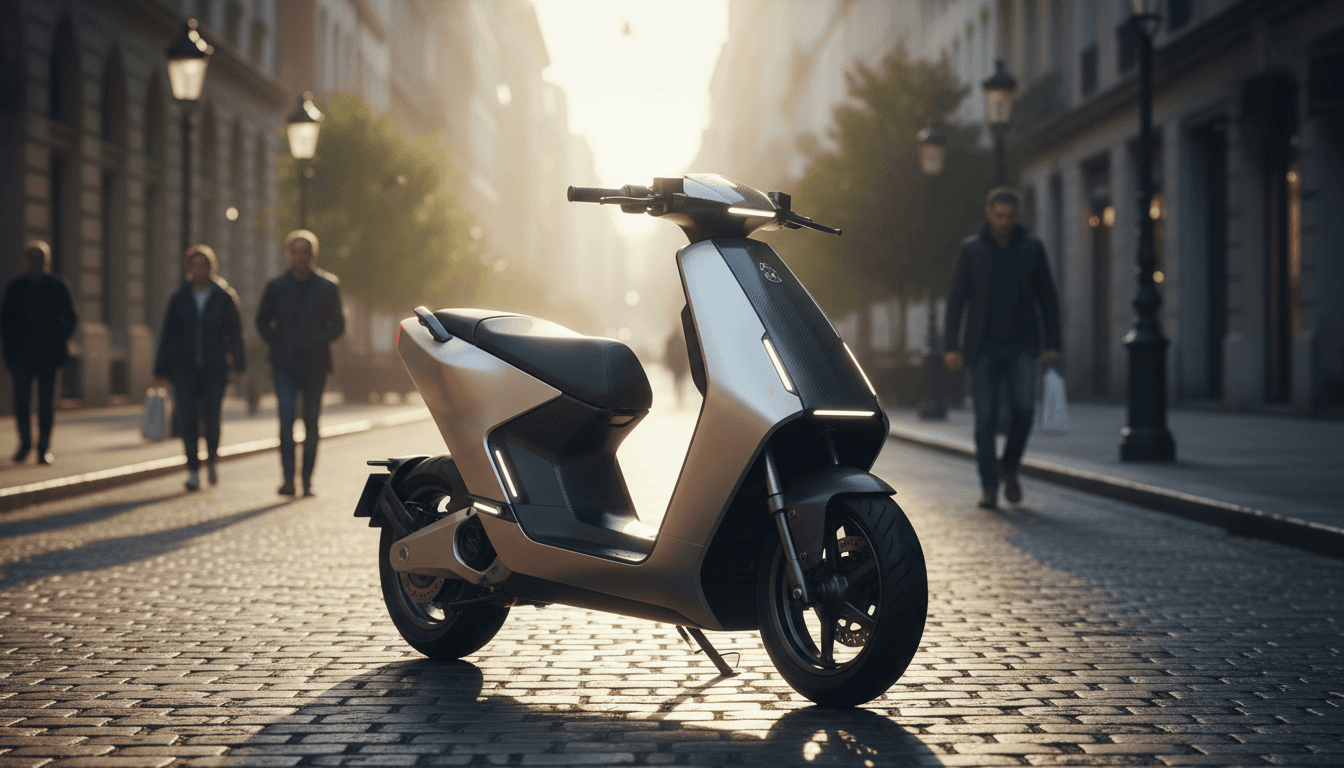
Quiet, cheap to run and perfect for traffic: the electric scooter has become one of the most sensible ways to get around a city. But between licences, range and prices, not every model suits you. Here is what to weigh before choosing one.
What licence you need
The rule is simple and mirrors that of petrol scooters, based on power. Electric scooters equivalent to a 50cc, with power up to 4 kW, are ridden on the AM moped licence from age 14. More powerful ones, equivalent to a 125, require the A1 licence, while the strongest models fall into higher categories. Before falling for a model, check its stated power and the corresponding licence: it is the first filter to apply.
Real range and removable batteries
The range of urban electric scooters generally runs from 50 to 120 real kilometres, more than enough for daily city trips. The real strength of many models is the removable battery: you can take it out and carry it home or to the office to charge at an ordinary socket, with no need for a garage with a charger. Anyone without a parking space with a socket should treat this feature as almost essential.
Charging and running costs
Charging an electric scooter costs a few cents for a full charge, a fraction of what you would spend on petrol. Add reduced maintenance: no oil, no spark plug, no filters, and brakes that last longer thanks to electric engine braking. In many cities the electric scooter also enjoys free access to restricted zones and cheaper or free parking, a daily advantage that counts for more than it seems.
What it costs and what to weigh
Prices start around 2,000 to 2,500 euro for entry-level models equivalent to a 50cc, and rise toward 4,000 to 6,000 euro for more powerful, well-equipped scooters. When assessing, look beyond the price: battery capacity and removability, charging time, payload, brake and tyre quality, and whether the brand has a service network. A spare battery, where offered, is an expensive but useful accessory that doubles your range.
Electric versus petrol scooter
Compared with a petrol 50cc or 125, the electric wins on quietness, running costs and the convenience of home charging, as well as emissions. Petrol keeps an edge on longer trips and in areas with few charging options, and has a wider, more predictable used market. For mainly urban use, though, the balance tips clearly toward electric.
Buying tips
Always test the scooter before buying: check seat comfort, under-seat storage, throttle response and how easily the battery comes out. If you buy used, check the battery's state of health and how many charge cycles it has done, because it is the component that sets the real value of the vehicle. Finally, make sure there is a reachable service centre for the brand you choose.
Safety, accessories and insurance
The usual rules apply to electric too: an approved helmet always fastened, and for more powerful models it is worth investing in gloves, a protective jacket and good brakes. Check for ABS or a combined braking system on 125-equivalent models, because it greatly improves safety in city traffic. On fixed costs, an electric scooter is insured like a petrol one of the same class, but in many regions it enjoys road-tax exemption or reduction for the first years. Budget for a good lock too: removable batteries are convenient but also tempting to thieves, so choose a model with a battery lock and consider a tracker.
Where to park and charge
An often-decisive advantage in the city is parking: many councils let electric scooters park free in paid bays or enter areas closed to petrol vehicles. Check your municipality's rules, because they can be worth several hundred euro a year. For charging, if you have no garage, the removable battery solves almost everything: a home socket and a few hours are enough, with no dependence on public chargers or their costs.
In short
For the city, the electric scooter is now a mature choice: very low running costs, convenient charging with a removable battery and easy access to urban centres. Start from the licence you hold, prioritise real range and battery practicality, and you will easily find the right model for your daily commute.
Further reading
Related articles
Electric Scooters Without a License in Italy
Plenty of listings promise electric scooters with no license, plate or insurance needed. Here is what the Italian Highway Code actually says, and how to spot a properly road-legal used scooter before you buy.
BMW Electric Scooters: CE 04 vs CE 02 Guide 2026
CE 04 vs CE 02 compared: 2026 prices, licenses, range, and how the trade-in Ecobonus can make a new one almost as cheap as a used one.