Electric Scooters in 2026: A Guide to Power Classes, Prices and Real-World Range, From the Piaggio 1 to the New BMW CE 04
BMW has just refreshed the CE 04, and Italy's ecobonus for electric mopeds and scooters is active again after March's click-day rush. Here is how to navigate the three power classes, the models actually on sale, and when buying used makes more sense.
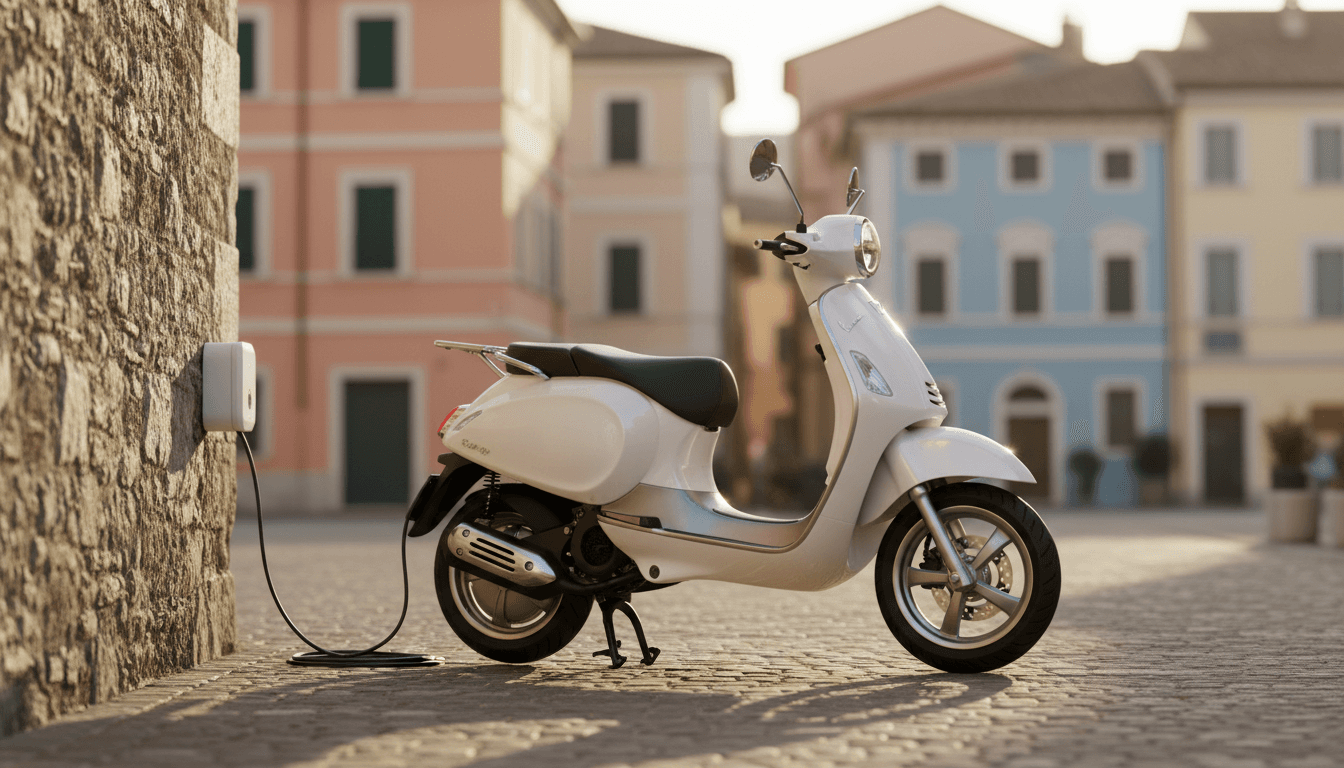
Italy's electric scooter market in 2026 is no longer pioneer territory: there are now several distinct power classes, declared ranges that finally come close to real-world figures, and a state incentive that, after a chaotic opening, is accepting applications again. Here is how to make sense of the models, the prices, and the math worth doing before you sign anything.
The signal from Munich
In mid-May 2026, BMW Motorrad unveiled an update to the CE 04, the premium electric scooter that remains the benchmark above the 11 kW threshold [1]. The changes are mostly cosmetic and in equipment: three trims (Basic in Lightwhite, Avantgarde in Gravity Blue with Sao Paulo Yellow accents, Exclusive in Spacesilver metallic) and an optional dynamic package adding ABS Pro, adaptive headlights and extra riding modes, alongside a fast charger, E-Call and an anti-theft alarm among the options [1]. Mechanically the CE 04 is unchanged: 31 kW (42 hp), 0-50 km/h in 2.6 seconds, a 120 km/h top speed, an 8.9 kWh battery good for a declared range of up to 130 km, and a charge time of roughly 4 hours 20 minutes from a home socket or 1 hour 40 minutes with the fast charger. BMW Motorrad Italia's official price list puts it at around 13,400-13,500 euros before options, with packages adding up to 1,200 euros more [2]. It is not a radical refresh, but it confirms that premium manufacturers keep investing in a segment that looked like a niche only a few years ago.
Three power classes, three ways to use one
Before looking at specific models it helps to understand the categories, because in Italy they determine the licence required, insurance and how you can actually use the scooter. The L1e class, equivalent to a 50cc, requires no full licence for riders 14 and older with an AM certificate, and is built purely for city use, capped at 45 km/h. The L3e-A1 class, equivalent to a 125cc, requires an A1 or B licence held for at least a year, and is today the busiest and best-selling bracket, since it covers both city and out-of-town trips without the insurance costs of a more powerful bike. Above 11 kW, where the CE 04 sits, you move into A2-licence territory, with genuinely motorcycle-like performance and pricing to match.
Who offers what in the 125cc bracket
This is where the most interesting competition plays out for anyone switching to electric without paying a premium price. The Silence S01+, homologated as a 125cc equivalent, currently offers the best range-to-price ratio in the category: 0-50 km/h in 2.9 seconds, a top speed above 80 km/h (105 km/h with e-Boost), a removable 5.6 kWh trolley-style battery good for a declared range of 133 km, and a 6-8 hour charge from a home socket [3]. The NIU MQi GT EVO, another established name in Europe, reaches 100 km/h in Sport mode thanks to two removable batteries for a combined 3.7 kWh, but its range tops out at 70-75 km; NIU's more accessible MQi+ Sport starts at around 1,999 euros [3]. The Piaggio 1 Active, the L3e-A1 version of Piaggio's electric scooter, declares 4.5 kW nominal power (7 kW peak), a 60 km/h top speed and an 85 km range, priced from around 2,950 euros [3]. Three different answers to the same question: Silence for the best range, NIU for the lowest entry price, Piaggio for brand recognition and a wide service network.
Ecobonus 2026: the window has reopened, but it will not last
This is where the real math changes. The 30 million euros allocated for 2026 to electric and hybrid mopeds, motorcycles, tricycles and quadricycles was exhausted on the very first day, March 18, 2026, thanks to the click-day mechanism and dealers making multiple reservations without finalised sales [4]. From May 6, 2026, part of that fund became available again after unconfirmed reservations expired, and applications are now processed in chronological order until the money runs out or, at the latest, December 31, 2026 [4][5]. The incentive amounts are unchanged from 2025: 30 percent of the purchase price up to a maximum of 3,000 euros, or 40 percent up to 4,000 euros when scrapping a combustion vehicle up to Euro 3 in the same category [4]. The detail worth remembering is that 2026 is the last year the ecobonus for electric two-wheelers will be paid out in full: waiting another year for better conditions risks running into a reduced incentive instead.
New or used: when the secondary market makes more sense
With models and batteries updated almost every cycle, first-year depreciation is sharper than on equivalent combustion scooters, which makes a recent used unit particularly attractive for anyone not chasing the ecobonus, which in any case only applies to new or zero-km purchases. On a two- or three-year-old scooter the real question is not whether the battery is good, but how good: always ask for the battery's state of health (SOH) through the manufacturer's app or a workshop diagnostic check, confirm whether the battery warranty is still active and transferable to a new owner, and make sure the original charger, or a cable compatible with public charging points, is included in the sale.
What to check before signing, new or used
Beyond price, three checks make the real difference on any electric scooter: first, coverage of the brand's service network in your area, since an electronic fault cannot be fixed by the corner mechanic the way a combustion scooter's can; second, the availability of software updates, which on many recent models adjust battery management and performance through an app; third, a real-world test ride, to confirm that the declared range holds up in cold weather or on hilly routes, which typically cut it by 15-25 percent.
The practical takeaway
If use is purely urban and the ecobonus is still open, a 125cc-equivalent scooter like the Silence S01+ or the Piaggio 1 offers the best balance of cost and real-world range today. If you need something capable of out-of-town rides with genuine motorcycle-like performance, the updated CE 04 remains the premium reference point, but it is worth checking the recent used market too, where the segment's fast depreciation can mean real savings without giving up a unit still under battery warranty.
Sources
- BMW Group Italia, The new BMW CE 04, May 2026
- Moto.it, Official BMW CE 04 2026 price list
- Auto361.it, Electric scooters 2026: the best from 50cc to 125cc equivalents, prices and real-world range
- NextMoto.it, Ecobonus for electric motorcycles and scooters 2026: funds return, but will run out fast
- inSella.it, Ecobonus for motorcycles and scooters reactivated, discounts up to 4,000 euros
Further reading
- Il nuovo BMW CE 04: lo scooter elettrico premium in nuovi colori e con equipaggiamenti opzionali attrattivi — BMW Group Italia
- Bmw CE 04 (2026), prezzo e scheda tecnica — Moto.it
- Scooter elettrici 2026: i migliori da 50 a 125cc, prezzi e autonomia reale — Auto361.it
- Ecobonus moto e scooter elettrici 2026: tornano i fondi, ma finiranno in fretta — NextMoto.it
- Fate in fretta! Riattivato il bonus per moto e scooter elettrici, sconti fino a 4.000 euro — inSella.it
Related articles
Electric Scooters Without a License in Italy
Plenty of listings promise electric scooters with no license, plate or insurance needed. Here is what the Italian Highway Code actually says, and how to spot a properly road-legal used scooter before you buy.
BMW Electric Scooters: CE 04 vs CE 02 Guide 2026
CE 04 vs CE 02 compared: 2026 prices, licenses, range, and how the trade-in Ecobonus can make a new one almost as cheap as a used one.