Electric Car Winter Range: How Much You Really Lose
NAF tests on 24 models and Recurrent data: from 5% to 32% range lost in the cold, why it happens, how much a heat pump matters and how to limit the drop, including when buying used.
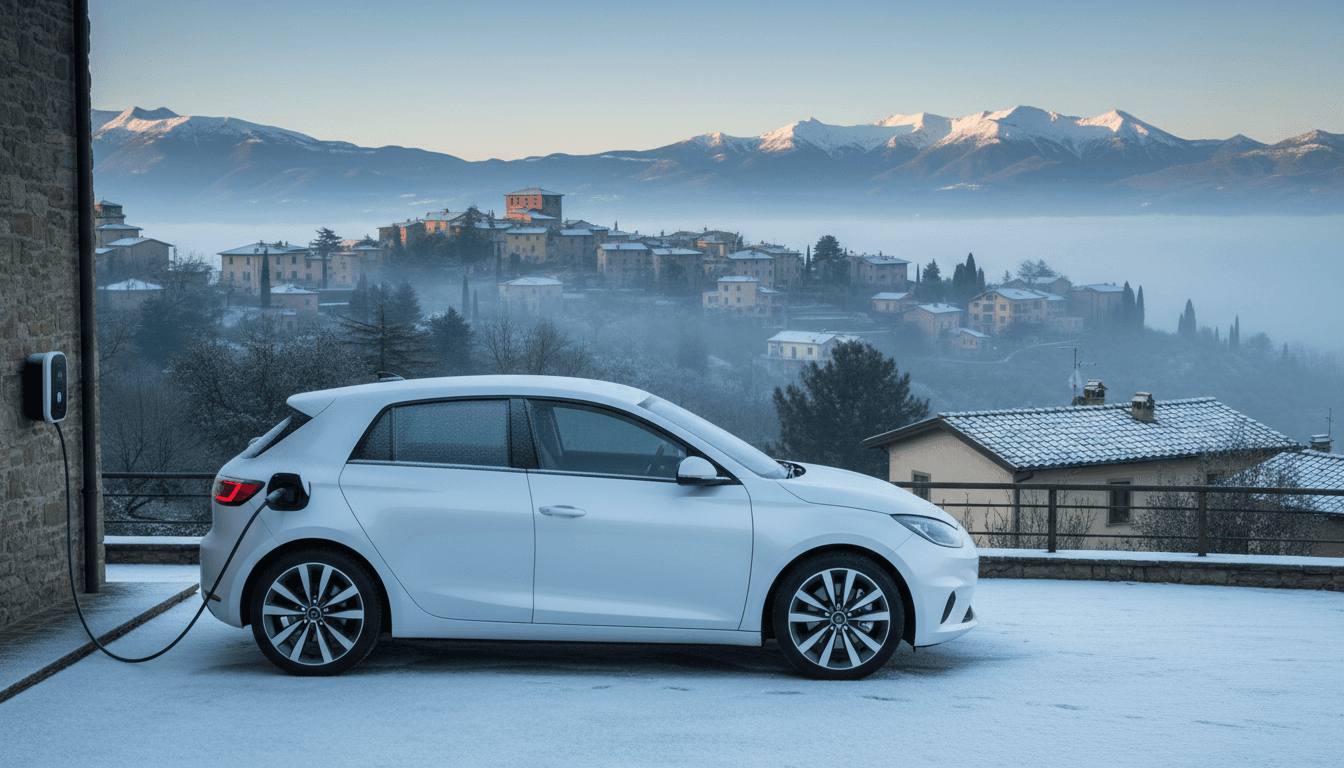
As the first cold snaps arrive, every electric car owner (and every shopper) asks the same thing: how much range does an EV actually lose in winter? The honest answer is that it depends on the model, the temperature and how you drive, but independent tests give us realistic numbers. This guide covers the measured figures, the causes, what a heat pump changes and how to limit the loss, including if you are looking at a used EV in Italy.
How much range you lose: what the tests show
Official range (WLTP) is measured in mild conditions. Near freezing, reality is different. According to auto.it (January 2026), during cold snaps it is normal to see range 15-30% below the official figure, depending on model, use and weather [1].
The most useful model-by-model comparison is the winter test by Motor and the Norwegian automobile association NAF: 24 EVs, the same route, temperatures between -6 and +7 °C. The best was the Polestar 3, losing just 5.18% (560 km claimed, 531 real). The worst was the Peugeot E-3008, down 31.9% (510 to 347 km). The Tesla Model 3 Long Range RWD lost 24.39%, from 702 to about 531 km. Two BYD models placed in the top five, the Tang second and the Sealion 7 fifth [2].
Another view comes from Recurrent data covering about 18,000 vehicles and 20 models: an average loss of about 20% compared with warm weather. Around 0 °C, cars with a heat pump keep 83% of normal range on average, those without keep 75% [3].
Why cold weather cuts range
There are two causes, and it helps to separate them.
- Battery chemistry. Cold slows the reactions inside lithium-ion cells, so less energy is available until the pack warms up. It is not damage, just a temporary dip in performance [1].
- Heating. A combustion car heats the cabin with waste engine heat. An EV does not: cabin, seats, steering wheel and sometimes the battery itself all draw on the traction battery. That is why short trips, where heating is a bigger share of total consumption, suffer most [1].
The reassuring part: the winter loss is not permanent and does not mean the battery is ageing. Range returns to normal at around 20-24 °C [3].
Heat pumps: are they worth it?
A heat pump warms the cabin using far less energy than a resistive heater. The ACI write-up of the NAF test says it can cut consumption by up to 10% and notes it is often an optional extra [2]. In the Recurrent data the gap is clear: roughly 10 percentage points more range kept at 0 °C, 83% versus 75% [3]. The same analysis shows an extreme case: a Volkswagen ID.4 Pro S without a heat pump drops from about 470 to about 295 km, while the best models stay around 87-89% of normal range [3].
If you buy new and live somewhere cold (northern Italy, the Apennines, inland areas), a heat pump is one of the options that pays back most. If you buy used, check the listing or the spec sheet: two versions of the same model can behave very differently in winter.
Charging in winter: slower, so plan ahead
A cold battery accepts less power. Auto.it notes that fast charging may be limited and take longer [1]. LFP batteries, increasingly common in affordable EVs, lose range just like NCA ones but charge more slowly in winter [3]. If you have a home wallbox or dedicated socket, the issue shrinks: at an average of about 50 km a day, you simply charge a little more during the week [3].
Practical ways to limit the drop
- Precondition while plugged in. Schedule cabin (and, where possible, battery) heating before departure while the car is still connected: the energy comes from the grid, not the battery [1][3].
- Set a charger as your navigation destination if the car supports it, so the battery prepares for charging automatically [3].
- Drive smoothly. Hard acceleration costs more in winter conditions [1].
- Use heated seats and steering wheel instead of cranking up the cabin temperature, where fitted.
- Plan with a margin. On the coldest days, count on real range 20-30% below WLTP, especially on motorways, and allow extra time for charging stops [1].
If you are shopping for a used EV
In winter, used EV listings often show very low estimated range. That is normal and does not by itself signal a weak battery. To tell the difference, ask for the battery state of health (SOH), test drive on a day that is not freezing, or compare consumption with the seller's stated figure. Also check for a heat pump and the remaining battery warranty. Cold-weather loss is reversible; degradation is not, and the two should be judged separately.
Sellers benefit too: describing real winter range with dashboard figures cuts suspicious questions and builds trust with buyers.
Bottom line
Budget for an average drop of around 20% in the cold, over 30% for the least efficient models and under 10% for the best. A heat pump, preconditioning while plugged in and smooth driving are the levers that matter. The loss is temporary: range comes back in spring. Before you buy, choose the model by winter test results, not just the WLTP number.
Further reading
- auto.it, Auto elettriche e gelo: perché l'autonomia cala con il freddo (19 January 2026).
- L'Automobile (ACI), Motor and NAF winter test of 24 EVs (21 January 2025).
- MotorBox, Autonomia delle auto elettriche in inverno: dati, analisi e consigli (Recurrent data).
- CleanTechnica, Recurrent Data Clarifies EV Range Loss In Cold Conditions (February 2025).
Further reading
- Auto elettriche e gelo: perché l'autonomia cala con il freddo — auto.it
- Auto elettrica al freddo: il test Motor e NAF su 24 modelli — L'Automobile (ACI)
- Autonomia delle auto elettriche in inverno: dati, analisi e consigli — MotorBox
- Recurrent Data Clarifies EV Range Loss In Cold Conditions — CleanTechnica
Related articles
Plug-in Hybrid Cars: Are They Worth It in Italy?
How a plug-in hybrid works, how much electric range it really has, when it pays off (regular charging, short trips) and what to check when buying used.
Used electric car: battery SoH and warranty checks
What to check before buying a used electric car in Italy: battery SoH and test cost, 8-year warranty and transferability, real range, charging, PRA search, road tax and insurance.