Italy Extends Its Diesel Fuel Tax Discount to September 10 - Why Diesel Still Costs More Than Petrol
A new decree extends Italy's 17-cent-per-liter diesel discount by five more days, a measure running since March. Yet at the pump diesel still costs more than petrol even with the cut. Here is what it means for anyone buying or selling a used diesel.
What the new decree says
Italy's government has issued an inter-ministerial decree extending the diesel excise tax discount through Thursday, September 10, 2026, just before it was due to expire on September 5 [1][2]. The cut itself is unchanged from the version running for months: 17 cents per liter, made up of a 14-cent reduction in the excise duty (accisa) plus a further 3 cents off VAT [3]. The measure, drafted jointly by the Ministry of Economy and the Ministry of the Environment and Energy Security, again relies on the so-called mobile excise mechanism: the discount is funded from the extra VAT revenue the state collects when oil prices rise, so in theory it should not add to the public deficit [2].
An extension running since March
This is the latest in a long string of mini-extensions of a measure born in March 2026, when the closure of the Strait of Hormuz during the US-Iran crisis sent crude prices spiking. Since then the decree has been renewed on tight deadlines, usually just days or a few weeks at a time: the previous extension, decided on August 26, pushed the discount to September 5 at an estimated cost of around 130 million euros [3]. Add up every extension since March and the state has now spent more than 2 billion euros keeping diesel prices down at the pump [1].
The paradox: even discounted, diesel still costs more than petrol
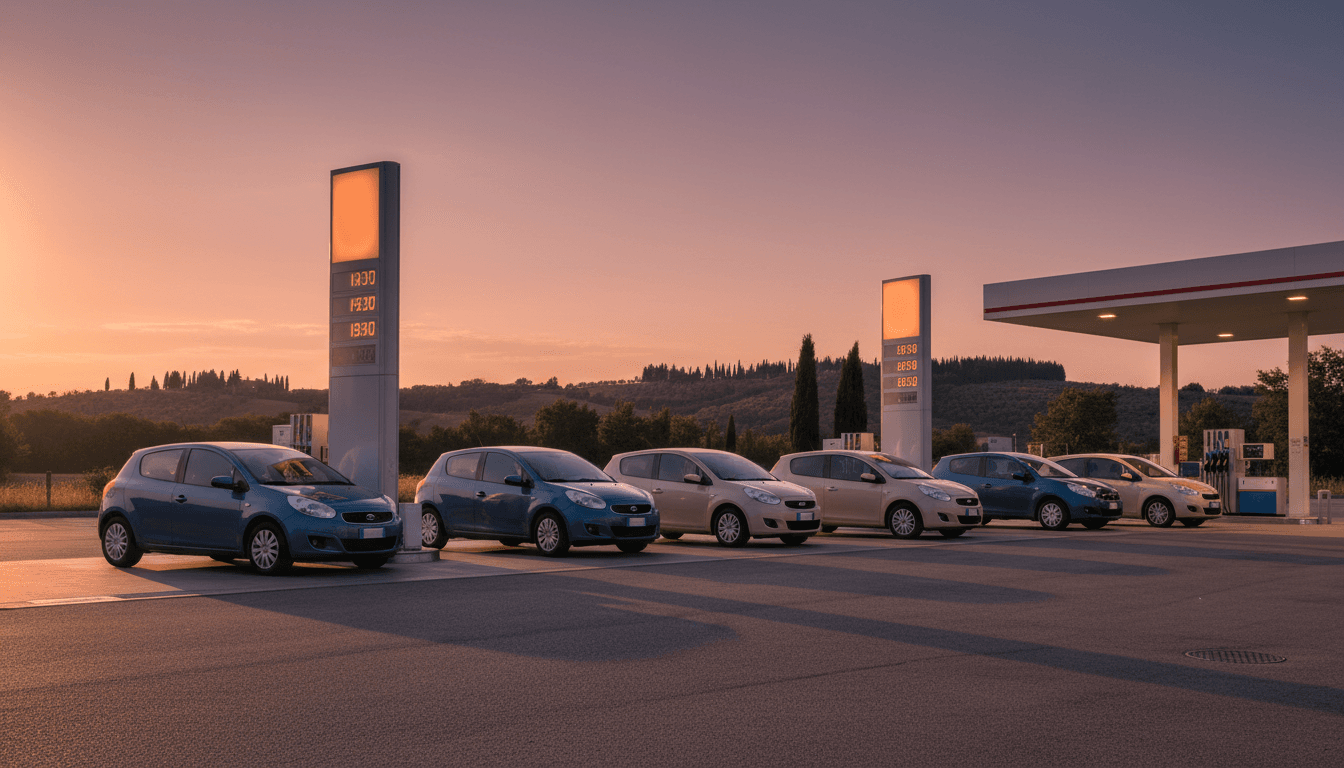
What surprises many Italian drivers is that, discount included, diesel still costs more than petrol. As of September 4, 2026, the national average for self-service diesel sat around 2.15 euros per liter against roughly 2.04 euros for petrol, a gap of 10-11 cents that widens further on motorways and at full-service pumps [5]. Strip out the excise discount and diesel would be sitting closer to 2.32 euros a liter today, nearly 30 cents above petrol. Petrol, worth remembering, has never had a dedicated discount in this round of measures: diesel gets the support because it remains the fuel of choice for hauliers, tradespeople and high-mileage households, groups the government considers most exposed to rising fuel costs.
Why the extension is so short
Five days may look like a rounding error, but the reasoning is political rather than technical. Transport minister Matteo Salvini has said the mini-extension is meant to buy time to design a structural, targeted package rather than another blanket discount available to anyone who fills up [2][4]. The sticking point is eligibility: the option on the table would tie support to ISEE, Italy's means-tested income indicator, for lower-income households, plus a dedicated scheme for the road-haulage sector and possibly a fringe-benefit top-up paid through employers [6]. Salvini's own Lega party, however, wants the net cast wider, to cover self-employed workers and small VAT-registered businesses too, arguing that ISEE alone is too narrow a filter to reach everyone actually squeezed by fuel costs [4][6].
The practical upshot: the flat, across-the-board discount that has kept diesel prices in check for every driver could soon give way to aid targeted at a handful of categories - good news for whoever qualifies, less good for the majority of private motorists who will not.
What it means if you own or are shopping for a used diesel
The excise saga tells anyone selling or considering a used diesel two things. First, the real running cost of a diesel today is higher than the old diesel is cheaper narrative suggests, because the gap with petrol has narrowed and, in recent days, actually flipped compared with the years when diesel was reliably the cheaper fuel. Drivers who cover fewer kilometers a year recoup the higher purchase price and maintenance cost of a diesel engine more and more slowly against a petrol or hybrid equivalent.
Second, if the flat discount genuinely ends on September 10 and is replaced by aid limited to a few categories, the pump price of diesel for most private drivers could jump by that same 17 cents overnight, adding roughly 8.5 euros to the cost of a 50-liter fill-up. For someone covering 20,000-25,000 km a year in a diesel, that is a few hundred extra euros in fuel annually - a concrete figure worth weighing before choosing between a used diesel, petrol, LPG or hybrid.
Diesel, petrol, LPG or hybrid: today's real math
With both petrol and diesel above 2 euros a liter, the economic edge keeps shifting toward alternative fuels. LPG typically stays under 0.70-0.75 euros a liter even in the same weeks, and a non-plug-in hybrid cuts urban fuel consumption by 15-25% without needing any dedicated charging infrastructure. Anyone shopping for a used car today should work out the real cost per kilometer - fuel price divided by declared consumption, adjusted for how the car will actually be driven - rather than anchoring on the pump price of a single fuel type. With the mobile excise mechanism changing every few days, that math can flip within weeks.
The practical takeaway
Anyone about to sell a used diesel has little reason to panic: the used market reacts to fiscal headlines with a lag of months, and a well-maintained diesel with its inspection and servicing in order remains a sound choice for high-mileage, motorway-heavy driving. Anyone about to buy, though, would do well to wait until late September, once it is clear whether the excise discount becomes structural, targeted, or simply disappears - a difference that, added up over a year of fill-ups, is worth more than any discount haggled off the asking price.
Sources
- AGI, Carburanti, possibile proroga taglio delle accise al 10 settembre, September 3, 2026
- ANSA, Decreto pronto, taglio accise diesel prorogato al 10 settembre, September 4, 2026
- Quattroruote, Accise diesel, il governo proroga lo sconto fino al 5 settembre: benzina a prezzo pieno, August 26, 2026
- Adnkronos, Carburanti, Salvini: proroga del taglio delle accise sul diesel fino al 10 settembre, allo studio per dopo misure selettive, September 4, 2026
- Il Messaggero, Taglio accise diesel prorogato al 10 settembre, prezzi carburanti ancora su, benzina self a 2,046 euro, September 4, 2026
- QuiFinanza, Accise carburanti, possibile proroga: cosa succede dopo il 10 settembre, September 3, 2026
Further reading
- Carburanti, possibile proroga taglio delle accise al 10 settembre — AGI
- Decreto pronto, taglio accise diesel prorogato al 10 settembre — ANSA
- Accise diesel, il governo proroga lo sconto fino al 5 settembre: benzina a prezzo pieno — Quattroruote
- Carburanti, Salvini: proroga del taglio delle accise sul diesel fino al 10 settembre, allo studio per dopo misure selettive — Adnkronos
- Taglio accise diesel prorogato al 10 settembre, prezzi carburanti ancora su, benzina self a 2,046 euro — Il Messaggero
- Accise carburanti, possibile proroga: cosa succede dopo il 10 settembre — QuiFinanza
Related articles
Italy Home EV Charger Bonus 2026: Apply Now
From today, 22 September 2026, Italian residents and condominiums can apply for a grant covering 80% of the cost of installing a home EV charger, up to 1,500 or 8,000 euros. Here is how it works, and why it matters even if the car you're buying is used.
Electric car tax in Italy 2026: what you pay by region
Five years of national exemption, then it is down to the region: from zero euros in Turin to hundreds elsewhere for the identical used EV. Here is how the 2026 electric car tax really varies by region.