Chinese SUVs in Italy in 2026: why one car in eight is now Chinese (and how to buy one, new or used, without surprises)
BYD, Leapmotor, Omoda and Jaecoo have grabbed 12.5% of the Italian market in the first four months of 2026. Here is which Chinese SUVs are worth buying, what the EU tariffs actually change, and what to watch for when shopping used.
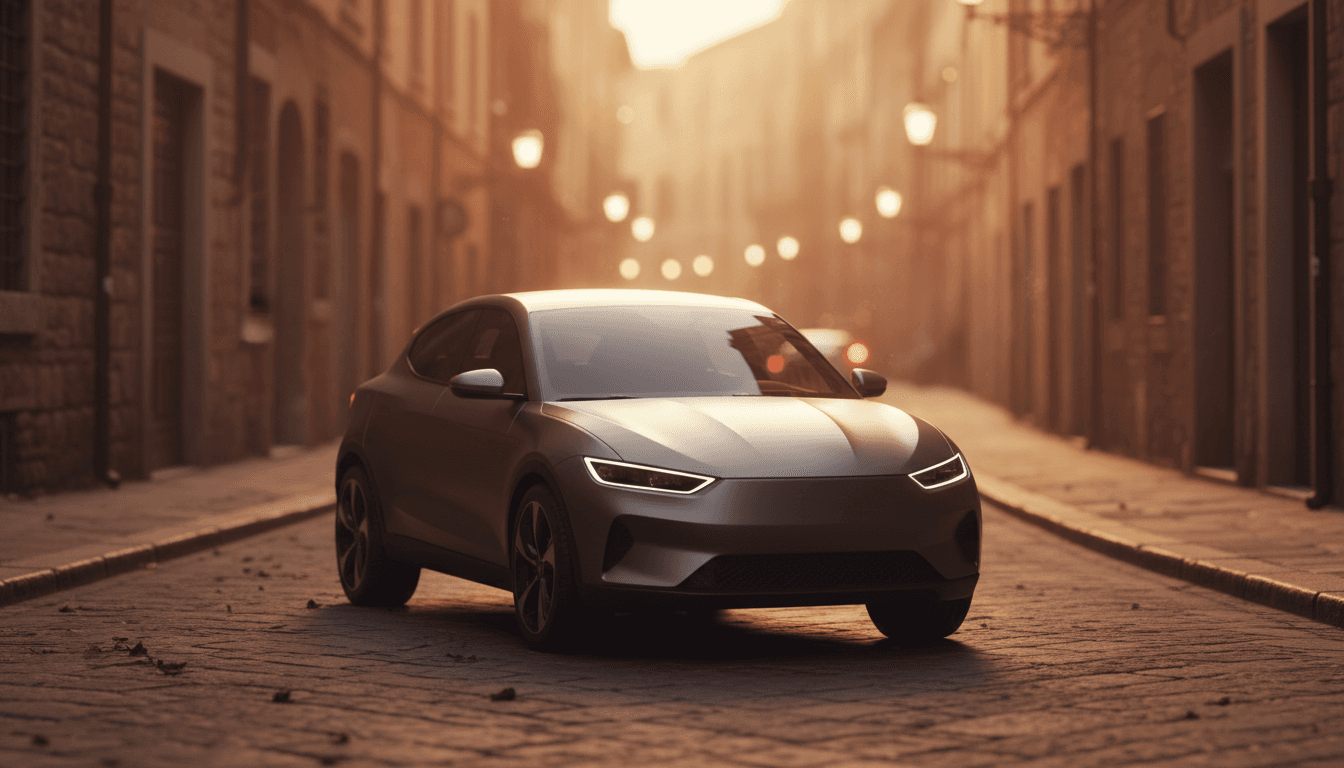
One car in eight sold in Italy is now Chinese
In the first four months of 2026, Chinese carmakers registered more than 78,000 vehicles out of a total of 640,083, or 12.5% of the Italian market. Italy has become the second-largest European market for Chinese brands, right after the UK. This is no longer a niche phenomenon confined to a handful of cheap electric hatchbacks: it is a structural part of tomorrow's used-car market, and anyone buying or selling a car today needs to start factoring these brands in.
Growth has been driven above all by compact SUVs and C-SUVs, Italy's single most popular segment. That is exactly where Chinese brands have pushed hardest, offering equipment levels typical of a higher trim tier at prices below a Volkswagen T-Roc or a Jeep Avenger.
The numbers behind the boom
First-half 2026 figures tell a growth story with no recent precedent in the Italian market. BYD passed 20,000 registrations, up 295% year on year. Leapmotor, distributed through the Stellantis network, logged over 24,000 registrations in the same period, up an extraordinary 849% year on year, the single most striking figure in the entire Italian market this year. Omoda and Jaecoo combined topped 16,000 units sold in the first five months of the year, up 322%, for a 2.13% market share.
Numbers on this scale are not explained by price alone. Long warranties, generous tech specs, and a dealer network that, starting from almost nothing a few years ago, already counts hundreds of outlets for the more established brands, all play a part.
Which Chinese SUVs Italians are actually buying, and at what price
In Italy, the trio reshaping the C-SUV segment is the Omoda 5, the BYD Atto 2 and the Leapmotor B10, all priced below a comparably equipped Volkswagen T-Roc but with equipment often reserved for top-of-range European trims. The BYD Atto 2 starts at a list price around 25,490 euros, but with MASE state incentives (up to 11,000 euros for scrapping an old car and meeting ISEE income thresholds) it can drop to roughly 14,500 euros. It runs a 177-horsepower motor and a 45.1 kWh Blade Battery, for a declared WLTP range of 312 km.
A notch up, the range-extended Leapmotor C10 REEV (a small petrol engine that recharges the battery rather than driving the wheels) starts at 29,900 euros and positions itself as one of the most complete C-segment SUVs under that price point. Jaecoo, meanwhile, has updated the compact Jaecoo 5 with a full-hybrid powertrain alongside the existing petrol and electric versions, starting at just under 30,000 euros, while the 279-horsepower plug-in hybrid Jaecoo 7 stays under 39,000 euros.
What the EU tariffs actually change
Since 2024 the European Commission has applied differentiated anti-subsidy tariffs on electric vehicles made in China: 17% for BYD, 18.8% for Geely, and a flat 35.3% for manufacturers that did not cooperate with the investigation. The effect shows up in the numbers: the EU market share of Chinese-made electric vehicles has fallen from a peak of 22% to 17% in the first quarter of 2026. But the tariffs only work halfway. A Chinese-made electric vehicle still costs, on average, 21% less than its European equivalent, tariffs included.
There is also a front the tariffs do not touch at all: batteries. Imports of Chinese-made battery cells rose sevenfold between 2020 and 2025, in a segment where European tariffs remain close to zero. And in early 2026 Beijing opened direct, individual negotiations with Brussels to replace the fixed-tariff mechanism with minimum-price commitments, while the Commission is reportedly already preparing the technical groundwork to extend new tariffs to Chinese plug-in hybrids as well. In short: the regulatory picture is anything but settled, and anyone buying today cannot assume the conditions will still look the same a year from now.
Buying a used Chinese SUV: how it differs from a used European one
For used-car shoppers, the first thing to understand is that this is still a young, thin market in Italy. The first meaningful volumes of Chinese registrations only date back two or three years, so the pool of Chinese used cars with some age on them is still limited compared to mainstream European or Japanese brands.
The good news is on warranties: Chinese brands generally beat the European average of 2-3 years by a wide margin. Five or six years (up to 150,000 km) is common, and Omoda and Jaecoo offer up to seven years on the mechanicals and eight years on high-voltage components (battery and electric motor). When buying used, checking that the original warranty is still active and, crucially, that it actually transfers to the new owner rather than staying tied to the first buyer, is a check worth as much as the service book.
The less pleasant part is depreciation: in the first year of ownership, Chinese electric models can lose 20% to 30% of their value, a steeper drop than the market average. For a used buyer this is good news, sharper pricing on near-new cars, but for anyone selling a Chinese model bought new a year ago, it means resetting expectations on resale price.
Service network and spare parts: the real test
Before signing for a used Chinese SUV, the advice from industry players is consistent: look at the nearest service network, not just the price. MG can count on more than 100 outlets in Italy, BYD has passed 60, and Leapmotor leans on the already dense Stellantis network. Other, younger brands still have networks concentrated almost exclusively in large cities, which can mean driving further for a scheduled service or waiting longer for a part after a breakdown.
Before buying a used Chinese car, it is worth checking four things in order: an authorized service center within reasonable driving distance, a written warranty and whether it actually transfers, the real-world availability of spare parts for that specific model in Italy, not just on paper, and how widespread the model is on the national market, which affects both future resale and the liquidity of the used-parts market.
The takeaway: a market to understand, not to fear or idealize
Chinese SUVs are no longer a marginal bet: they are now a structural part of the Italian market, driven by aggressive pricing, generous equipment and long warranties. But it remains a young segment, with a still-thin used market, steeper early depreciation, and an EU tariff picture that is far from settled. Anyone selling a near-new Chinese car today faces an increasingly well-informed buyer; anyone buying used has a real opportunity for a good deal, provided they check warranty, service network and parts availability with the same care they would give a mainstream brand.
Further reading
- Virgilio Motori, I brand cinesi alla conquista dell'Italia: i numeri del primo semestre 2026
- Quattroruote, Auto elettriche cinesi, svolta sui dazi UE: Pechino apre alle trattative dirette e individuali, February 13, 2026
- Greenplanner, Dazi sulle auto elettriche cinesi: effetti parziali, batterie senza tariffe, July 17, 2026
- AutoToday, Omoda 5, BYD Atto 2 e Leapmotor B10: costano meno della Volkswagen T-Roc e offrono dotazioni da segmento superiore
- Il Giornale Digitale, BYD Atto 2 prezzo 2026: davvero da 14.500 euro con incentivi?
- BlogMotori, Auto cinesi in Italia 2026: marche, modelli, prezzi e garanzie
Further reading
- I brand cinesi alla conquista dell'Italia: i numeri del primo semestre 2026 parlano chiaro — Virgilio Motori
- Auto elettriche cinesi, svolta sui dazi Ue: Pechino apre alle trattative dirette e individuali — Quattroruote
- Dazi sulle auto elettriche cinesi: effetti parziali, batterie senza tariffe — GreenPlanner
- Omoda 5, BYD Atto 2 e Leapmotor B10: costano meno della Volkswagen T-Roc e offrono dotazioni da segmento superiore — AutoToday
- BYD Atto 2 prezzo 2026: davvero da 14.500 euro con incentivi? — Il Giornale Digitale
- Auto cinesi in Italia 2026: marche, modelli, prezzi e garanzie — BlogMotori
Related articles
Opel Frontera Manual 2026: New or Go Used?
Opel just launched the Frontera Start, a 100-hp manual entry point priced from 17,900 euros on promotion. Here is what the fine print hides, and when a used compact SUV still wins.
Best Cheap Used City Cars in Italy 2026
With no new city car left under 10,000 euros in Italy, used is the only route to a cheap runabout. Here is what a used Panda, 500, Aygo X, Picanto or i10 really costs, what insurance and road tax add on top, and what to check before you sign.