Chinese Cars Under the Microscope: Beijing Launches Nationwide Inspections After BYD and Geely Fail Quality Checks — What It Means If You're Buying One in Italy
Four Chinese ministries have opened a year-long production-quality inspection after the Geely Xingyuan and BYD Qin L failed conformity checks. With Chinese brands now at 12.5% of the Italian new-car market, here is what to actually check before buying one, new or used.
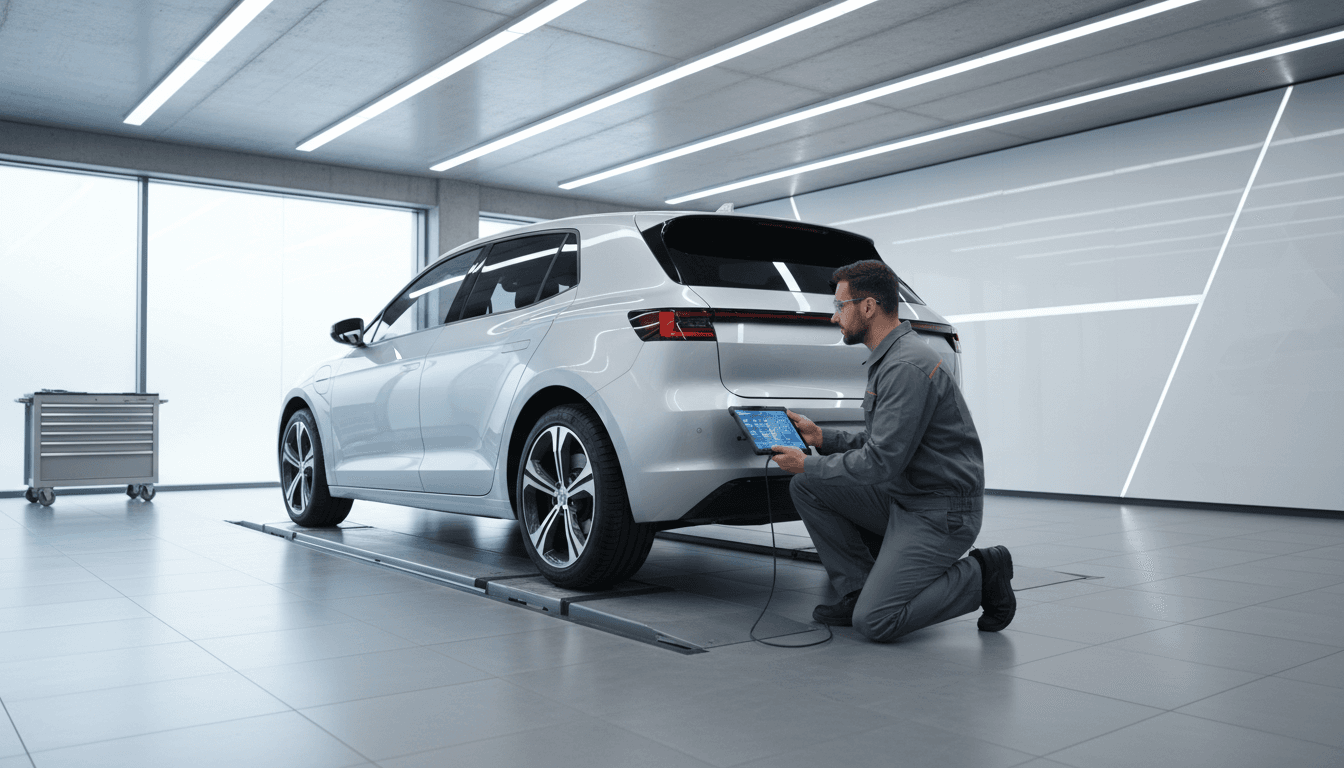
China Opens a Nationwide Investigation Into Car Quality
On August 27, 2026, four Chinese ministries, led by the Ministry of Industry and Information Technology (MIIT), launched a year-long inspection campaign covering roughly one hundred automakers, who must report on their production quality by the end of 2026. It is the sharpest response yet to the breakneck pace at which Chinese brands push out new models, often on development cycles as short as eighteen months: regulators are reportedly weighing doubling the mandatory road-test distance for EVs to roughly 30,000 km, precisely to slow that pace and give validation more room to work.
The Geely Xingyuan and BYD Qin L Cases
What triggered the scrutiny were two high-volume models: the compact electric Geely Xingyuan and the BYD Qin L DM-i plug-in hybrid sedan, both among China's best-sellers. On sampled vehicles, MIIT found the Xingyuan's wheelbase deviated by more than 1% from its homologated specification, while the Qin L DM-i consumed more fuel than its declared figure. Both cars were also missing owner's manuals, and some safety features, including emergency windows, failed to meet national standards. This is not a mass recall: these are non-conformities found on sampled units, but the ministry still ordered corrective measures ranging from rectification to suspending sales of the affected models, depending on severity. It echoes a 2025 MIIT production-conformity inspection of new-energy vehicles that had already flagged issues on seven other models.
Why This Story Reaches All the Way to Italy
It might look like a purely domestic Chinese story, but the numbers say otherwise. In the first four months of 2026, cars made in China topped 78,000 registrations out of a total 640,083 in the Italian market — 12.5% of the total, counting both pure Chinese brands and models built in China for international groups. MG ranked as the 11th best-selling brand in Italy with over 21,500 units in the four-month period, BYD sold 17,427 cars (up 208% year on year), and Chery's Omoda-Jaecoo duo reached 12,848 units (up 329%). The small Leapmotor T03 electric hatchback became Italy's third best-selling car in April. Between 2026 and 2027 the list of Chinese brands on the Italian market will only grow longer, with Changan, Denza, GWM, iCaur, XPeng and Zeekr all confirmed to be arriving. The cars rolling into Italian showrooms today are simply tomorrow's used-car stock: what China is finding in its own quality checks right now is therefore just as relevant to anyone who will buy one of these cars secondhand in three, five or ten years.
The European Regulatory Gap You Should Know About
There is a second, related issue that directly concerns buyers in Italy today: a loophole in the European type-approval system that some smaller importers exploit to bring in Chinese models while sidestepping the stricter checks. It relies on Individual Vehicle Approval (IVA), a procedure designed for one-off or specially built vehicles, but effectively used to register series-produced cars — often 1.5-litre turbo petrol or hybrid sedans and SUVs from lesser-known brands — as single units, before reselling them on the regular market, Italy included. The important distinction: this workaround does not involve the major groups such as BYD, Geely, MG or Chery, which go through the full European Whole Vehicle Type Approval (WVTA) process like any other manufacturer. It involves smaller or little-known brands whose cars arrive without effective warranty coverage, an official service network, or certified spare parts.
What to Actually Check Before You Buy
Taken together, these two stories point to a very concrete checklist, whether you are buying new or considering a used Chinese car:
- Type of approval: check the registration document (libretto) to confirm the car carries standard European WVTA approval rather than an Individual Vehicle Approval. The difference shows up in the registration procedure and in the paperwork the dealer must provide on request.
- Official network in Italy: verify the brand has authorised dealers and service centres in the country, not just an importer-broker that disappears after the sale. For a used car, ask whether the original warranty is still valid and transferable through the official network.
- Documentation matching the actual car: the Xingyuan wheelbase mismatch is a reminder that even large manufacturers can have gaps between declared specifications and the actual vehicle. For a privately imported used car, have a workshop verify that the homologation data matches the car's real characteristics before completing the ownership transfer.
- Declared consumption and range: especially for plug-in hybrids, do not rely solely on the brochure's WLTP figure — look for recent independent tests of that specific model.
- Spare parts and lead times: ask about realistic delivery times for common parts (bumpers, mirrors, the high-voltage battery), not just theoretical catalogue availability.
The Picture Is Moving Fast, But the Basic Rules Aren't
China's inspection campaign runs through the end of 2026 and could bring further corrections, targeted recalls or changes to how newer models are approved. For anyone buying or selling a Chinese-brand car in Italy, today or a few years from now on the used market, the starting point remains the same as ever: check the paperwork, the type approval and the service network before you check the price. A car with all its documentation in order, whatever the badge or the country of origin, remains the safer choice — for buyer and seller alike.
Sources
- CnEVPost, "China launches yearlong auto quality campaign focused on connected-car safety", August 27, 2026
- CnEVPost, "Geely Xingyuan, BYD Qin L flagged in China quality review over production conformity issues", August 28, 2026
- CarNewsChina, "Chinese regulator flags Geely EX2, BYD Qin L over wheelbase and fuel economy discrepancies", August 29, 2026
- Motor1, "China Opens Nationwide Inspections After BYD And Geely Fail Quality Checks", August 29, 2026
- Motor1 Italia, "Ogni otto auto vendute in Italia, una e cinese", May 2026
- Rinnovabili.it, "Immatricolazione auto cinesi, falla nel sistema Ue", December 29, 2025
Further reading
- China launches yearlong auto quality campaign focused on connected-car safety — CnEVPost
- Geely Xingyuan, BYD Qin L flagged in China quality review over production conformity issues — CnEVPost
- Chinese regulator flags Geely EX2, BYD Qin L over wheelbase and fuel economy discrepancies — CarNewsChina
- China Opens Nationwide Inspections After BYD And Geely Fail Quality Checks — Motor1
- Ogni otto auto vendute in Italia, una e cinese — Motor1 Italia
- Immatricolazione auto cinesi, falla nel sistema Ue — Rinnovabili.it
Related articles
Used cars: physical buttons or touchscreen?
From January 2026 Euro NCAP penalises cars that hide indicators, the horn and hazard lights inside touch menus. What that means if you are buying a used car from the all-touch years, and what to check before you sign.
Buying a Used Car With a Black Box: 2026 Guide
Buying a used car that already has an insurance black box installed is not a problem, but it is not an automatic perk either: the discount and the driving history stay with the previous owner. What Italy's 2024 data-portability law actually changed, and what to do before and after the ownership transfer.