Cheapest Electric Car in Italy: New or Used?
The Spring, T03 and ë-C3 start at 18,000 to 20,000 euros, yet used EVs are depreciating faster than any other segment. Numbers, incentives to verify and checks for a smart purchase.
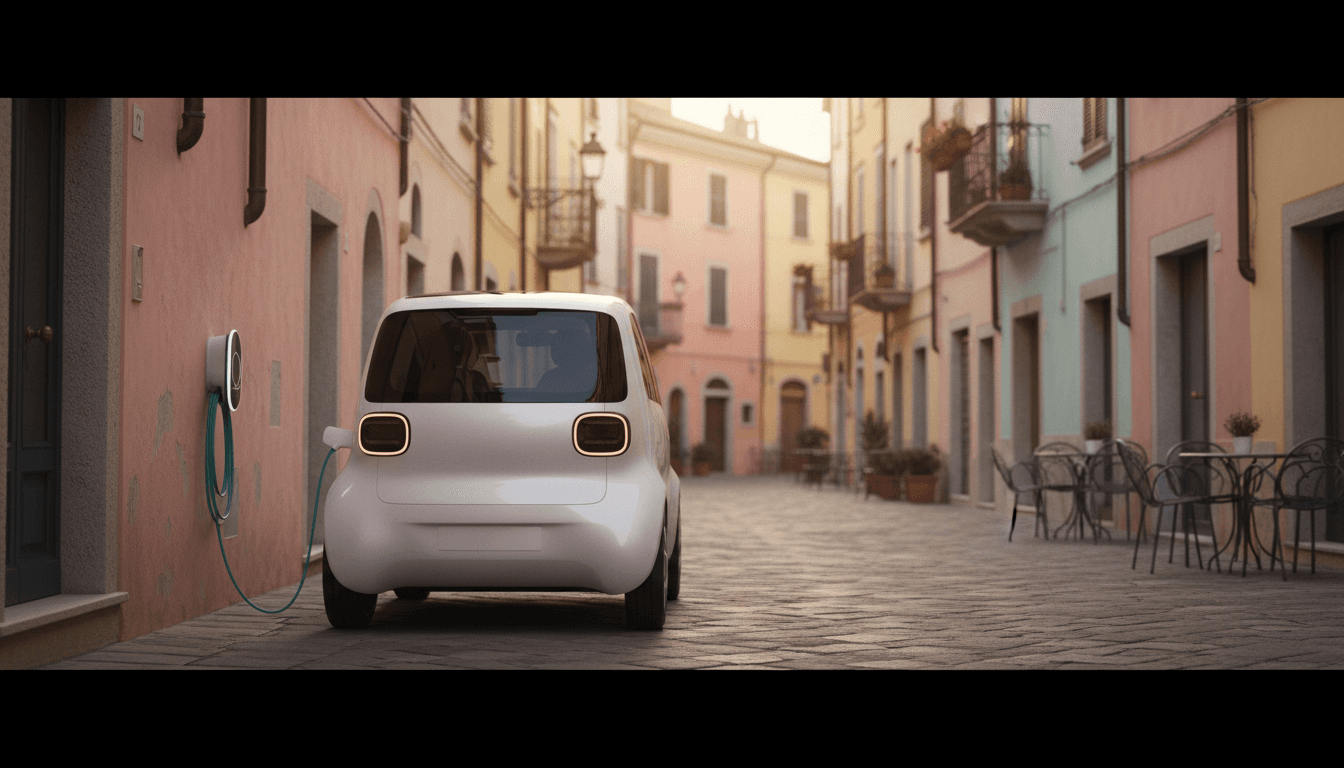
If you are looking for the cheapest electric car in Italy, the first question is whether you need it new at all. In 2026 the entry list price sits around 18,000 euros, yet used electric cars are losing value faster than any other fuel type. This guide lines up the numbers, the models and the checks so you can decide with a calculator rather than a hunch.
What a new electric car really costs in 2026
According to the Quotidiano Motori comparison [1], which uses list prices from January 2026, the most affordable electric cars in Italy are the Dacia Spring (17,900 euros), the Leapmotor T03 and the DR 1.0 EV (both 18,900 euros), and the Citroën ë-C3 Urban Range (20,490 euros). A little higher we find the ë-C3 Standard Range, the Fiat 500e and the electric Grande Panda at roughly 23,900 to 24,900 euros, then the Hyundai Inster and Renault 5 E-Tech at 24,900 euros.
These are starting prices. Trim levels, paint, packs and registration fees can add hundreds or thousands of euros, and brand promotions keep shifting. Sicurauto [2] notes, for example, that in May 2026 the T03 was being offered at 15,900 euros with financing, almost 3,000 euros under list. The practical rule never changes: compare the final drive-away price, not the advertised one.
The role of incentives, and why to treat them with caution
Part of the success of cheap EVs in 2026 came from the PNRR-funded Ecobonus, a 600 million euro fund that, per Quotidiano Motori [1], offered up to 11,000 euros with scrappage for buyers with an ISEE up to 30,000 euros, and up to 9,000 euros for the 30,000 to 40,000 band, with a price cap of 35,000 euros excluding VAT. With those contributions some cars fell below 10,000 euros and, in the best case, the T03 below 5,000 euros [2].
Beware, though: that fund had a deadline and limited money, and Sicurauto [2] points out that early-2026 deliveries came from orders placed between October and December 2025. Before building a budget on a bonus, check the MASE website and your dealer to see whether a window is open today. If none is, the comparison with a used car becomes far more favourable.
Why used EVs keep getting cheaper
A price index reported by QN Motori [3] in early February 2026 showed used car prices down 1.2% in the first weeks of the year. Electric cars were down 4.4% year on year and, the paper writes, had fallen below pre-pandemic levels. Hybrids were the only segment rising, up 2.2%.
For a buyer that means something simple: someone else has already paid the depreciation. A three or four year old EV often costs well under half of the new price, and running costs (energy, servicing, road tax) stay low. The trade-off is that batteries age and technology moves on: a 2020 car has less real-world range and charges more slowly than a 2026 one.
New or used: the comparison that matters
Think in three lines, not one.
- Purchase cost. A new Spring or T03 starts around 18,000 euros before any discount. A used segment A or B EV can cost noticeably less, but the price depends on age, mileage and battery condition. Look at real listings, not averages.
- Cost of ownership. Buying used means less depreciation but less warranty. New cars often carry a long battery warranty; on a used one, check how much is left and whether it transfers.
- Real use. If you drive short urban distances and can charge at home or work, a small used EV is almost unbeatable. If you regularly drive on motorways, the stated range of a budget city car will not be enough and a bigger segment makes sense.
One piece of context worth keeping in mind: EconomyUp [4], citing a Deloitte study, reports that about half of Italians have no home charging. If that is you, the theoretical energy saving shrinks and your choice has to include public or workplace charging.
How to pick a used EV without nasty surprises
- Ask for the battery state of health (SoH). A certificate from a specialist centre beats a verbal figure. As a general rule it declines with age and repeated fast charging.
- Check the remaining warranty on the battery and drive unit, and whether it passes to the new owner.
- Verify charging hardware: maximum AC power, fast-charge socket, cables included.
- Test drive on your own route with the climate control on, to measure real range.
- Check the paperwork: registration book, ownership certificate, no liens or administrative holds, software service history.
Beyond that, the usual used-car rules apply: coherent mileage history, no sign of structural damage, tyres in good shape. EV tyres wear faster because of weight and torque.
Road tax, insurance and hidden costs
Quotidiano Motori [1] mentions the five-year road tax exemption on new electric cars; on used ones the rule depends on the region and first registration date, so ask your region or ACI before buying. Get an insurance quote early: premiums on EVs, especially for newly licensed drivers, can be surprising. Finally, add the cost of a wallbox and installation, which varies widely with your home wiring.
Our conclusion
If your goal is to spend as little as possible today, a recent used EV is almost always the cheapest route, provided you verify battery and warranty. If instead you find a new car on promotion near 16,000 euros and you can charge at home, the gap narrows a lot and a full warranty tips the scale. In both cases, calculate total cost over five years, not just the sticker price.
Practical takeaway: set a spending ceiling, compare three used listings against one drive-away quote for a new car, and always ask for the battery certificate before you sign.
Sources
- Quotidiano Motori, All electric cars under 30,000 euros in 2026.
- Sicurauto, Leapmotor T03: sales boom only thanks to incentives? Maybe not (7 May 2026).
- QN Motori, Used cars, the market opens 2026 with a 1.2% price drop (1 February 2026).
- EconomyUp, Electric cars in the US: 2026 is the year of used (30 March 2026).
Further reading
Related articles
Plug-in Hybrid Cars: Are They Worth It in Italy?
How a plug-in hybrid works, how much electric range it really has, when it pays off (regular charging, short trips) and what to check when buying used.
Used electric car: battery SoH and warranty checks
What to check before buying a used electric car in Italy: battery SoH and test cost, 8-year warranty and transferability, real range, charging, PRA search, road tax and insurance.