Cheap Electric City Cars in Italy: New or Used in 2026?
State incentives for new EVs have run dry and the 2026 Ecobonus for cars has not opened yet. Here is why a one or two year old used electric city car is quietly becoming the smarter buy, and what to check before you sign.
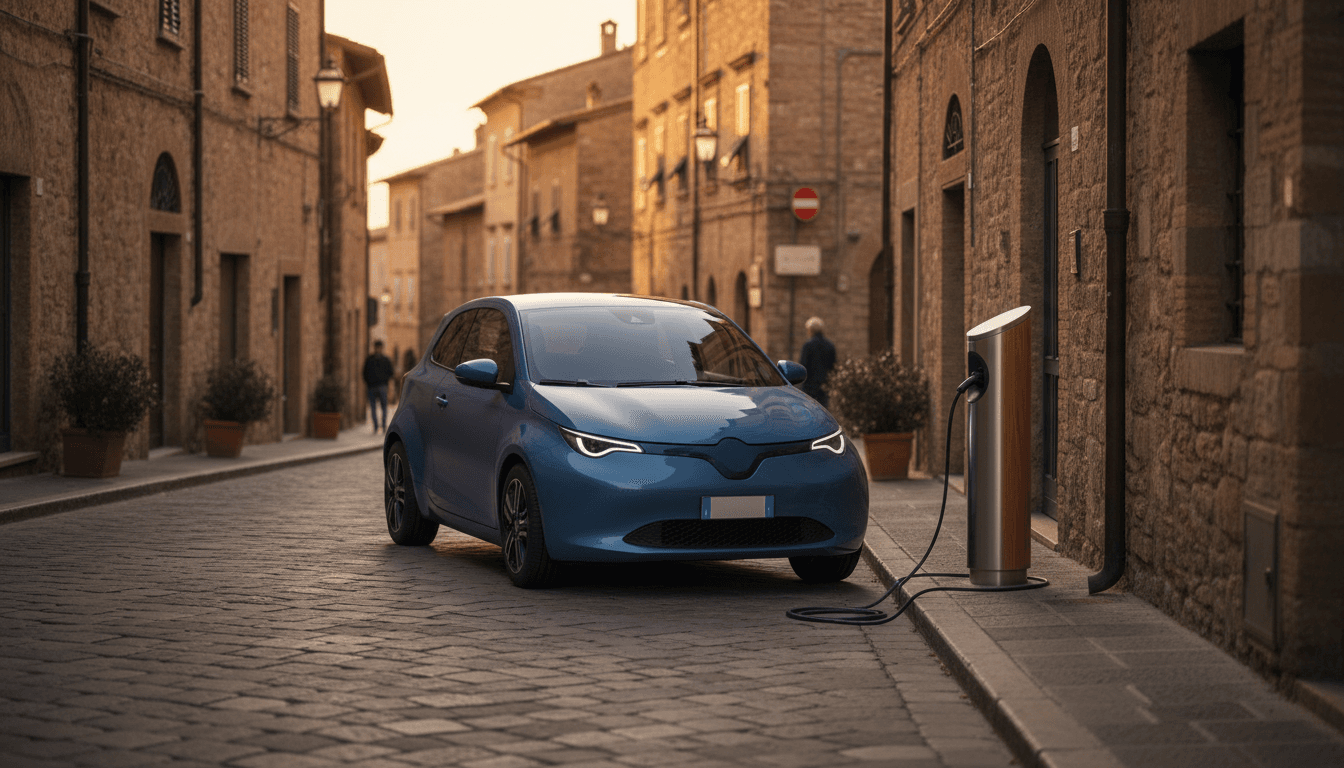
Anyone searching cheap electric city car Italy in 2026 is really asking a question that has gotten more complicated over the past year: with state incentives for new EVs now dry, does it still make sense to buy a cheap electric car new, or is this the moment to look at the used market instead?
The cheapest new electric city cars in 2026
The lineup of sub-25,000-euro battery-electric city cars has grown considerably this year. The Dacia Spring remains the price benchmark: the outgoing model starts at 17,900 euros with a declared range around 225 km WLTP. On September 8th Dacia unveiled the second generation, which keeps the same starting price but adds a 27.5 kWh LFP battery and an 80 hp motor, pushing range up to 250 km WLTP, with 6.6 kW AC charging as standard and optional DC fast charging up to 50 kW [1][2].
Alongside the Spring, several other models have landed under 20,000 euros: the DR 1.0 EV and the Leapmotor T03 both start at 18,900 euros, while the BYD Dolphin Surf opens at 19,490 euros [3]. One tier up, the pair built on a shared platform by Citroen and Fiat remains the best-balanced choice for buyers who want more space and range: the Citroen e-C3 is priced from 20,490 euros (30 kWh battery) to 28,400 euros (44 kWh MAX version), with commercial promotions that brought it down to 18,900 euros in May 2026, plus an extended battery warranty of 8 years or 160,000 km [4]. The Fiat Grande Panda electric, the e-C3's mechanical twin, starts at 23,900 euros with 113 hp, roughly 44 kWh of battery and 320 km of WLTP range [3]. Rounding things out is the new Renault Twingo E-Tech Electric, which reached Italian showrooms over the weekend of April 18-19, 2026: 19,500 euros for the Evolution trim and 21,100 euros for the Techno, with an 82 hp motor, a 27.5 kWh LFP battery and up to 263 km of range [5].
The state incentives have stalled, and here is what that actually means
This is what makes 2026 different from previous years. The PNRR-MASE bonus, the one reserved for pure electric cars, worth up to 11,000 euros with a trade-in for buyers with an ISEE income indicator under 30,000 euros and up to 6,000 euros without a trade-in, ran out of funding in October 2025 and is no longer active for private buyers [6]. The ordinary Ecobonus run by the MIMIT ministry, which historically also covered other low-emission cars, has only one confirmed date for 2026, March 18th, and that date applies to mopeds and motorcycles: as of this writing there is still no confirmed window for new cars [6]. In practice, anyone buying one of the city cars listed above today is almost always paying full list price, or whatever discount the dealer itself is willing to offer, without the state contribution that used to shave 6,000 to 11,000 euros off the final bill.
Why used is becoming the smarter buy right now
When the state incentive was in place, a new car clawed back most of its price disadvantage against an equivalent used one: trade in the old petrol runabout and the gap narrowed to almost nothing. Without that contribution, the gap between buying new and buying a one or two year old electric city car goes back to being the ordinary used-market gap, which for EVs is typically steeper in the first couple of years than for an equivalent combustion car. A first-batch Dacia Spring, a first-year e-C3 or a Fiat 500e with a few tens of thousands of kilometres on the clock can today be found noticeably cheaper than the equivalent new model, while still carrying most of its statutory battery warranty: most manufacturers cover the high-voltage battery for 8 years or 160,000 km, so a two or three year old car still retains the bulk of that cover. For buyers who simply want an affordable runabout for the city, with no need to chase the very latest tech, the arithmetic today tilts toward used more often than it did twelve months ago.
What to check on a used electric city car
Before you sign, there are checks that matter more here than the usual combustion-car once-over. First, the battery warranty: ask for the original warranty booklet and confirm how many years and kilometres remain, since it transfers to the new owner on the same original terms. Second, battery State of Health: many manufacturer apps, or a dedicated OBD diagnostic tool, will show remaining capacity against the nominal figure; a drop of more than 10-15 percent after just a few years is worth a direct question to the seller. Third, the charging hardware fitted: a car limited to slow AC charging is a real handicap if you do not have a home wallbox, so check whether that specific model has DC fast charging as standard or optional, as with the new Dacia Spring. Fourth, software updates: on these relatively young platforms, a missed software update can mean outdated ADAS behaviour or known bugs the manufacturer has already fixed elsewhere. Fifth, check that the declared mileage matches real wear on tyres, brakes and suspension, since a heavier electric car tends to wear those components slightly faster than a petrol car of the same size.
Which one to pick based on how you will use it
If your driving is almost entirely urban, with daily trips under 30-40 km, the declared range of the cheapest city cars (225-263 km WLTP) is more than enough whether bought new or used, and it makes sense to simply chase the lowest price: the Dacia Spring, DR 1.0 EV and Leapmotor T03 remain the benchmarks. If you regularly leave the city, a bigger battery and steadier motorway behaviour favour models like the Fiat Grande Panda or the Citroen e-C3, which with roughly 320 km and beyond 300 km of declared range (depending on trim) cope better with mixed trips. The new Twingo E-Tech sits in between, striking a solid balance between price, cabin space and range.
The practical takeaway
In 2026 the real question is no longer simply which electric city car costs the least when new, but whether buying new still makes sense without the safety net of state incentives. For many buyers the practical answer is to look at the recent used market, where the same technology costs less and the battery warranty is still comfortably valid. If you are weighing that move, take a look at the used electric city cars listed on VendiVoce before deciding: sometimes the deal you are chasing is already parked a few kilometres from home.
Sources
- Quattroruote, New Dacia Spring 2026: features, range, prices and news, September 8, 2026, https://www.quattroruote.it/news/nuovi-modelli/2026/09/08/dacia_spring.html
- SmartWorld, Dacia Spring 2026: prices from 17,900 euros and 250 km range, September 2026, https://www.smartworld.it/mobilita/dacia-spring-2026-prezzi-17900-euro-autonomia-250-km.html
- AutoScout24, Cheap electric cars 2026: models and prices, 2026, https://www.autoscout24.it/informare/consigli/scelta-e-acquisto/auto-elettriche-economiche-modelli-prezzi/
- Il Giornale Digitale, Citroen e-C3 price 2026, 2026, https://www.ilgiornaledigitale.it/nuova-citroen-e-c3-prezzo-2026-davvero-da-8900e-incentivi-82365.html
- Automoto.it, Renault Twingo E-Tech Electric 2026: prices from 19,500 euros, 2026, https://www.automoto.it/news/renault-twingo-e-tech-electric-2026-prezzi-da-19500-euro-6-gadget-pazzeschi-e-un-anno-di-eventi-imperdibili.html
- Auto361, Changing car in September 2026: what makes sense now that the EV bonus has run out, September 2026, https://www.auto361.it/cambio-auto-dopo-l-estate-novita-attese-a-settembre-2026
Further reading
- Nuova Dacia Spring 2026: caratteristiche, autonomia, prezzi e novità — Quattroruote
- Dacia Spring 2026: prezzi da 17.900 euro e autonomia di 250 km — SmartWorld
- Auto elettriche economiche 2026: modelli e prezzi — AutoScout24
- Citroën e-C3 prezzo 2026: davvero da 7.900 con incentivi? — Il Giornale Digitale
- Renault Twingo E-Tech Electric 2026: prezzi da 19.500 euro — Automoto.it
- Cambiare auto a settembre 2026: cosa conviene fare ora che il bonus elettriche è finito — Auto361
Related articles
Opel Frontera Manual 2026: New or Go Used?
Opel just launched the Frontera Start, a 100-hp manual entry point priced from 17,900 euros on promotion. Here is what the fine print hides, and when a used compact SUV still wins.
Best Cheap Used City Cars in Italy 2026
With no new city car left under 10,000 euros in Italy, used is the only route to a cheap runabout. Here is what a used Panda, 500, Aygo X, Picanto or i10 really costs, what insurance and road tax add on top, and what to check before you sign.