Electric city cars under 26,000 euros: what happens to the used market as incentives fade
In July 2026 battery electric share fell to 5.9% from 10.1% in June, just as the Twingo, Leapmotor T03, Grande Panda and Cupra Raval fill the sub-26,000 euro band. Here is why cheaper new cars compress used EV prices, and what to check before you buy or sell.

Two pieces of news that belong together
In August 2026 the Italian car market is telling two stories that look unrelated but are really about the same thing.
The first comes from July registration data: 123,184 cars registered, up 3.9% on the same month in 2025, with the first seven months of the year clearing one million units. Inside that healthy picture sits a detail worth pausing on. Battery electric vehicles fell to 5.9% market share, down from 10.1% in June. This is not a collapse in demand. It is the mechanical effect of state incentives running dry: in June they inflated deliveries, and in July they stopped doing so.
The second story comes from price lists. At precisely the moment public support is thinning out, manufacturers are filling the electric city car segment with models that cost less than a compact EV did just two years ago.
Put side by side, these two dynamics describe a market quite different from the one we had twelve months ago. Anyone buying or selling a used car should be reading them together.
The new entry price for going electric
The genuinely new development is that the psychological threshold of 20,000 euros is no longer out of reach.
The Renault Twingo E-Tech starts at 19,500 euros with 263 km of WLTP range, and is currently the only electric car under 20,000 euros built in Europe, at the group's Slovenian plants. To hit that price Renault cut industrial complexity hard, taking the component count down from 1,500-2,000 to roughly 750.
Below that threshold sits the Leapmotor T03, starting at 18,900 euros. One step up is the electric Fiat Grande Panda at 23,900 euros, with 113 hp, a 43 kWh battery, 320 km WLTP and DC charging up to 100 kW.
Then there is the Cupra Raval, the newest arrival and the one making the most noise. In Italy it launches with Launch Edition trims from 29,950 euros, with Plus at 33,950 and VZ at 39,950, but the entry version is expected in the autumn at 26,000 euros. Underneath sits the Volkswagen group's MEB+ platform, a 52 kWh battery and a claimed range reaching around 450 km in the most efficient variant.
The point is not which of these is best. The point is that an Italian buyer walking into a dealership today finds a real choice of new compact EVs between roughly 19,000 and 26,000 euros. Two years ago that band was close to empty.
Why this compresses used prices
Here is the mechanism that matters if you operate in the second-hand market.
The value of a used car is not set in isolation. It is set relative to the price of the nearest new equivalent. When new list prices fall, the ceiling on used prices falls with them, immediately, without anyone having to decide it.
With electric cars the effect has been unusually violent, because falling list prices arrived on top of the price war triggered by Asian manufacturers and Tesla's responses. When a new model's price is cut by 20% overnight, it drags down the value of every identical used example, which the day before was worth a fifth more.
The depreciation figures bear this out. Some premium electric models have lost more than 45% of their value in the first 24 months. Comparing cars from the same family makes the gap obvious: the Mercedes EQA has burned through more than 52% of its original list price, while the combustion-engined GLA stopped at 30.2%. The Peugeot e-208 shows a 50.1% drop, the Hyundai Kona Electric 43.4%.
Meanwhile used electric cars remain a thin niche, around 1.9% of the used market, with prices running as much as 25% below the equivalent new car.
What it means if you are buying
If you are shopping for a used EV, this is objectively a good moment, provided you change how you judge value.
The first rule is to stop thinking in percentages off the original list price. A 50% discount on a 2022 car tells you very little, because the correct benchmark is not what it cost then but what a brand new electric city car with a full warranty costs now. If a three-year-old used car costs the same as a new Twingo, the choice is no longer obvious.
The second rule concerns the battery. On a used EV the component that determines residual value is not mileage but battery state of health, the SOH figure. Always ask for a recent diagnostic certificate and check how many years of battery warranty remain: most manufacturers cover eight years or 160,000 km with a guaranteed minimum capacity threshold, and that protection transfers to the new owner.
The third concerns charging. A first-generation EV with low peak DC charging power can be perfect for city use and genuinely frustrating on long trips. Before signing, check the real maximum charging power and ask yourself honestly how many long journeys you make in a year.
What it means if you are selling
The message for anyone with an EV to sell is blunter: time is working against you.
Every new model that lands under 25,000 euros shifts the benchmark downward, and every fresh round of incentives does the same, because an incentive on a new car is effectively a discount on your car's direct competitor. Waiting is not a neutral strategy.
Sellers do have two concrete levers. The first is documentation: an up-to-date battery state-of-health certificate and a complete record of rapid-charging history reduce the buyer's uncertainty, and it is uncertainty, more than mileage, that drives offers down. The second is remaining warranty: if the battery still has years of coverage left, that is a real selling argument, not a footnote to mention at the end of the negotiation.
The picture for the months ahead
Be careful not to read July's 5.9% as a verdict by Italian drivers on electric cars. It is a snapshot of a month without incentives, immediately following a month that was inflated by them. Hybrids remain comfortably in front at 47.5% of the market, plug-ins climbed to 10.5%, and rechargeable vehicles together account for 16.4%.
The underlying direction holds: new entry prices falling, used electric supply growing slowly but from a very small base, and the gap between new and used narrowing. For buyers that is an opportunity, as long as you assess the battery rather than a three-year-old list price. For sellers it is a reason not to postpone.
Further reading
- Il mercato auto italiano cresce ancora a luglio, ma la vera sfida resta rinnovare il parco veicoli — TuttoTech
- Immatricolazioni a +3,9% nel mercato auto italiano a luglio. Rivista al rialzo la stima 2026 a 1,610 milioni di unita — UNRAE
- Mercato auto Italia: +3,9% a luglio 2026, elettriche al 5,9% di quota — HDmotori
- City car elettriche 2026: Twingo, Leapmotor e Cupra Raval prezzi — Quotidiano Motori
- Cupra Raval 2026, tutti i prezzi per l'Italia della formidabile compatta elettrica — QN Motori
- Renault Twingo vs Fiat Grande Panda, duello tra baby elettriche retro — InsideEVs Italia
- Quali sono le auto che si svalutano di piu nel 2026? La classifica — Auto.it
- Auto elettriche usate: 10 modelli che oggi costano la meta — Sky TG24
Related articles
Best Cheap Used City Cars in Italy 2026
With no new city car left under 10,000 euros in Italy, used is the only route to a cheap runabout. Here is what a used Panda, 500, Aygo X, Picanto or i10 really costs, what insurance and road tax add on top, and what to check before you sign.
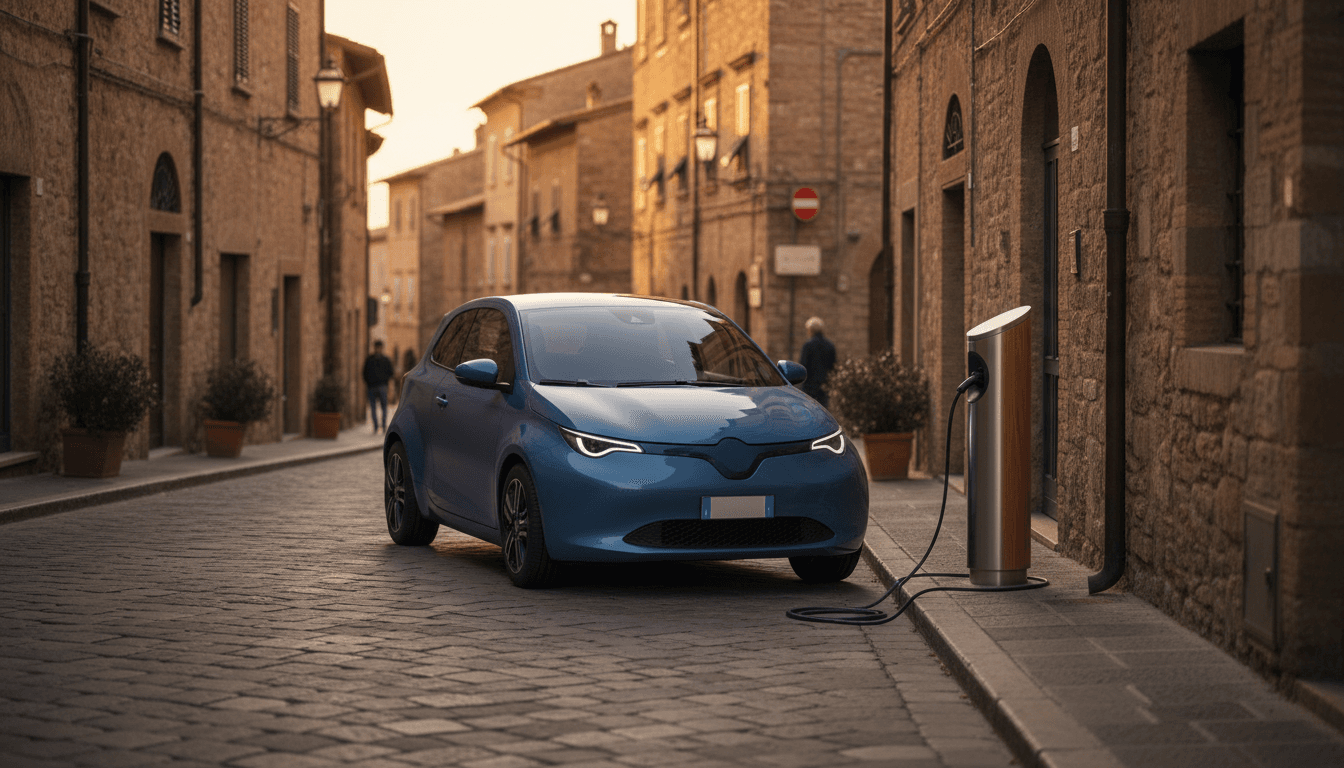
Cheap Electric City Cars in Italy: New or Used in 2026?
State incentives for new EVs have run dry and the 2026 Ecobonus for cars has not opened yet. Here is why a one or two year old used electric city car is quietly becoming the smarter buy, and what to check before you sign.