Car safety: Euro NCAP, airbags and what really matters
Euro NCAP stars tell you a lot, but they have an expiry date. Here is how airbags, ABS and ESP work, why the body shell matters, and how to weigh safety when buying a used car.
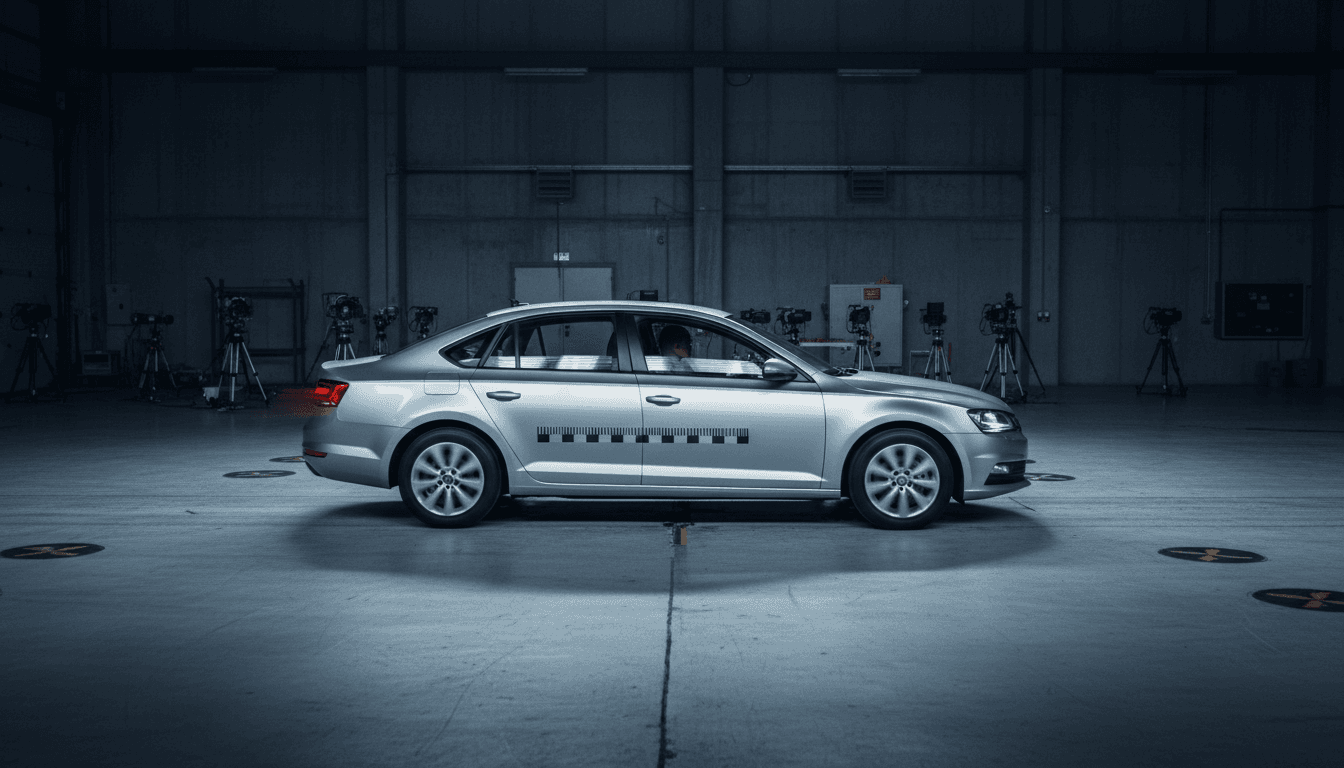
A car's safety cannot be reduced to a number of stars. Yet when we shop for a used vehicle, that is often where we stop: five Euro NCAP stars, job done. Reality is more nuanced. Stars tell you a lot, but they have clear limits, and on a second-hand car they matter just as much as — if not more than — the belt you fasten, the airbags that actually deploy and the shell that absorbs the impact. Let us look at what really protects the driver, and how to judge it without being fooled by the numbers.
How Euro NCAP stars really work
Euro NCAP is the independent European safety-assessment programme, running since 1997 and backed by transport ministries, motoring clubs and consumer groups. It is not the mandatory type approval (omologazione): it is a voluntary, comparative test, usually far stricter than the legal minimum. The final score, from zero to five stars, is built from four areas: adult occupant protection, child occupant protection, protection of vulnerable road users (pedestrians and cyclists) and Safety Assist, meaning the electronic driver-assistance systems.
The main crash tests are unforgiving. In the offset frontal, the car travels at around 50 km/h into a deformable barrier that is itself moving; in the full-width frontal the whole nose takes the blow; in the side tests the car is struck by a trolley and thrown against a rigid pole that concentrates all the energy on one point. On board, sensor-packed dummies measure the loads on head, neck, chest and legs. That is where the stars come from.
The most important limit: stars have a date
Here is the point almost nobody considers: a star rating does not last forever. Euro NCAP updates its protocols every few years and raises the bar each time. Five stars in 2013 did not require autonomous emergency braking or lane-keeping systems; five stars in 2024 do. That is why every rating is stamped with the year of the test, and older ones (usually beyond six years) are archived.
For a used-car buyer this is decisive: never stop at the number of stars, always check the year of the test. Five stars from 2012 and five stars from 2023 are not the same thing. The bar has moved in between, and a top score from a decade ago might only earn three stars today.
Airbags: a helper, not a substitute for the belt
The technical name for an airbag is SRS, Supplemental Restraint System — and the key word is supplemental. The airbag is designed to work with the seatbelt, not instead of it: it inflates in 30 to 50 milliseconds with such force that, without a belt, it can injure rather than protect.
Modern cars carry frontal airbags, side thorax airbags, curtain airbags for the head, often knee airbags and, on the newest models, a centre airbag between the front seats. On a used car, both the count and the condition matter. During the test drive, watch the SRS warning light on the dashboard: it should switch on at start-up and then go out. If it never lights up, the system may have been disabled, or the airbags removed after a crash and never refitted. That is a serious red flag.
ABS and ESP: the safety that avoids the crash
Airbags and the body shell are passive safety: they act once the impact is already happening. ABS and ESP are active safety: they aim to stop you reaching that impact at all. ABS prevents the wheels from locking under braking, so you can keep steering while you brake hard; it has been mandatory on new cars in Europe since 2004. ESP (or ESC, electronic stability control) brakes individual wheels selectively to correct skids, understeer and oversteer.
The figures are striking: ESP cuts loss-of-grip crashes by roughly 38% and rollover risk by up to 80%. It is estimated to have already prevented more than 188,000 injury crashes in Europe and saved over 6,000 lives. That is why it became mandatory on new models in 2011 and on every car registered from November 2014. The practical upshot: a small car registered before 2011 may not have ESP at all. For a newly licensed driver (neopatentato), with less experience handling a slide, that gap is worth more than any star.
The shell that protects you
The engineering that matters most sits under the bodywork. A safe body combines programmed deformation zones — the front and rear, designed to crumple and absorb energy — with a rigid survival cell around the cabin, reinforced with high-strength steels and anti-intrusion bars in the doors. The A, B and C pillars, together with computer-designed load paths, steer the force of the impact away from the people inside.
On a used car this structure may have been compromised by a crash and by poor repairs. Check the vehicle history, look for uneven panel gaps, suspect welds and mismatched paint. The periodic roadworthiness test (revisione) checks brakes, lights and emissions, but it does not certify how the structure will hold up in a collision: never mistake a valid revisione sticker for passive safety.
Buying used: weighing safety realistically
Older cars almost always have lower scores and less technology. Before 2018 there is no eCall, the system that automatically calls 112 after a crash and transmits the location (estimated to cut fatalities by 10%). Before 2014-2015, standard ESP and autonomous emergency braking are often missing. Physics counts too: all else equal, a bigger, heavier car protects its occupants better than a tiny city car.
This leads to an honest budget trade-off. Sometimes a six-year-old mid-size saloon with ESP, curtain airbags and a solid recent rating protects you better than a fifteen-year-old flagship with plenty of stars — but old ones. Think in terms of priorities, not prestige. And remember that some costs — the road tax (bollo), access to limited-traffic zones (ZTL), the emissions class — are separate from safety: important, but not something to let override crash protection.
In practice: the checklist
When you compare listings — including while browsing on VendiVoce — use this grid. Read the stars and the test year together. Confirm ESP is fitted (guaranteed from November 2014). Count the airbags and check that the SRS light comes on and then goes out. If the car is from 2018 or later, it should have eCall. Ask for the accident history and have the structure assessed by a trusted mechanic, ideally with a pre-purchase inspection. At the change of ownership (passaggio di proprietà), the paperwork being in order says nothing about safety: you check that beforehand. A passed revisione is not the same as crash protection. The best safety system remains a well-maintained car, with everyone belted in and an attentive driver: stars help you choose, not switch off.
Further reading
- Come funzionano davvero i crash test auto e le stelle Euro NCAP — Motor1 Italia
- Euro NCAP - Safety ratings — Euro NCAP
- ESP obbligatorio su tutte le auto da novembre 2014 — alVolante
- Sistema ESP, ecco come è fatto e come funziona — L'Automobile - ACI
- eCall: arriva il sistema di chiamata d'emergenza in auto — alVolante
Related articles
Used cars: physical buttons or touchscreen?
From January 2026 Euro NCAP penalises cars that hide indicators, the horn and hazard lights inside touch menus. What that means if you are buying a used car from the all-touch years, and what to check before you sign.
Buying a Used Car With a Black Box: 2026 Guide
Buying a used car that already has an insurance black box installed is not a problem, but it is not an automatic perk either: the discount and the driving history stay with the previous owner. What Italy's 2024 data-portability law actually changed, and what to do before and after the ownership transfer.