BYD Is Booming in Italy in 2026 — But Between Tariffs and No Incentives, Is Buying New Still Worth It?
BYD's Italian registrations have surged in 2026, but EU tariffs and the lack of a national purchase incentive are pushing prices up. Here is what actually changes for anyone weighing a new or used purchase.
BYD Is No Longer a Niche Player: The July 2026 Numbers
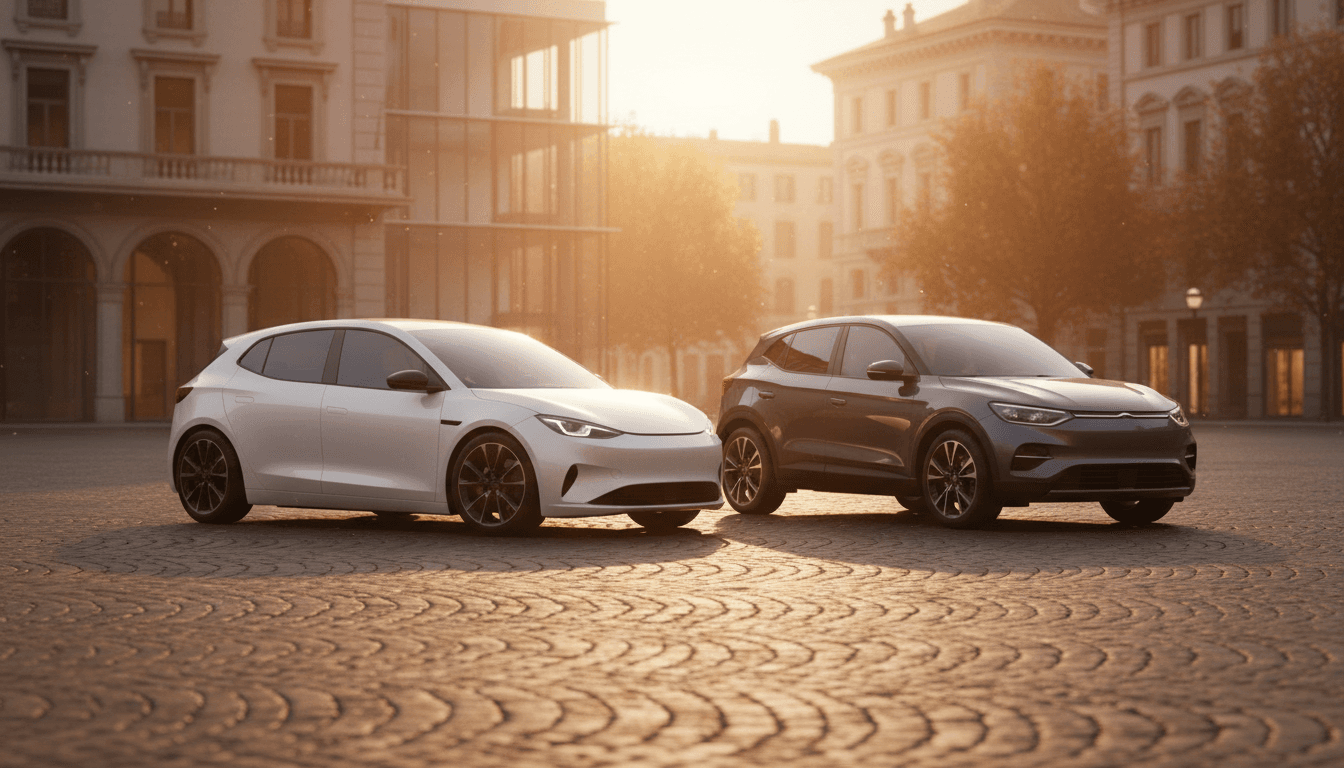
In July 2026, BYD registered roughly 4,500 vehicles in Italy, a market share of about 3.2% across the total vehicle mix (cars and light commercials) and 3.6% among passenger cars alone, more than double the volume of July 2025 [1][2]. It was the brand's third straight month in Italy's top ten manufacturers by registrations, a feat that would have sounded like science fiction for a Chinese carmaker just two years ago. In the NEV segment, battery-electric plus plug-in hybrid combined, BYD is now the number one brand in the Italian market, holding just over a fifth of the segment's registrations; in plug-in hybrids alone its share tops 27% for the month and 28% year to date [1].
Over the first seven months of 2026, BYD's Italian registrations passed 34,000 units, up more than 150% on the same period of 2025 [2]. The best-seller is the ATTO 2, sold as both a full electric and a DM-i plug-in hybrid, which alone accounts for roughly a third of BYD's Italian volume.
Numbers like these are rare in a market as brand-conservative as Italy's. But just as BYD accelerates, two forces are reshaping the price tag for anyone actually considering a purchase: EU tariffs, and the disappearance of a blanket national purchase incentive.
Why a BYD Costs More Than It Did a Year Ago
Since 2024, the European Union has applied a 10% baseline customs duty to electric vehicles imported from China, on top of additional countervailing tariffs that for BYD range from 17.4% to 38.1% depending on the model and the outcome of Brussels' anti-subsidy investigation [3]. These duties exist to offset the cost advantage Chinese manufacturers gain from state subsidies and vertical integration; BYD builds its own battery cells, electric motors, and most of its onboard electronics in-house.
The practical effect is that Italian BYD price lists now sit higher than they would without tariffs, even though the price edge over European rivals has not disappeared entirely: industry estimates suggest BYD retains a price advantage of up to 20% over comparably sized and equipped European models, even after duties [3]. In short, it costs more than a year ago, but it is still frequently cheaper than an equivalent German or French model with similar equipment.
What BYD Models Actually Cost in Italy Right Now
Stripping out month-to-month promotions, BYD's Italian range in summer 2026 starts at around 19,490 euros for the entry point of the all-electric lineup and tops out above 70,000 euros for the Han flagship sedan [3][4]. In between sit the volume models: the Dolphin electric city car lists just above 24,700 euros, with promotional pricing that has occasionally dipped below 23,700 euros, while the plug-in hybrid ATTO 2 DM-i starts around 27,600 euros [4]. On some trims, stacking whatever regional incentives are still active in parts of the country, real-world discounts can reach 8,000 to 11,000 euros off list, but these are local, patchwork schemes, not an automatic national ecobonus [3].
No National Incentive, and a Tighter EU Rulebook on the Way
This is the detail that actually changes the math for anyone buying new in 2026: for most of the year, Italy has not renewed a blanket national incentive for private purchases of new vehicles, electric or otherwise. The roughly 1.6 billion euros in public funds earmarked for the sector have gone mainly toward supporting domestic production and technological innovation, not direct consumer purchase subsidies.
And the direction of travel in Brussels does not favour Chinese-built models. A draft of the EU's Industrial Accelerator Act would require a vehicle to have at least 70% of its components manufactured within the European Union to qualify for any national incentive, including a possible ecobonus of up to 11,000 euros with a trade-in, with battery cells exempted from that percentage but still subject to separate origin rules for cells, modules and electrodes [5]. If adopted as drafted, the rule would effectively shut out low-cost models imported from China, tilting the field toward European manufacturers. It remains a proposal rather than law today, but it is a clear signal of where EU industrial policy on electric vehicles is heading.
The Used Market Tells a Different Story
On the used side, the numbers reveal a gap worth understanding before you decide. In the first four months of 2026, Chinese brands reached about 12.8% of new car registrations in Italy, yet their share of used-car demand held at just 3%, essentially flat year on year, a gap of more than four to one between new and used demand that has not narrowed over the past twelve months [6]. Among Chinese brands, BYD has the strongest demand on Italy's used-car market, led mainly by the Seal U plug-in hybrid, followed by the Dolphin [6].
That gap reflects a familiar caution among used-car buyers: a preference for brands with an established service network, a verifiable track record, and parts availability tested over time, all things a brand that only arrived in Italy a few years ago is still building. It does not mean buying a used BYD is a bad idea, especially for the highest-volume models like the ATTO 2, Seal U and Dolphin, but resale value remains harder to predict than for a Japanese or German model with a decade of Italian sales history behind it.
The Practical Takeaway: New, Used Chinese, or Used Established Brand?
In the end, the right choice depends on what you are optimizing for. Buyers who want the lowest possible price on a new EV, with current technology and a factory warranty, will still find BYD competitive even after tariffs, especially on models like the Dolphin and ATTO 2. Buyers looking at the used market who want to minimize resale risk currently have more negotiating room and more certainty with an established European or Japanese electric or hybrid model, even if the starting price is higher. And anyone still set on a used Chinese EV should stick to the highest-volume models sold in Italy, since service networks and parts supply follow sales volume, not any single model's specs.
Either way, the move that always pays off is the same one it has always been: compare several listings, check the service history, and never stop at the sticker price; in 2026 it only tells half the story.
Sources
[1] Quattroruote, Italian car market July 2026: registrations grow, EV sales slow, August 3, 2026 — https://www.quattroruote.it/news/mercato/2026/08/03/mercato_auto_luglio_2026.html [2] ANSA, BYD accelerates in Italy: over 6,000 registrations and a 4.1% share in June, July 1, 2026 — https://www.ansa.it/sito/notizie/economia/2026/07/01/byd-accelera-in-italia-a-giugno-oltre-6-mila-immatricolazioni-e-quota-al-41_f07ca54d-7749-4e3f-837b-e8761c97a9d1.html [3] Automobilista.it, BYD and Chinese cars: what changes for prices and incentives in Italy?, June 24, 2026 — https://www.automobilista.it/byd-e-auto-cinesi-cosa-cambia-per-prezzi-e-incentivi-in-italia/ [4] AutoMotoriNews, BYD electric cars in Italy: prices and models 2026, July 10, 2026 — https://www.automotorinews.it/2026/07/10/auto-elettrica-byd-italia-prezzo/ [5] Il Fatto Quotidiano, EVs and hybrids head toward an EU squeeze: incentives only with 70% made-in-Europe content, February 18, 2026 — https://www.ilfattoquotidiano.it/2026/02/18/auto-elettriche-e-ibride-verso-la-stretta-ue-incentivi-solo-con-70-di-contenuto-made-in-europe/8295966/ [6] AutoSuperMarket, Chinese cars on Italy's used market: real demand and Q1 2026 data, May 6, 2026 — https://autosupermarket.it/magazine/osservatorio-auto/auto-cinesi-usate-italia
Further reading
- Mercato auto italiano luglio 2026: crescono le immatricolazioni, rallentano le elettriche — Quattroruote
- BYD accelera in Italia, a giugno oltre 6 mila immatricolazioni e quota al 4,1% — ANSA
- BYD e auto cinesi: cosa cambia per prezzi e incentivi in Italia? — Automobilista.it
- Auto elettrica BYD Italia: prezzi e modelli 2026 — AutoMotoriNews
- Auto elettriche e ibride verso la stretta UE: incentivi solo con 70% di contenuto made in Europe — Il Fatto Quotidiano
- Auto cinesi usato in Italia: domanda reale e dati Q1 2026 — AutoSuperMarket
Related articles
Buying a Used LPG Car in 2026: Does It Pay Off?
Before buying a used LPG car in 2026, here is what actually matters: tank age, system testing, regional road tax and traffic bans, and how many kilometres it takes to break even.
Odometer Fraud: How to Spot It Before You Buy Used
A survey published today finds nearly one in three used-car buyers runs into a tampered odometer. Here's how to check for free before you sign, and what a seller risks for doing it.