Audi Is Killing the RS6's V8: Why the Used Market Is Worth a Look Before 2027
The next Audi RS6 is trading its twin-turbo V8 for a plug-in hybrid V6, with the sedan making a comeback in 2027. Here is what that means for anyone eyeing a used C7 or C8 RS6 today, from prices to Italy's superbollo tax and a real buying checklist.
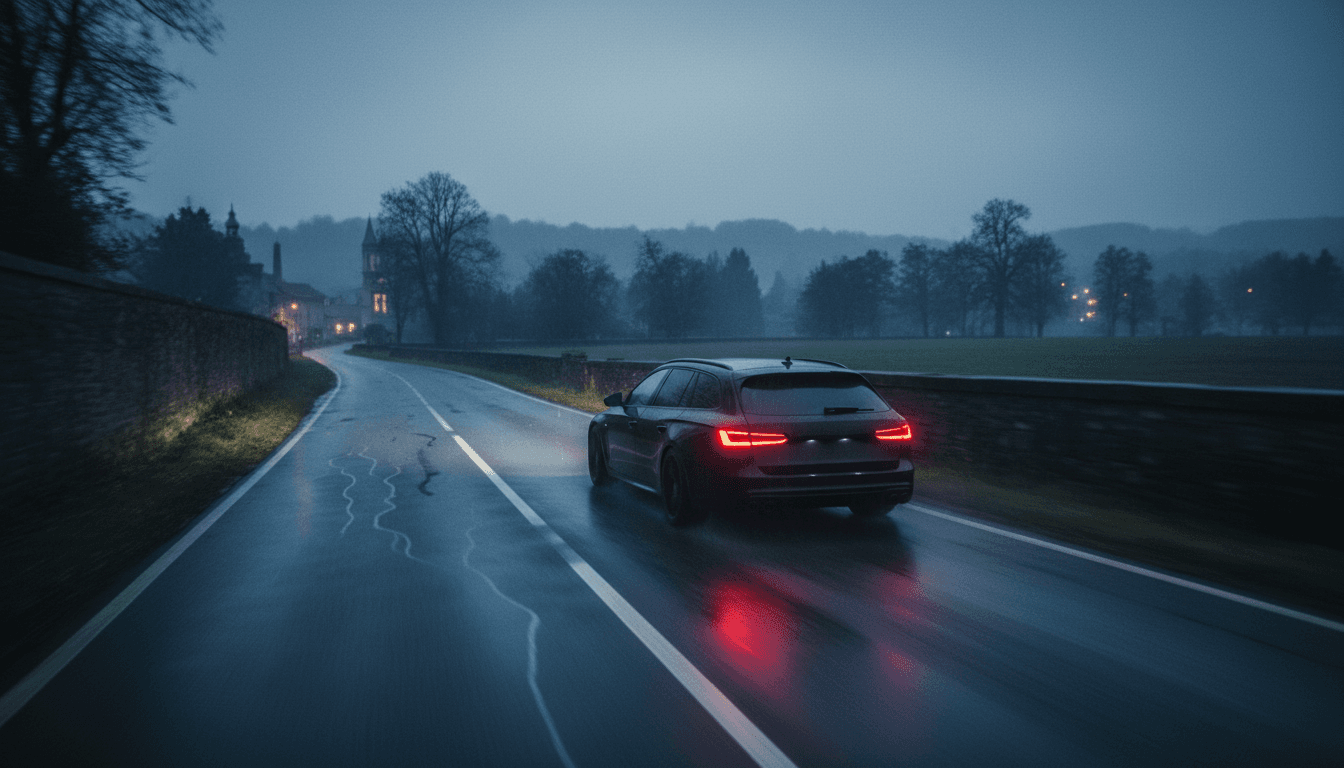
The plot twist: Audi is dropping the V8 from the RS6
In early August 2026, after years of rumors and spy shots, Audi confirmed what enthusiasts had been dreading: the next RS6, due in 2027, drops the familiar 4.0-liter twin-turbo V8 for a plug-in hybrid powertrain built around a six-cylinder engine, with combined output estimated between 700 and 750 hp [1][2]. That is not a minor footnote. Since 2002, the RS6 badge has meant a turbocharged V8 stuffed into a wagon body, and the switch to a V6 quietly closes a chapter across the whole German super-wagon segment. To make things more interesting, the new generation will also bring back the RS6 sedan, absent from Audi's lineup for more than fifteen years [3].
Why the V6 is not (only) a downgrade
The technical story is more nuanced than the headlines suggest. Multiple sources point to a 2.9- or 3.0-liter twin-turbo six paired with an electric motor built into the transmission, with combined output higher than today's 600-hp RS6 C8 [2]. More power, fewer cylinders, more electrification: the same script Audi already ran with the RS5, and one that matches what is happening across the segment. Mercedes-AMG has already retired the A45, its last petrol-only hot hatch, while insiders describe engines like AMG's naturally aspirated M159 or the Corvette Z06's LT6 as the symbolic end of an era [4]. The V8 is not disappearing entirely, it is increasingly hybridized or pushed into niche, low-volume production.
What it actually means for used-car buyers
Whenever a manufacturer announces the end of a purely combustion-engined generation, the used market tends to split into two camps: buyers who wait for the newer, more efficient, often cheaper-to-insure model, and buyers who want the last real version of something before prices climb. For the RS6 C7 and C8, the second camp is already visible in the listings. Italian ads currently span a wide range, from around 42,750 euros for early, higher-mileage C7s to well over 180,000 euros for the best-kept C8s, with low-mileage 2023 cars sitting around 150,000-160,000 euros [5]. Prices will not necessarily keep climbing in a straight line, but the pattern seen with other last-of-breed combustion cars, the manual Porsche 911 GT3, the BMW M3 CSL, is that final-series models tend to hold value better than the segment average, precisely because they cannot be repeated.
The superbollo math, done properly
Before getting swept up in the excitement, it is worth running the real numbers. The RS6 C8, with roughly 600 hp (441 kW), sits squarely inside Italy's superbollo bracket: the extra tax kicks in above 185 kW, at a rate of 20 euros per kW over that threshold, reduced progressively every five years until it disappears after twenty years from first registration [6]. For the C8, that works out to (441 - 185) x 20, or roughly 5,120 euros a year in additional tax on top of the ordinary road tax [6][7]. That is a fixed cost to budget for before buying, not after. One detail worth watching once the new hybrid RS6's official specs land: for plug-in hybrids, the superbollo is calculated on the combustion engine's power alone, not on the combined petrol-plus-electric output [6]. If the standalone V6 turns out to sit under the 185-kW threshold, the future RS6 could end up cheaper to tax than today's C8 despite its higher total output, a detail that, if confirmed, would meaningfully change the buy-now-versus-wait calculation.
A practical checklist for buying a used RS6 today
Anyone moving on a used RS6 ahead of the generational change should focus on a handful of concrete checks rather than nostalgia for a dying V8:
- A complete service history from an Audi dealer or a specialist workshop, with particular attention to oil-change intervals: the twin-turbo V8 is sensitive to them, especially on cars driven hard.
- Turbo health and no blue exhaust smoke on cold start, a classic sign of abnormal oil consumption.
- Brake condition, especially if the car has the optional carbon-ceramic setup, since replacement costs are steep.
- Tyres and air suspension, where fitted, both expensive to repair if neglected.
- Clean tax records, including proof the superbollo has been paid in prior years, since unpaid back taxes become the new owner's problem.
Buy now, or wait for 2027?
There is no single right answer, but market logic offers a useful compass. Buyers who want a daily-usable performance car, ideally more efficient and cheaper to run, have every reason to wait for the plug-in hybrid generation. Buyers who want the RS6 in its purest form, and worry the V8 version will become an out-of-reach collector's piece within a few years, have a stronger case for acting in the coming months, while C7 and C8 supply is still relatively healthy and prices have not fully priced in the last-of-its-kind effect. On marketplaces like VendiVoce, where listings for high-end performance sedans and wagons keep growing, it is worth setting up a targeted search and comparing several ads before settling on a price, since on a car with running costs like these, the gap between a meticulously serviced example and a neglected one can easily be worth several thousand euros.
The bottom line
Dropping the V8 from the next Audi RS6 is not just news for engine enthusiasts, it is a market signal. The outgoing petrol-only RS6 generation is very likely the last chance to own this particular combination of wagon layout and V8 soundtrack before it disappears from the lineup for good. Anyone considering a used one, though, needs to look past the romance of the engine and budget for the superbollo, factor in upkeep, and insist on a spotless service history. That is what turns enthusiasm for a piece of Audi history into a sound purchase rather than an expensive regret.
Further reading
- Auto.it, Audi RS6, addio V8? Arriva il 6 cilindri plug-in da 750 cv, August 5, 2026
- Motor1.com, 2027 Audi RS6: Spy Photos Confirm It's A Plug-In Hybrid, August 2026
- Motorionline.com, Audi RS6 Sedan 2027: beccata in strada la nuova berlina ad alte prestazioni, August 2026
- Autoappassionati.it, Se voglio comprare un'auto V8 cosa e rimasto sul mercato? La guida all'acquisto, July 2026
- AutoUncle.it, Audi RS6 usata: prezzo da 42.750 euro, 276 auto in vendita, August 2026
- Automobilista.it, Superbollo 2026: quanto si paga davvero oltre 185 kW?, 2026
- Frattin Auto, Audi RS6 usata: quanto costa mantenerla?, 2026
Further reading
- Audi RS6, addio V8? Arriva il 6 cilindri plug-in da 750 cv — Auto.it
- 2027 Audi RS6: Spy Photos Confirm It's A Plug-In Hybrid — Motor1.com
- Audi RS6 Sedan 2027: beccata in strada la nuova berlina ad alte prestazioni — Motorionline.com
- Se voglio comprare un'auto V8 cosa e rimasto sul mercato? La guida all'acquisto — Autoappassionati.it
- Audi RS6 usata | Prezzo da 42.750 euro, 276 auto in vendita — AutoUncle.it
- Superbollo 2026: quanto si paga davvero oltre 185 kW? — Automobilista.it
- Audi RS6 Usata: Quanto Costa Mantenerla? — Frattin Auto
Related articles
Buying a Used LPG Car in 2026: Does It Pay Off?
Before buying a used LPG car in 2026, here is what actually matters: tank age, system testing, regional road tax and traffic bans, and how many kilometres it takes to break even.
Odometer Fraud: How to Spot It Before You Buy Used
A survey published today finds nearly one in three used-car buyers runs into a tampered odometer. Here's how to check for free before you sign, and what a seller risks for doing it.