Italy's Roadworthiness Test Is Becoming an Electronic Audit: What It Now Reveals About a Used Car
With ADAS checks in force since 2025 and stricter diesel particulate measurement arriving through 2026, Italy's roadworthiness test is no longer just brakes and lights. For used-car buyers it has become a source of information worth knowing how to read.
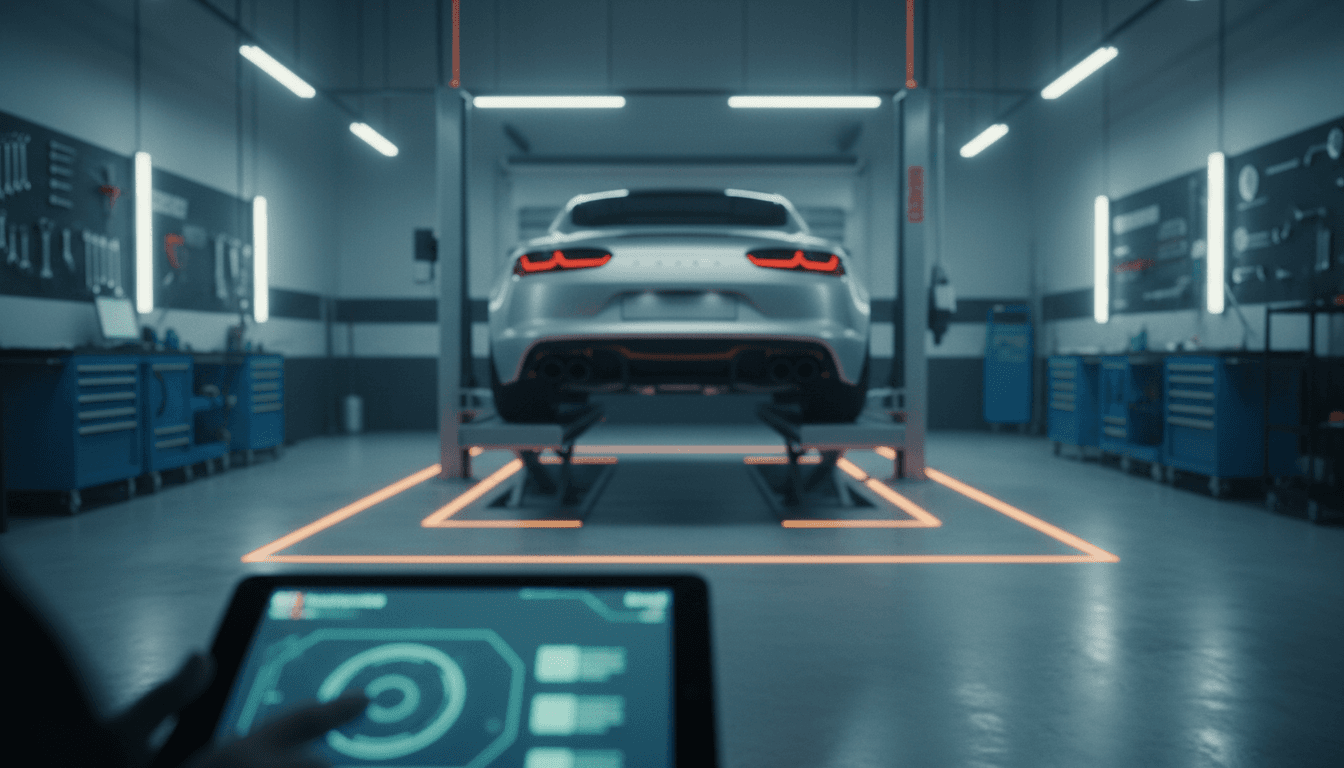
From mechanical inspection to electronic diagnosis
For decades the Italian roadworthiness test, the revisione, was treated as a formality: you took the car in, someone checked the brakes, lights and exhaust gases, and you went home with a stamp. That perception is now out of date. Checks today follow the MCTC Net2 digital protocol and cover braking, lighting, emissions, tyres, steering, suspension and windscreen, and since 2025 they have extended to ADAS driver assistance systems as well [1].
The more substantial change, though, concerns the tool being used. The OBD port, the onboard diagnostic socket, has become increasingly central to reading parameters and fault codes from the vehicle's electronic systems [2]. That means the workshop is no longer only observing what the car does on the test bench: it interrogates the control units and sees what the car has recorded over time, including malfunctions a visual inspection would never surface, such as problems with emissions control systems, ABS or airbags [2].
For anyone buying second-hand, that changes the picture considerably.
What a recent test certificate actually tells you
A car that recently passed its revisione is not automatically a healthy car, and it is worth being clear about this so nobody takes false reassurance from it. The test verifies compliance with minimum safety and environmental requirements at a single point in time. It says nothing about clutch wear, gearbox health, structural rust or abnormal oil consumption.
What a recent pass does now guarantee, and did not guarantee ten years ago, is that the ABS and airbag warning lights were not active and that driver assistance systems responded to the check. On a modern car those happen to be among the most expensive items to put right: an airbag control unit, or recalibrating an ADAS camera after a windscreen replacement, can easily run to several hundred euros.
The tightening on diesel particulates
The most significant change in 2026 concerns diesels. Stricter particulate controls are coming progressively into force, measured with a particle counter [1], an instrument that counts emitted particles rather than relying on the smoke opacity measurement used historically.
The difference is practical rather than theoretical: a particle counter identifies inefficient or tampered particulate filters that the old method could let through. If you are considering a used diesel, particularly one driven mainly in town on short trips, the diesel particulate filter becomes a priority check. A clogged or removed DPF is a serious expense and, under the new testing regime, a problem unlikely to slip past the next inspection.
Deadlines: the rule almost everyone gets wrong
The interval is well known but worth repeating, because it causes frequent confusion on used cars: the test is required four years after first registration and every two years thereafter [1][3].
The less familiar detail is the precise deadline: it falls on the last day of the month in which the vehicle was first registered, with no grace period [1]. A car first registered in March must be tested by 31 March of the relevant year, not by some flexible date. When buying used, work this date out immediately rather than trusting a vague assurance that it is still valid for a while. Responsibility transfers to the new owner along with the vehicle.
What an expired test costs you
The penalties are substantial and worth knowing before closing a purchase. Driving with an expired test carries a fine of 173 to 694 euros plus confiscation of the registration document, and the amount doubles for a repeat offence [4]. If the vehicle has actually been suspended from circulation for a missed test and is driven anyway, the penalty rises to between 1,998 and 7,993 euros, with the vehicle impounded for ninety days [4].
The insurance angle matters too: in the event of a claim with an expired test, the policyholder's position becomes significantly more complicated. That is not a situation to end up in through a calendar oversight.
A buyer's checklist
Translated into practice, here is what to ask for and verify on a used car:
- The exact next-due date, calculated from the month of first registration rather than estimated.
- Documented results from the last test, not just verbal confirmation that it passed.
- On a diesel, the condition of the particulate filter and the car's typical usage pattern. Almost exclusively urban use is the worst possible profile for a DPF.
- On the electronics, confirm with the ignition on that the ABS, airbag and ESP lights illuminate during the initial check and then go out. A light that never illuminates at all can indicate a bulb removed to hide a fault.
- If the car has ADAS and a replaced windscreen, ask whether camera recalibration was carried out. It is an expensive step that frequently gets skipped.
The bottom line
The revisione is becoming more of an electronics audit every year, and that is good news for used-car buyers: a share of the defects that previously stayed invisible now surfaces. It does not replace an independent pre-purchase inspection, though, because it remains a minimum-requirements check rather than an assessment of the vehicle's general condition. The right way to use it is as one source among several, alongside the service history and an inspection you arrange yourself, while keeping firmly in mind that once ownership transfers, deadlines and penalties become the buyer's problem.
Further reading
- Quotidiano Motori, Roadworthiness test 2026: cost, deadlines and what gets checked, 2026
- Automobilista.it, What are the new roadworthiness test regulations in 2026?, 2026
- SBK Italia, Mandatory testing 2026: deadlines, costs and checks for cars and scooters, 2026
- Automobile360, Roadworthiness test 2026: deadlines, costs, where to go and fines from 173 to 694 euros, 2026
- Automobilista.it, What are the new rules for the roadworthiness test in 2026?, 2026
Further reading
- Revisione auto 2026: costo, scadenze e cosa controllano — Quotidiano Motori
- Quali sono le nuove normative sulla revisione auto nel 2026? — Automobilista.it
- Revisione obbligatoria 2026: scadenze, costi e controlli per auto e scooter — SBK Italia
- Revisione Auto 2026: Scadenze, Costi, Dove Farla e Multe da 173 a 694 Euro per Chi Circola Senza — Automobile360
- Quali sono le nuove regole per la revisione auto nel 2026? — Automobilista.it
Related articles
Used cars: physical buttons or touchscreen?
From January 2026 Euro NCAP penalises cars that hide indicators, the horn and hazard lights inside touch menus. What that means if you are buying a used car from the all-touch years, and what to check before you sign.
Buying a Used Car With a Black Box: 2026 Guide
Buying a used car that already has an insurance black box installed is not a problem, but it is not an automatic perk either: the discount and the driving history stay with the previous owner. What Italy's 2024 data-portability law actually changed, and what to do before and after the ownership transfer.