Volkswagen ID. Cross vs Ford Puma Gen-E: the compact electric SUV duel Italy has been waiting for
Volkswagen opened Italian orders for the ID. Cross in late July, just as Ford refreshed the Puma Gen-E with a bigger battery and more range. Here is how price, range and boot space stack up, and why the real verdict may not land until early 2027.
Two rivals chasing the same target
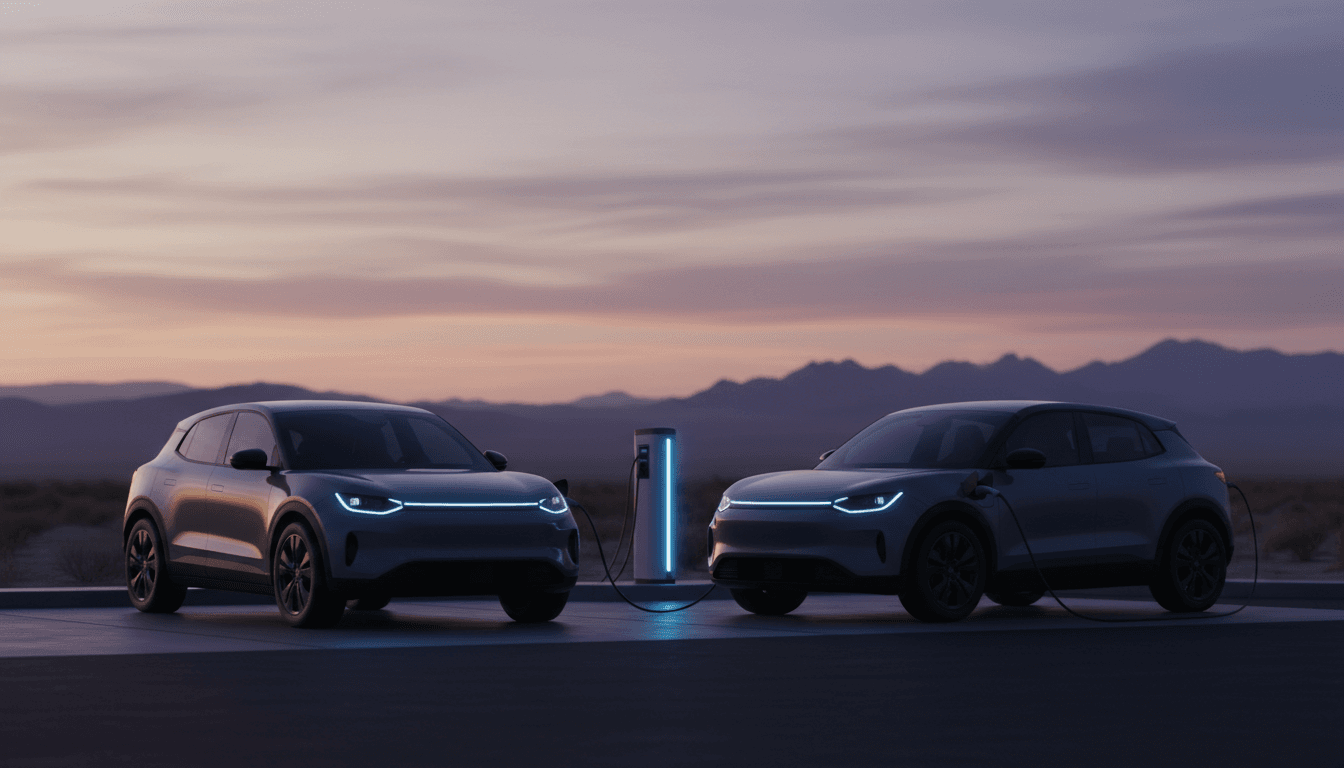
Since late July 2026 the Volkswagen ID. Cross has been open for order in Italy, arriving just as the Ford Puma Gen-E, on sale since spring 2025, gets a bigger battery and more range for the 2026 model year [1][6]. It is no accident that international coverage keeps placing the two side by side: they are the most anticipated entries in the compact electric SUV segment under 40,000 euros, the price band finally pulling battery-electric mobility out of the premium niche.
For anyone choosing a compact EV right now, or anyone who will be shopping for one used a couple of years from now, understanding how these two actually compare today matters more than any spec sheet skimmed in a hurry.
Price: who is cheaper now, who will be cheaper later
On today's price list, the Ford Puma Gen-E starts at 33,250 euros, with the Premium trim from 35,250 euros [6][7]. The Volkswagen ID. Cross, for now, can only be ordered in Life trim with a 52 kWh battery and a 155 kW (211 hp) motor, starting at 37,450 euros [1]. Right now, then, the Ford undercuts the equivalent Volkswagen by a meaningful margin.
That picture is set to change. Volkswagen has already confirmed cheaper ID. Cross variants arriving by late 2026 or early 2027, built around a 37 kWh LFP battery and an 85 kW (115 hp) motor: the quoted price sits around 28,000-29,000 euros, a figure that would upend the segment and undercut the Puma Gen-E outright [2][3]. The full ID. Cross line-up will eventually span seven combinations across two battery chemistries, LFP at 37 kWh and NMC at 52 kWh, and three power outputs of 115, 135 and 211 hp [3].
Buyers who are not in a rush, in other words, have a concrete reason to wait a few months before signing an order.
Range: the contest comes down to real kilometres
With the 2026 update, the Puma Gen-E's battery grew from 43 to 46.8 kWh net, lifting the claimed WLTP range from 376 to 417 km, or 404 km on the Premium trim [6][7]. The ID. Cross, in the 52 kWh configuration currently orderable, claims up to 427 km WLTP according to the most recent figures published by Volkswagen [1]. The two cars are essentially neck and neck on this front, with a slight edge to the German entry.
The picture shifts for the future 37 kWh LFP ID. Cross: range will drop proportionally, likely well under 350 km, the familiar trade-off between a lower sticker price and usable range that anyone who also follows the used entry-level EV market already knows. On fast charging the two are close: the Puma Gen-E tops out at 100 kW DC and recovers 10 to 80% in just over 20 minutes, while the ID. Cross quotes a similar window of around 23-24 minutes [1][6].
Boot space and practicality: where Ford has a real edge
On everyday usability, Ford plays a strong card: the Gigabox system, a double-floor boot arrangement that pushes capacity to 523-574 litres depending on configuration, plus a small frunk under the front hood [6][7]. The Volkswagen ID. Cross tops out at 475 litres in the boot plus 22 litres in the frunk, expanding to as much as 1,340 litres with the rear seats folded [3]. Both are generous for the class, but the Puma remains the smarter pick for anyone regularly hauling luggage, prams or sports gear.
On exterior dimensions the two are similar: the ID. Cross measures 4.153 metres long, 1.794 metres wide and 1.581 metres tall, with a 2.601-metre wheelbase that frees up genuine cabin space [3]; the Puma Gen-E is slightly longer, around 4.21 metres, but lower, at roughly 1.56 metres [6].
Driving character: sporty versus sturdy
Anyone who has driven both describes the Puma Gen-E as the more entertaining of the two, true to the peppy character that made the petrol Puma one of Europe's best-selling crossovers: 123 kW (168 hp), 290 Nm of torque and a 0-100 km/h sprint of around 8 seconds [6][7]. The ID. Cross, in the 211-hp version currently orderable, leans more on a sense of solidity and a chassis tuned for frequent practical use, in keeping with Volkswagen's tradition in the compact SUV segment, echoing the petrol T-Cross whose overall layout it borrows [1][3]. On the technology front, Ford added its hands-free BlueCruise driver-assistance system for 2026 on a new BlueCruise Edition trim, a feature Volkswagen does not currently offer on this model [6].
The rest of the field crowding the segment
The Volkswagen-Ford duel is not happening in a vacuum. Renault has just launched the 4 E-Tech Electric, with the 120 hp Evolution trim from 30,900 euros and the better-equipped 150 hp Techno from 35,940 euros; the special fabric-roof Plein Sud version reaches up to 395 km WLTP from 36,790 euros [8]. The smaller Renault 5 E-Tech starts at around 24,900 euros, while Citroen offers the ë-C3 from 23,900 euros and the ë-C3 Aircross from 26,790 euros with a claimed 310 km of range, currently the cheapest options in the whole segment. The electric Jeep Avenger, the segment's Italian sales leader with more than 48,000 registrations, remains the priciest of the group, above 39,000 euros. Kia, with the EV2, and Chinese brands such as BYD with the Atto 2, are also moving into this same price band, a sign that 2026 is genuinely the year affordable compact electric SUVs leave the experimental phase behind.
What this means in practice
If you need a compact EV right now, the Ford Puma Gen-E remains the more balanced choice today across price, cargo space and driving enjoyment. Buyers who can wait a few months should keep an eye on Volkswagen's cheaper LFP ID. Cross variants arriving between late 2026 and early 2027: if that 28,000-29,000 euro price holds, it will genuinely reshuffle the segment. And for anyone also watching the used market, it is worth remembering that the earliest Puma Gen-E units, on the road for over a year now, are starting to reach the used market with the smaller 43 kWh battery, a detail worth checking carefully before choosing a first-series car over a 2026-updated one.
Sources
- Quattroruote, Volkswagen ID. Cross: prezzi da 37.450 euro e autonomia fino a 427 km, 2026-07-20, https://www.quattroruote.it/news/mercato/2026/07/20/volkswagen_id_cross_ordini_listino.html
- Quattroruote, Nuova Volkswagen ID. Cross, debutta la B-SUV elettrica da circa 28 mila euro, 2026-07-15, https://www.quattroruote.it/news/nuovi-modelli/2026/07/15/volkswagen_id-_cross_2026_anteprima_foto_e_video.html
- Quattroruote, B-SUV elettrica: Volkswagen ID. Cross, ora sappiamo tutto, 2026-03-09, https://www.quattroruote.it/news/primo_contatto/2026/03/09/volkswagen__vw_id-_cross_prezzo-_consegne-_autonomia-_ricarica-_dimensioni-_interni.html
- M3 Motorcube, Ford Puma 2026: BlueCruise Edition arrives, Puma Gen-E range tops 400 km, 2026-03-06, https://www.m3motorcube.com/2026/03/06/news-mondo-motori/ford-puma-2026-bluecruise-edition-autonomia-puma-gen-e/
- ClubAlfa, Ford Puma Gen-E: battery and equipment updated for 2026, 2026-03-06, https://www.clubalfa.it/automobili/ford-puma-gen-e-per-il-2026-si-aggiornano-la-batteria-e-le-dotazioni-38704
- Quattroruote, Electric Renault 4: the Plein Sud brings a fabric roof, price and range, 2026-05-11, https://www.quattroruote.it/news/nuovi-modelli/2026/05/11/renault_4_plein_sud.html
Further reading
- Volkswagen ID. Cross: prezzi da 37.450 euro e autonomia fino a 427 km — Quattroruote
- Nuova Volkswagen ID. Cross, debutta la B-SUV elettrica da circa 28 mila euro — Quattroruote
- B-SUV elettrica, Volkswagen ID. Cross: ora sappiamo tutto — Quattroruote
- Ford Puma 2026: arrivano le BlueCruise Edition, Puma Gen-E supera 400 km di autonomia — M3 Motorcube
- Ford Puma Gen-E, per il 2026 si aggiornano la batteria e le dotazioni — ClubAlfa
- Renault 4 elettrica, con la Plein Sud arriva il tetto in tela: prezzo e autonomia — Quattroruote
Related articles
Dacia Spring vs Leapmotor T03: Which to Buy in 2026?
Price, range, charging and equipment for Italy's two most searched low-cost EVs, compared point by point, with a look at what to expect once they reach the used market.
Used Chinese Cars: Worth Buying in 2026?
Chinese brands are booming in new-car sales (+72% registrations in 2025) but stuck at just 3% of the used market. Here is what the data on resale value, warranty and reliability of MG, BYD, Omoda and Jaecoo really says before buying one secondhand.