Volkswagen Is Cutting Half Its Lineup: What It Means If You're Buying or Selling a Used Group Car
The Volkswagen Group is set to halve its model range by 2030. Here is what has already been cut, what is next in line, and what it means if you are buying or selling one of these cars used right now.
The announcement reshaping the Volkswagen Group
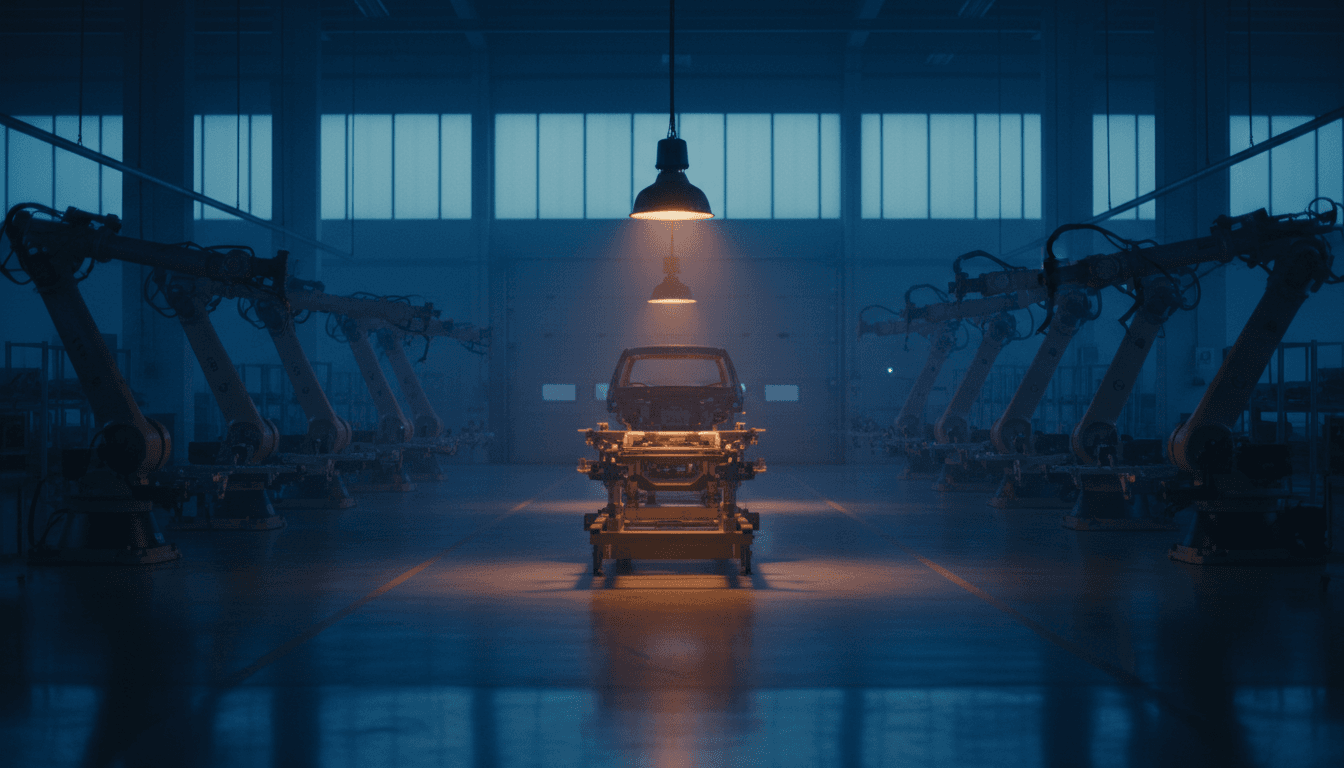
In July 2026 the Volkswagen Group confirmed what had been circulating out of Wolfsburg for months: the combined model range across its ten brands, from Volkswagen itself to Audi, Skoda, Seat/Cupra and Porsche, will shrink by roughly half by 2030 [1][2]. This is not just about dropping a handful of niche models. The plan also calls for cutting up to 75 percent of trim and engine variants on the models that do survive [3]. It is the most radical overhaul in the group's recent history, paired with a cut to worldwide production capacity from 12 million to 9 million vehicles a year, a level that would have been unthinkable in Wolfsburg before the pandemic [1].
Why now
The plan is the result of three pressures stacking up over the past three years: shrinking margins from the cost of the EV transition, increasingly aggressive Chinese competition on price even inside Europe, and a model range that had multiplied over time into heavy overlap between the group's own brands, with Audi, Skoda, Seat and Volkswagen often selling cars built on the same platform a segment or two apart [4]. Simplifying, in management's own framing, means concentrating investment on the products and technologies that create the most value for customers and the best margin for the company, instead of spreading it across dozens of low-volume variants [3]. The estimated saving is around 6 billion euro a year by the end of the decade [2].
Models already gone, and the ones on the chopping block
Some of the cuts are already real. Audi has pulled the A1 Sportback and the Q2, its two petrol entry-level models, off the market to make room for the electric A2 e-tron [3][5]. Volkswagen ended production of the Touran minivan in spring 2026 [3]. Others are next in line: the T-Roc Cabriolet will keep rolling off the line in Osnabruck only until mid-2027, with no direct successor planned, while the electric SUV-coupe ID.5 will not get a successor of its own, folded instead into the next-generation ID.4, which from 2027 is expected to be renamed ID.Tiguan [3][5]. Inside Audi, the coupe-styled Q5 Sportback and Q6 e-tron Sportback are also being discussed as candidates for the cut, to reduce lineup complexity [5]. Seat and Cupra sit in the trickiest spot of all: they share platforms and factories, but investment is flowing much more heavily toward Cupra [5].
What it means if you are selling a used Group model today
For anyone who already owns one of the discontinued models, a shrinking range is not necessarily bad news. Once a car stops being built, new-car supply drops to zero overnight, while demand for well-specced examples or particular trims can stay flat or even climb, the same dynamic that has kept resale values firm for discontinued wagons or coupes in other segments over the past few years. If you own a well-kept Audi A1 or Q2, or a Volkswagen Touran in good condition, it is reasonable to expect its resale value to hold up better than the segment average over the next two or three years, precisely because buyers looking for one no longer have the option of ordering it new. Before selling, it is worth checking prices for comparable models that went out of production a year or two ago, to judge whether waiting a bit longer pays off or whether selling now, while demand is still fresh, is the smarter move.
What it means if you are buying one of these models used
On the flip side, anyone shopping for a used T-Roc Cabriolet, ID.5 or one of the at-risk Audi variants should approach the purchase with more care, not less interest. The end of production does not mean the car stops being supported: EU rules require manufacturers to guarantee parts availability for a minimum period after a model's production ends, typically around ten years for major components. But the network of brand-specialist workshops, lead times on less common parts and future resale value can all still suffer once a model is fully retired. Before you sign anything, ask the seller for the full service history at authorized dealers and check, via the chassis number, whether that specific car has already received the latest software updates and recall fixes, since brand investment tends to concentrate on the models that stay in the lineup.
The bigger picture through 2030
The plan is not carved in stone yet. Volkswagen's leadership has already had to walk back part of the planned German plant closures after fierce opposition from unions and the supervisory board, which carries real weight in German corporate governance [4]. Still on the table are up to 100,000 job cuts worldwide and declared uncertainty over the future of four German plants, Emden, Hannover, Zwickau and Neckarsulm, beyond 2030 [4]. For the Italian used-car market, this likely means the range reduction will roll out gradually rather than land as an overnight cut, but the direction is now clear: fewer variants, fewer niches, more concentration on high-volume compact and mid-size SUVs.
Bottom line
If you own a Volkswagen Group model that has already gone out of production, scarcity may work in your favor when you decide to sell. If you are shopping used for a model on the next round of cuts, check on service and parts availability before you commit, and factor in that prices for a recent used example could climb as production winds down.
Further reading
- Il Post, Volkswagen dimezzera il numero dei suoi modelli di auto, July 10, 2026
- Bloomberg, Volkswagen Plans to Halve Model Lineup in Bid to Streamline Offerings, July 9, 2026
- L'Automobile (ACI), La mannaia del Gruppo Volkswagen: quali modelli rischiano di scomparire, July 14, 2026
- Il Fatto Quotidiano, Gruppo Volkswagen, la cura drastica: dimezza l'offerta e taglia la capacita produttiva, July 10, 2026
- Auto.it, Volkswagen taglia: gamma dimezzata, i modelli a rischio con Audi, Porsche e Skoda, July 26, 2026
Further reading
- Volkswagen dimezzera il numero dei suoi modelli di auto — Il Post
- Volkswagen Plans to Halve Model Lineup in Bid to Streamline Offerings — Bloomberg
- La mannaia del Gruppo Volkswagen: quali modelli rischiano di scomparire — L'Automobile (ACI)
- Gruppo Volkswagen, la cura drastica. Dimezza l'offerta e taglia la capacita produttiva — Il Fatto Quotidiano
- Volkswagen taglia: gamma dimezzata, i modelli a rischio con Audi, Porsche, e Skoda — Auto.it
Related articles
Itala 56: Italy's China-Built SUV, Price and Red Flags
At the Turin Motor Show 2026, the Itala 56 debuts: a euro49,000 coupe-SUV reviving a historic Turin badge on a Chinese platform, built by DR Automobiles. What to check on origin, a past antitrust fine, and resale value before you sign.
The Lamborghini Temerario Joins Italy's Police Fleet: What It Means for the Used Exotic Car Market
On September 4, 2026, Italy's State Police received its first hybrid Lamborghini Temerario, a 920-hp supercar. We trace twenty years of Lamborghinis in uniform and explain why stories like this keep Italy's used exotic-car market alive, from the Gallardo to the Huracan.