Used Cars for New Drivers in Italy: kW Limits
How many kW can a new driver's car have in Italy? First-year and years two-three limits, the registration-document formula, hybrids and EVs, models to consider and pre-purchase checks.

If you hold a freshly issued Italian licence and you are shopping for a used car for a neopatentato (the Italian term for a newly licensed driver), the single most important check is not the price or the colour. It is two numbers on the registration document: the engine power in kilowatts and the unladen weight. Those two figures decide whether you are legally allowed to drive that car at all, and a mistake can mean fines, a suspended licence and insurance trouble. This guide explains the limits, how to check any car in two minutes and which kinds of used cars make sense.
What Italian law says about new drivers
The reference is Article 117 of the Codice della Strada, as amended by the reform that took effect on 14 December 2024 (Law 177/2024). According to up-to-date sources, the power limits for passenger cars (category M1) are:
- first year after the category B licence is issued: at most 55 kW per tonne and at most 70 kW;
- second and third year: at most 75 kW per tonne and at most 105 kW.
A car is legal only if it meets both values for the period you are in. Being under the absolute cap is not enough if the power-to-weight ratio is too high, and the other way round. After three years the power restrictions drop away.
A warning: online guides still disagree, because the rules have changed more than once. Some pages describe a single year of limits, others three years with one fixed threshold. The practical rule is to start from the strictest figures (55 kW/t and 70 kW) if your licence is under twelve months old, and to confirm your own situation with the Portale dell'Automobilista or the motor vehicle office before signing anything.
How to check a car: the formula from the registration document
For any used car you need two items from the carta di circolazione:
- maximum power, field P.2, in kW (not horsepower);
- unladen weight (tara), in the section covering masses.
Some newer documents print the kW/t ratio directly, but not all do. When it is missing, use the ACI formula: kW divided by (unladen weight + 75 kg), in tonnes. A classic example: a 55 kW car weighing 1,050 kg gives 55 / 1.125, about 48.9 kW/t. That passes the 55 kW/t first-year limit, and 55 kW is under the 70 kW cap too.
A quick trick for classified ads: if power is listed in CV, divide by 1.36 to get kW. A 75 CV car is roughly 55 kW, so under 70 kW. A 100 CV car is about 74 kW, already above the first-year cap but within the 105 kW allowed in years two and three. For cars already registered you can also enter the plate number in the Portale dell'Automobilista tool, which tells you whether the vehicle is allowed for novices.
Hybrids and electric cars: where sources differ
This is the area where sources do not fully agree, so be careful. For hybrids, the figure that counts is the combustion engine power shown on the document. Plug-in hybrids follow the same parameters, again referring to the combustion engine. For electric cars, weight includes the battery and the rated (homologated) power is used, not peak power.
Previously electric and plug-in cars had their own 65 kW/t limit and no absolute cap. After the 2024 reform several sources say both the specific and the maximum limits now apply to them too, while some guides still quote the looser rules. So if you are eyeing a small used EV, do not trust an ad that simply says OK for novices: read the numbers on the document and ask for confirmation. A city EV like the Dacia Spring, with 45 kW and around 1,049 kg, sits comfortably below any threshold anyway.
Which used cars to look at
The right approach is not to find the most powerful car you are allowed to drive, but the one that is cheap to insure, to run and to resell. The sensible categories:
- Petrol or mild-hybrid city cars: Fiat Panda, Toyota Aygo, Hyundai i10 and Volkswagen up! are the most commonly recommended and largely fit within the limits. A Panda 1.0 Hybrid at 51 kW, for example, is under 70 kW even in the first year.
- Supermini hatchbacks: Dacia Sandero, Opel Corsa, Renault Clio in lower-power versions. Check the exact engine: the same Clio comes in very different kW outputs.
- Entry-level hybrids: useful for city use, but check battery health and what a repair would cost.
- LPG or CNG cars: often cheap to buy and to refuel, but verify the inspections and cylinder expiry dates.
Avoid sporty versions of ordinary models: a compact turbo variant with 110 kW may share a name with the base car and still be out of bounds for all three years. Even the Grande Panda Hybrid, at 74 kW, exceeds the 70 kW first-year cap, a good example of how two similar cars can give different answers.
What to inspect before you buy
A new driver has less experience and usually less budget for repairs, so condition matters more than power:
- Registration document and plates: confirm kW and weight match the car and that no modifications are missing from the records.
- Service history: documented services, the latest inspection (revisione), open recalls.
- Administrative detention and liens: request a PRA search before paying.
- Consistent mileage: compare it against the wear on seats, steering wheel and pedals.
- Test drive: clutch, gearbox, steering, brakes, noises. Have a trusted mechanic look at it if you can.
- Safety equipment: ABS and ESP are mandatory on recent cars, but check older models; braking assistance has real value for an inexperienced driver.
Other rules for your first three years
Besides power limits, other rules apply during the first three years of the licence. Speed limits are lower: 100 km/h on motorways and 90 km/h on main extra-urban roads. There is also zero tolerance for alcohol, a blood alcohol level of 0.0 g/l. For serious offences such as speeding, drink driving or phone use, new drivers risk double the penalty points. Driving a car outside the power limits brings fines and can lead to licence suspension.
There is an exemption for training: in the first year the limits do not apply if an instructor holding a B licence for at least ten years and aged 65 or under is on board. It is meant for lessons, not as a way to use a more powerful car freely. Guides diverge on this point, and some say a generic accompanying adult no longer qualifies, so do not rely on it as a shortcut.
Insurance: how not to be scared off
Third-party liability insurance (RC auto) is often the heaviest cost for a new driver. Industry surveys point to average premiums for new drivers that are far above the national average. The usual ways to keep the bill down are to compare several quotes, choose a small engine and, where the rules allow, use a family member's bonus-malus class. Always request quotes with the exact plate before you buy: the premium can vary a lot between models.
The takeaway: three steps before you call the seller
- Read the document: P.2 in kW and the unladen weight, then compute the ratio with the formula.
- Compare it with the limit for your period (55 kW/t and 70 kW in year one, 75 kW/t and 105 kW afterwards).
- Get an insurance quote and a PRA search before paying any deposit.
If the numbers work, the car is legal to drive, and from there the choice comes down to reliability, history and price, not power.
Further reading
- Automobilista.it, how to tell from the libretto if a car is legal for new drivers (updated 30 September 2026).
- Rentago, Auto da neopatentati 2026 (9 January 2026).
- MotorBox, Neopatentati nel 2025: rules, kW limits and models.
- Cesarmeccanica, Nuovi limiti neopatentati (15 December 2024).
Further reading
Related articles
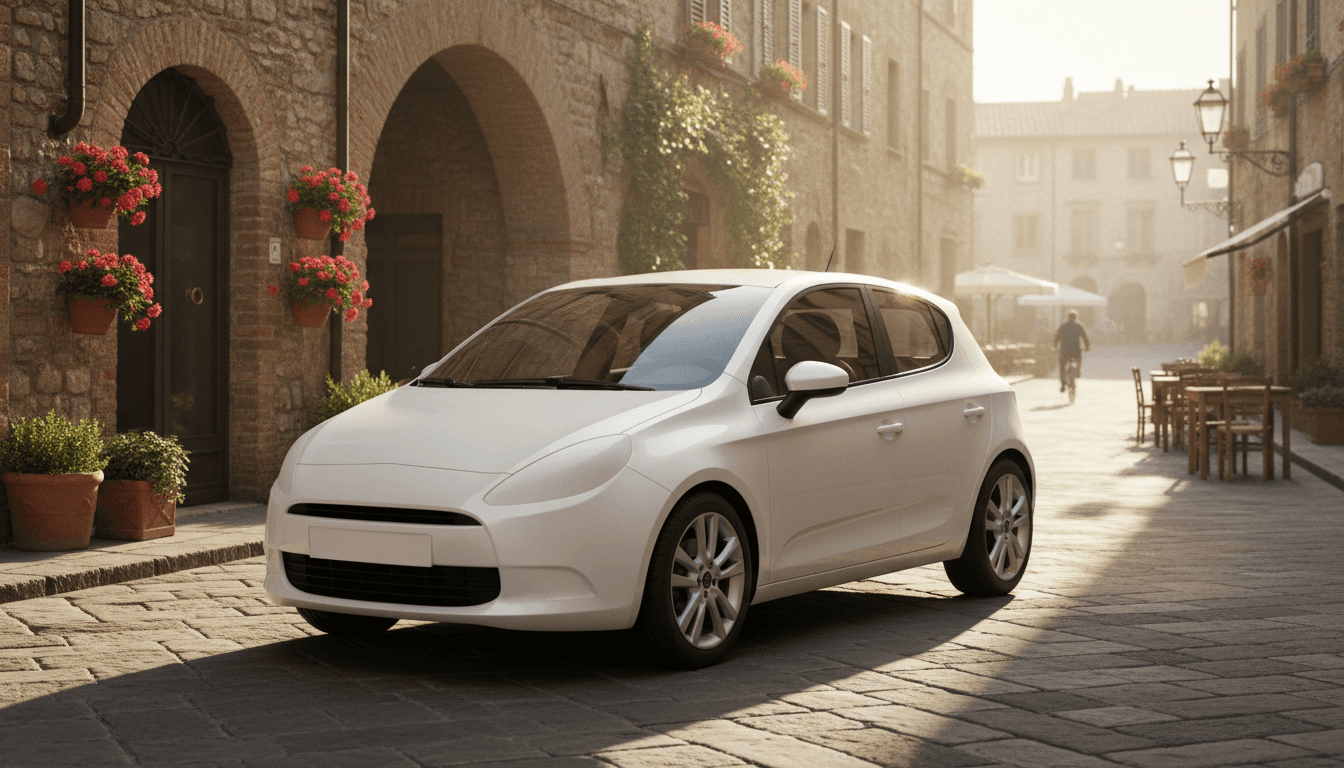
Used Dacia Sandero: which to buy and what to check
Used Sandero: petrol, Eco-G LPG or automatic? New-car prices as a benchmark, the 2023 LPG tank recall and a checklist to avoid a bad purchase.
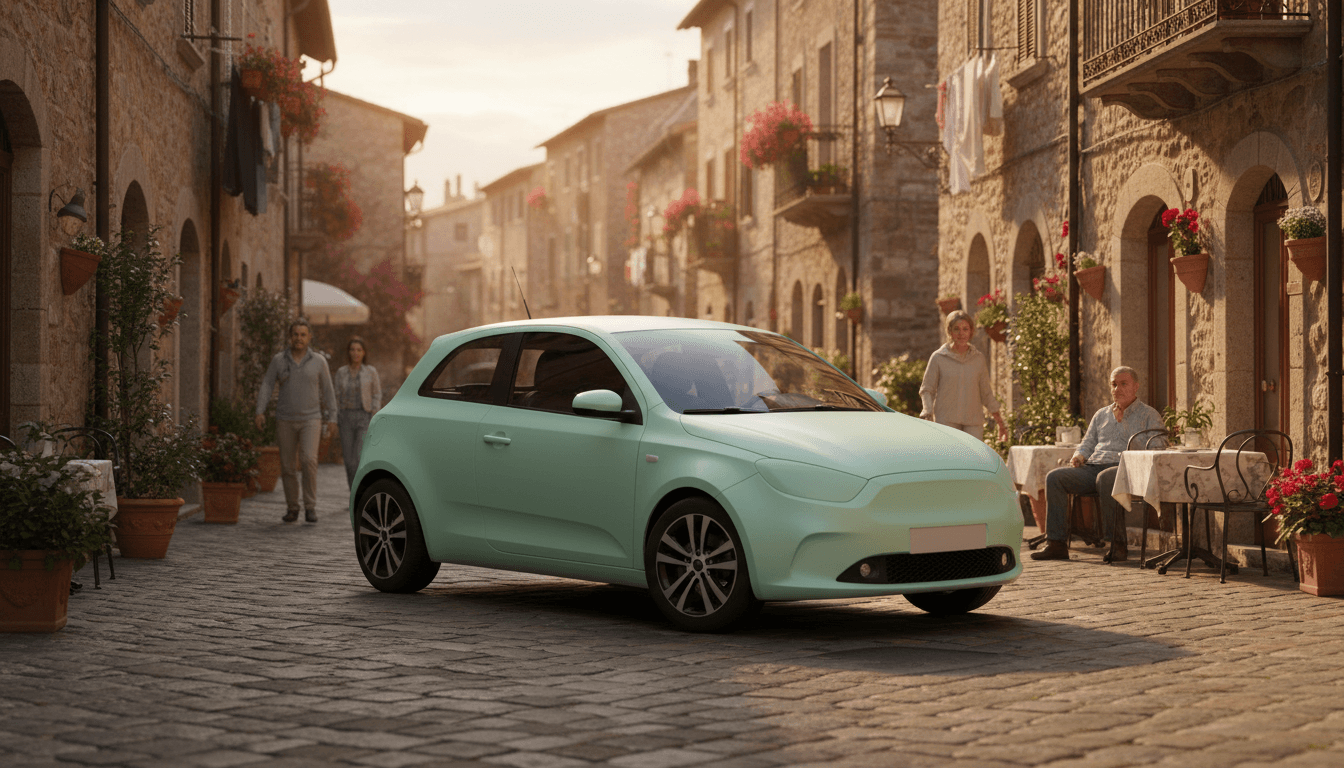
Used Fiat Panda: which version to choose
1.2, TwinAir or 1.0 mild hybrid: differences, indicative listing prices and the checks to make before buying a used Fiat Panda in Italy.