Used Car Insurance Italy 2026: Costs & Savings
Italy's average RC Auto premium climbed to 423 euros in 2026, but the gap between Naples and Valle d'Aosta runs close to 257 euros. What you need to insure a newly bought used car, how the Bersani law cuts the premium, and why the IVASS comparator should come before any signature.
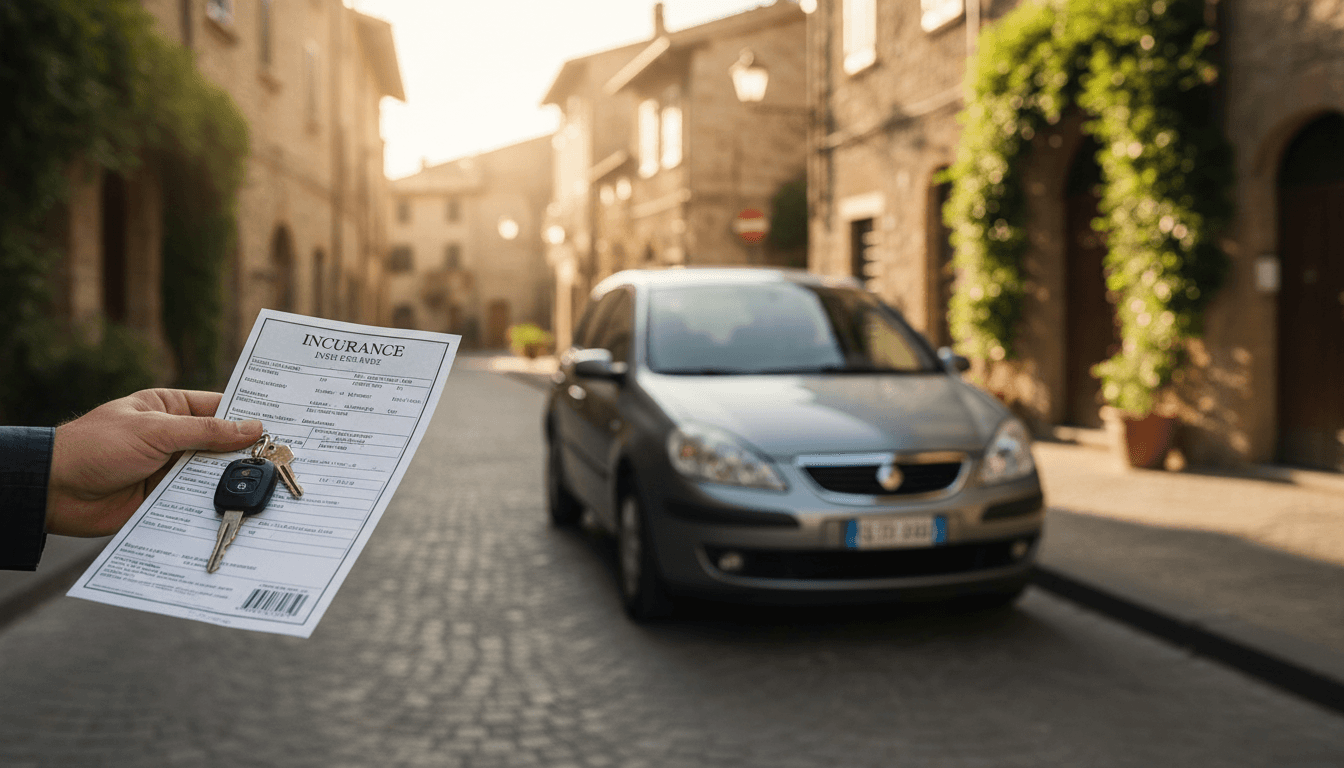
Why insurance is such a big line item for used-car buyers in 2026
Anyone shopping for a used car or scooter tends to focus on the asking price, the roadworthiness check, and the ownership transfer — and leaves insurance for last. That is the most common mistake, because in Italy you cannot legally drive even the few kilometres from the seller's driveway to your home without an active third-party liability policy. Driving uninsured is a criminal offence there, not a minor administrative slip.
2026 is a transition year for prices. According to the IVASS quarterly IPER survey, the average third-party liability (RC Auto) premium reached 423 euros in the first quarter of 2026, up 3.2% year on year — 1.5% once inflation is stripped out [1][3]. That is a far gentler climb than the 7.2% jump recorded in the same period of 2024 and the 4.1% seen in 2025: increases are slowing, but they have not stopped [3][4].
What it actually costs: the regional price map
The national average hides enormous gaps. Naples remains Italy's most expensive province, with an average premium around 604.7 euros, while Valle d'Aosta sits among the cheapest, just under 399 euros — a roughly 257-euro spread between the two extremes, slightly narrower than the 262 euros recorded in the same quarter of 2025 [5][6]. Buy the same used car in Naples or Caserta rather than in Trentino-Alto Adige or Molise, and the premium can nearly double, even with an identical no-claims class and driving history.
That gap comes mainly from claims frequency and confirmed fraud rates in each province — criteria insurers legitimately use to price territorial risk — rather than from anything about the vehicle itself.
What you actually need to insure a car you just bought used
Once you have bought the car, there are two routes, and it pays to know them before you even negotiate the price:
- Transferring your existing policy: you can move your current policy from your old vehicle to the newly purchased one, but only if the old one is sold or scrapped at the same time — a single policy cannot cover two vehicles at once [7][8].
- Taking out a new policy: once the ownership transfer is registered with the PRA (the public vehicle registry), you can open a fresh policy on the purchased vehicle.
Either way you will need proof of the ownership transfer (or the sale/scrappage certificate for the previous vehicle), the registration document for the vehicle you bought, its plate number, a valid ID, and the buyer's tax code [7][8]. Coverage has to be active before the car moves at all — not within a grace period of a few days. Even the drive away from the seller's address falls under the obligation.
The Bersani law: the fastest shortcut to a lower premium
If a household already has a car or motorcycle with a long, clean insurance history, Italy's Bersani law lets a family member inherit that vehicle's no-claims class for a newly purchased car, even one that has never been insured before. The insurer is legally required to apply it, provided the reference vehicle's risk record shows no claims with sole, main, or shared fault in the last five years, and provided both vehicles are registered to people in the same cohabiting household [2].
The saving is not theoretical. A newly licensed driver inheriting class 1 instead of starting at class 14 can see the premium drop from an average of 1,250 euros to somewhere around 400-500 euros a year — about an 850-euro difference [2]. For anyone buying a used car specifically for a child or family member who just passed their driving test, this single step often moves the needle more than anything else in the quote.
The IVASS comparator: shop around without paying a middleman
Before signing anything, it is worth opening the Preventivatore Pubblico — IVASS's official comparison tool, built with Italy's Ministry of Enterprises. It is free, takes no commission, and compares the base RC Auto price across every insurer operating in Italy. All it needs is the buyer's tax code and the vehicle's plate number, and quotes come back within seconds [1].
The public tool compares the mandatory base contract — the legal minimum cover. For a fuller picture that includes theft, fire, glass, or weather damage, it is worth pairing it with a private comparator (Facile.it, Segugio.it, 6Sicuro and similar), which also aggregates add-on cover that makes more sense on a lower-value used car.
The black box: a real discount, but not for everyone
In the first quarter of 2026, 16% of RC Auto policies included a black box (scatola nera), down slightly from 17% a year earlier, and far more common in the south: penetration tops 54% in Caserta and nearly 44% in Naples [3]. More than nine contracts in ten still carry some discount regardless, averaging close to 38.4% off the tariff premium — around 209 euros less [3].
So the black box is not the only route to a discount, but it remains the most substantial one where territorial risk runs high. Buyers picking up a used car in an expensive province can use it to offset part of the regional gap, in exchange for trip tracking and — in the event of a crash — an objective account of what happened.
Five practical moves before you sign
- Always run the IVASS comparator alongside at least two private ones: identical profiles can still show a gap of hundreds of euros between insurers.
- Check whether you qualify for the Bersani law before accepting the starting no-claims class an insurer first offers.
- On a lower-value used car, weigh whether theft and fire cover is genuinely worth its cost against the vehicle's residual value.
- If you drive little or mostly in town, a black box can cut the premium with few real downsides.
- Be wary of anyone asking for cash payment to an unidentifiable intermediary — always check that the agency or broker is listed on the IVASS register.
The bottom line: get quotes before you get the keys
The moment you are negotiating the price of a used car or scooter is also the right moment to open the IVASS comparator on your phone and get a real sense of what the policy will cost — not after the deal is done. On VendiVoce, every listing carries the plate and ownership details a buyer needs for both the transfer and the insurance quote: use them to run a couple of estimates before you even book the viewing, so the negotiated price and the policy cost get weighed together, not sprung on you one after the other.
Further reading
- Preventivatore pubblico IVASS — IVASS
- Legge Bersani: come funziona nelle assicurazioni — Prima.it
- Rc auto, premio medio a 423 euro: i rincari rallentano, ma le due ruote accelerano — Insurzine
- Il prezzo medio della Rc Auto sale a 423 euro nel primo trimestre — InterMediaChannel
- Prezzo medio RCA: la classifica delle regioni e province piu' care — Moveo by Telepass
- RC Auto 2026: prezzo medio e classifica regioni — M3 Motorcube
- Acquistare un'auto: come attivare la polizza — Facile.it
- Come funziona l'assicurazione nell'acquisto dell'auto usata? — SicurAUTO.it
Related articles
Used Car Bank Transfer Scam: How to Avoid It
A seller near Parma lost both his car and 26,000 euros to a bank transfer that was cancelled after handover. Since 2025 banks must run Verification of Payee checks, but that alone will not save you: here is the difference between an urgent and an instant transfer, and the rules for selling a used car safely in 2026.
How Much Is My Used Car Worth in 2026?
Eurotax, Quattroruote, mileage and service history: here is how a used car's value is really calculated in Italy in 2026, before you sell it or trust a single online quote.