Used automatic car: what to check before buying
Torque converter, CVT, DSG or robotised: how to identify the gearbox, what maintenance costs, the lifetime-oil myth and the warning signs on a test drive.
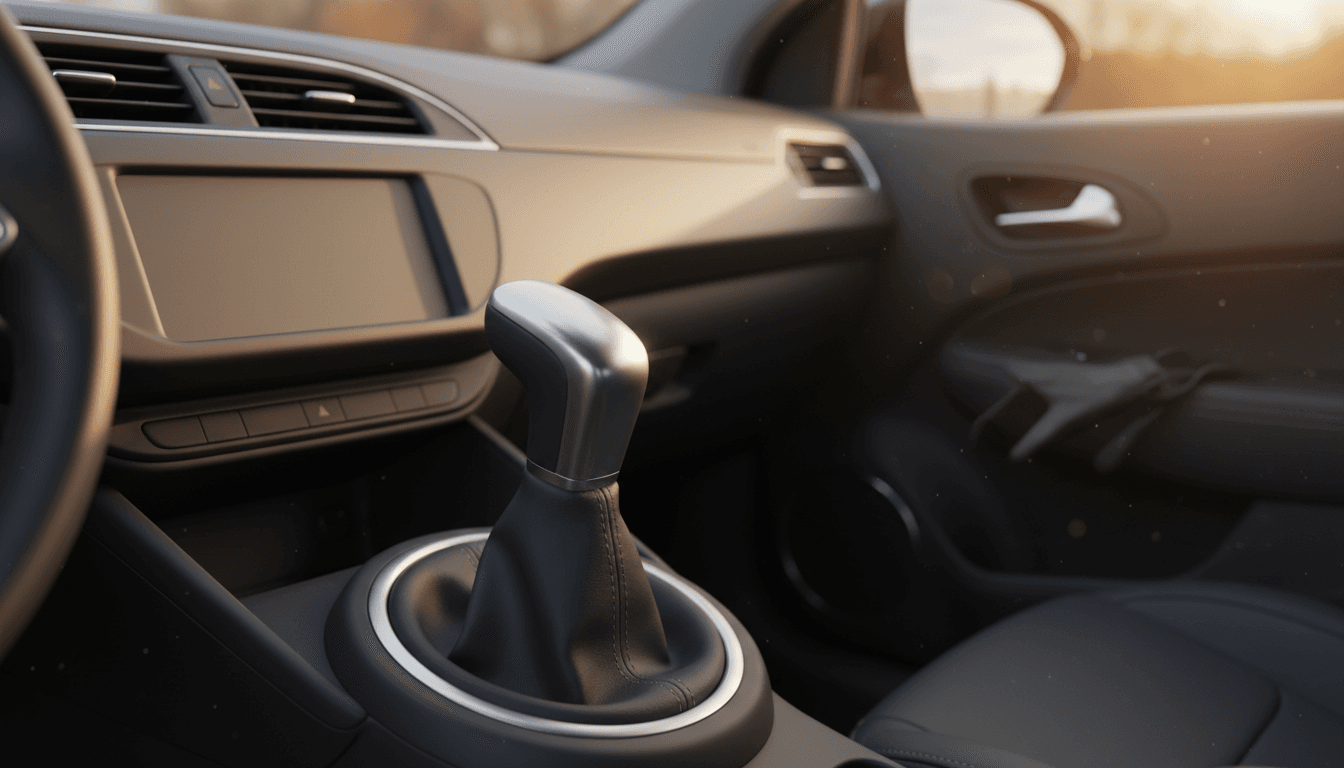
Shopping for a used car with an automatic gearbox is increasingly common, but the same label hides very different technologies: torque converter, CVT, dual-clutch and robotised. Each has its own strengths, weaknesses and running costs, and a wrong call can turn into a repair bill worth thousands of euros. Here is how to identify the gearbox type and what to check before you buy.
The four kinds of automatic gearbox
The first step is knowing what is under the car, because behaviour and risks differ a lot [1]:
- Torque converter: a hydraulic coupling that transmits torque through oil pressure, with internal planetary gearsets. Strengths: smoothness and good long-term durability; it historically used more fuel [1].
- CVT: two pulleys joined by a belt giving a continuous range of ratios. Low consumption, but the typical flaw is the scooter effect, where revs rise before the car accelerates [1].
- Dual-clutch (DCT/DSG): two clutches handle odd and even gears. Very quick and efficient shifts, but costlier maintenance and less smooth behaviour at low speed [1].
- Robotised (AMT): a manual gearbox with electronically controlled clutch and gear selection. Cheaper to build, but shifts are less smooth and you feel jerks [1].
Listings and registration documents are often vague: always ask which gearbox the exact version has, and check the model's technical sheet.
Why maintenance matters more than on a manual
A manual gearbox can last as long as the car; an automatic is more delicate and leans heavily on electronics [3]. The gearbox fluid needs changing more often than the manual might suggest: the most general source says typically every 60,000 to 100,000 km depending on model and type [1], while another gives roughly 50,000 to 60,000 km, pointing to manufacturers' manuals [3]. The two do not agree: what counts is the carmaker's schedule for that specific gearbox.
The lifetime-oil myth
Some sellers say the fluid is for life, meant to last as long as the vehicle. According to Autoblog this does not mean it never degrades: heat, towing, mountain driving and heavy use wear it down over time [2]. Makers such as ZF, Aisin and Getrag specify different maintenance schedules and some gearboxes have no fixed interval [2]. If a seller says the oil was never changed because it is for life, on a high-mileage car treat it as a yellow flag.
What the work costs
Figures vary widely but give an order of magnitude:
- An average oil change costs about 250 euros, and may need a filter too if the fluid is very dirty [3].
- A full circuit flush can cost several hundred euros, up to roughly 900 in some cases [2].
- Partial repairs, such as solenoid valves or internal clutches, run indicatively from 500 to 1,200 euros [1].
- A complete gearbox overhaul can exceed 2,000 euros and sometimes reach several thousand [1][2].
So when you negotiate, factor in the gearbox condition: saving 500 euros on the purchase can vanish with a single repair.
Warning signs on the test drive
During the test drive watch for these symptoms [2]:
- harsher gear changes than normal;
- hesitation when pulling away;
- engine revs rising without a matching increase in acceleration;
- vibrations or unusual noises;
- slow response when cold.
As the source notes, the same symptoms can come from mechanical wear or a fault rather than just old fluid [2]. Test from cold, repeat hill starts and low-speed manoeuvres, where DSG and robotised flaws show most, and if in doubt get a diagnosis at a trusted garage: driving on with a fault can turn a small repair into a big one [2].
Documents and history to ask for
Before paying, ask the seller for:
- invoices for gearbox oil changes and any flushes, especially for torque converters, where a simple oil change may be only partial [2];
- the service book or dealer history;
- the registration document data, including the exact version;
- confirmation of real mileage, to avoid surprises such as clocked odometers.
The maintenance history is, according to the sources, the single most useful thing to verify on a used automatic [1].
Is it worth it? Resale value
A well-maintained automatic tends to hold its value better, especially in SUVs, saloons and premium cars where it is standard [1]. In small cars demand is lower and the price gap against manual versions is smaller [1]. On a tight budget and mostly city use, a simple, well-documented automatic can make more sense than a more powerful car with a doubtful history.
The bottom line
Before choosing a used automatic, identify the gearbox type, demand the service and oil history, test from cold and in low-speed manoeuvres, and weigh the price against the potential cost of a repair. Be wary of a verbally claimed lifetime fluid, especially at high mileage. A garage check before purchase costs little compared with a gearbox redo.
Sources
- [1] Quotidiano Motori, Cambio automatico: tutto quello che serve sapere
- [2] Autoblog, Cambio automatico, l'olio è a vita? I meccanici avvertono
- [3] Motori Magazine, Quando cambiare olio cambio automatico
Further reading
Related articles
Used Dacia Sandero: which to buy and what to check
Used Sandero: petrol, Eco-G LPG or automatic? New-car prices as a benchmark, the 2023 LPG tank recall and a checklist to avoid a bad purchase.
Used Fiat Panda: which version to choose
1.2, TwinAir or 1.0 mild hybrid: differences, indicative listing prices and the checks to make before buying a used Fiat Panda in Italy.